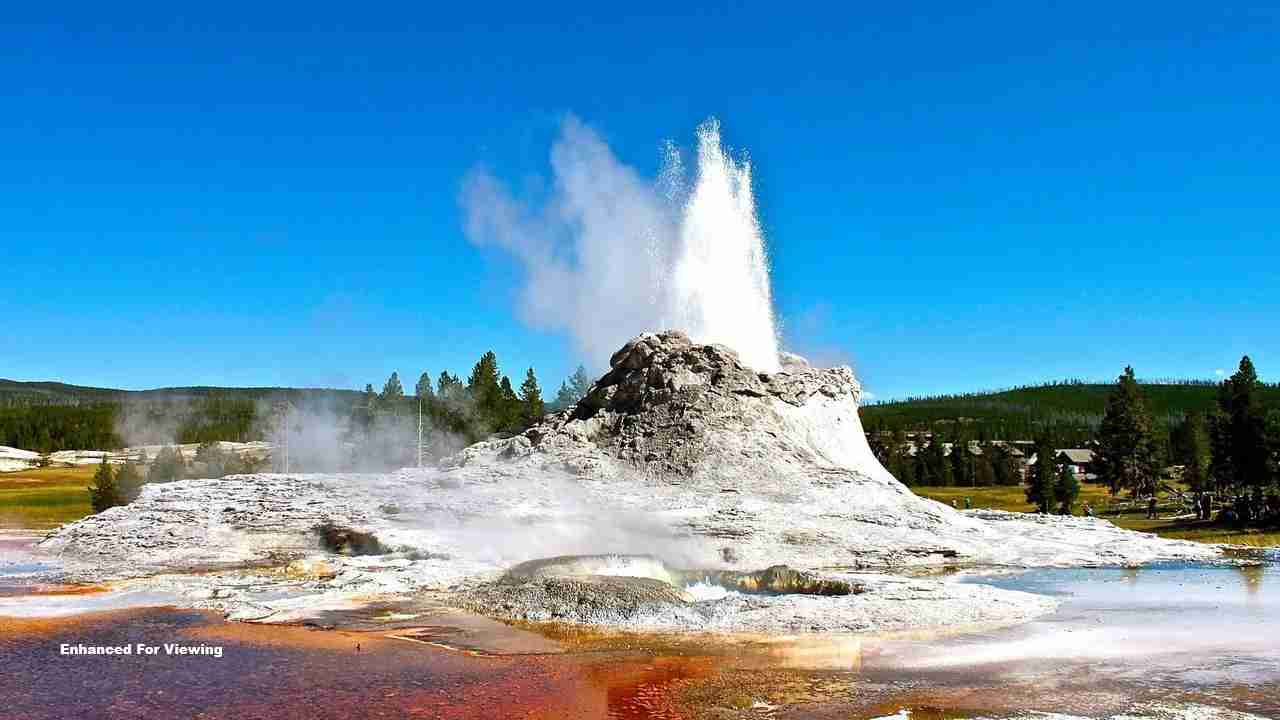
Steamboat Geyser’s long silence puzzles scientists as Yellowstone’s tallest active geyser stays quiet
Steamboat Geyser in Yellowstone’s Norris Geyser Basin has been unusually quiet for more than 230 days, with only two major eruptions in 2025; scientists are puzzled as the planet’s tallest active geyser stays dormant after a recent active run.
- Key takeaways:
- Steamboat is the world’s tallest active geyser and remains active but unpredictable.
- After record activity in 2018–2020, eruptions tapered steadily and 2025 shows only two major blasts, the last on April 14, 2025.
- Scientists cite plumbing changes or mineral clogging as possibilities, but no single cause is confirmed.
Key information
Facts at a glance:
- Steamboat Geyser is the tallest active geyser on Earth, able to shoot water more than 300 feet high.
- Its behavior is highly erratic: intervals between major eruptions have ranged from about 3 days to about 50 years (National Park Service).
- The geyser erupted often from 2018–2020, then tapered through 2024; scientists report only two major eruptions in 2025, the last on April 14, 2025 (NPS, Yellowstone Volcano Observatory/USGS, GeyserTimes eruption log).
A long, unpredictable past
Steamboat’s eruptions have been recorded since the late 19th century. Early records show the geyser can switch from long quiet stretches to sudden active phases without clear warning. Documented eruptions begin around 1878, and there is a noted ~50‑year gap from about 1911 to 1961.
“Steamboat has a history of long silent periods followed by bursts of activity,”
The 1959 quake and a noted rebound
The 7.5 magnitude Hebgen Lake earthquake in 1959 shook areas near Yellowstone. About two years later, Steamboat erupted again after its long quiet stretch. Some researchers suggest seismic events can alter underground plumbing and revive geysers, though the Park Service cautions there is no clear, proven link.
Sparse years, then a modern boom
Across the late 20th century and into the 2000s, major eruptions were rare. For example, between 1991 and 2000 Steamboat erupted only once. That quiet pattern shifted in 2018 when a new eruptive period began on March 15, 2018, producing dozens of major eruptions through 2020 with record counts in 2019 and 2020.
Even during the boom, timing was uneven: intervals between eruptions ranged from a few days to more than two weeks, underscoring the geyser’s erratic nature (NPS; The River 97.9; Cowboy State Daily).
Tapering off after 2020
Following 2018–2020’s surge, activity dropped: 48 eruptions in 2020 fell to 20 in 2021, 11 in 2022, 9 in 2023 and 6 in 2024. By early 2025 the Yellowstone Volcano Observatory and USGS described the unusually frequent period as likely over (YVO/USGS).
2025 — a new lull and what researchers are seeing
In 2025 Steamboat has recorded only two major eruptions. The last occurred on April 14, 2025, when water reached roughly 300 feet at about 11:05 a.m. As of early December 2025 that date is more than 230 days past, and crowd-sourced logs such as GeyserTimes list the last major eruption about 246 days ago — a long quiet stretch compared with recent busy years.
Yellowstone Volcano Observatory scientist-in-charge Mike Poland described 2025’s change as a breakdown of the prior pattern. Small, abortive bursts occur but rarely grow into the giant eruptions of the boom years; Poland and colleagues say the frequent-eruption period that began in 2018 has “probably ended” and a major eruption is “unlikely anytime soon” based on current behavior (YVO/USGS).
Possible causes — no single answer yet
Researchers emphasize Steamboat remains an active hydrothermal feature: steam rises from the vent and instruments show ongoing heat and fluid movement. That means the system has not died, but it is behaving differently (NPS).
Scientists point to a few plausible explanations, none proven:
- Mineral precipitation could partially clog vents and alter pressure build‑up (The River 97.9).
- Changes in heat or water paths could redirect supply underground, reducing the geyser’s ability to produce major eruptions (Cowboy State Daily).
Because Steamboat has both returned suddenly to activity and stayed dormant for decades in the past, predicting the next major eruption is not possible — it could erupt tomorrow, next year, or not for decades (YVO/USGS).
How Steamboat fits the bigger Yellowstone picture
Steamboat sits in the Norris Geyser Basin, which the National Park Service and USGS/Yellowstone Volcano Observatory describe as Yellowstone’s most changeable thermal area. Geysers, hot springs, mudpots and fumaroles in Norris can shift behavior or change type. Scientists say the current slowdown looks like a return to Steamboat’s long-term erratic norm rather than a sign of larger volcanic trouble.
Implications for Redding, California
Economic and tourism effects: Redding residents who travel to Yellowstone or run businesses serving western travelers may see little immediate change. Occasional Steamboat eruptions draw interest, but the basin stays open and Yellowstone’s major attractions, such as Old Faithful, continue to attract visitors (NPS).
Public safety and local priorities: Scientists stress Steamboat’s behavior is hydrothermal, not volcanic eruption warning; the slowdown does not change hazard profiles for towns hundreds of miles away. Redding’s emergency planning remains focused on local risks such as wildfires, floods and earthquakes (YVO/USGS).
Scientific and civic interest: The steamy show at Norris highlights the value of monitoring and public science. Redding-area schools, clubs and outdoor groups might use Steamboat’s story to teach about unpredictable natural systems and the need for steady, unbiased observation (YVO/USGS; NPS).
Travel planning: For families planning Yellowstone trips, Steamboat’s quiet spells are a reminder to set expectations: you may see a rare towering eruption or simply enjoy the basin’s steaming pools and trails. Visitors should always follow posted safety rules in Norris Geyser Basin (NPS).
Sources and reporting notes
This article draws on National Park Service and USGS/Yellowstone Volcano Observatory reporting, crowd-sourced eruption logs, and regional coverage of Steamboat’s recent slowdown. Key sources:
- National Park Service (Steamboat Geyser)
- Yellowstone Volcano Observatory/USGS
- GeyserTimes eruption log
- Cowboy State Daily
- The River 97.9
- Outside Online
Reporting notes: This piece preserves original facts and URLs from the cited agency pages, crowd-sourced logs and regional reporting. All factual claims above are drawn from the linked sources.