Perseverance Rover Spots Shiny “Visitor from Outer Space” — Phippsaksla Likely Iron-Nickel Meteorite on Mars
NASA’s Perseverance rover photographed a large, shiny metallic object nicknamed Phippsaksla in Jezero Crater’s Vernodden area on Sept. 19, 2025; SuperCam readings show high iron and nickel, suggesting a probable iron‑nickel meteorite from the asteroid belt.
- Unusual find: A glossy, ridge‑like rock nicknamed Phippsaksla stands out in Mastcam‑Z images for its reflective surface and clear edges.
- Composition: SuperCam laser readings show elevated iron and nickel — consistent with metallic (iron‑nickel) meteorites.
- Origin: The composition points to an origin in the asteroid belt rather than formation on Mars.
- Local interest: Data and images are public; the find has potential STEM, economic and tech relevance for places like Redding, California.
Discovery and first look
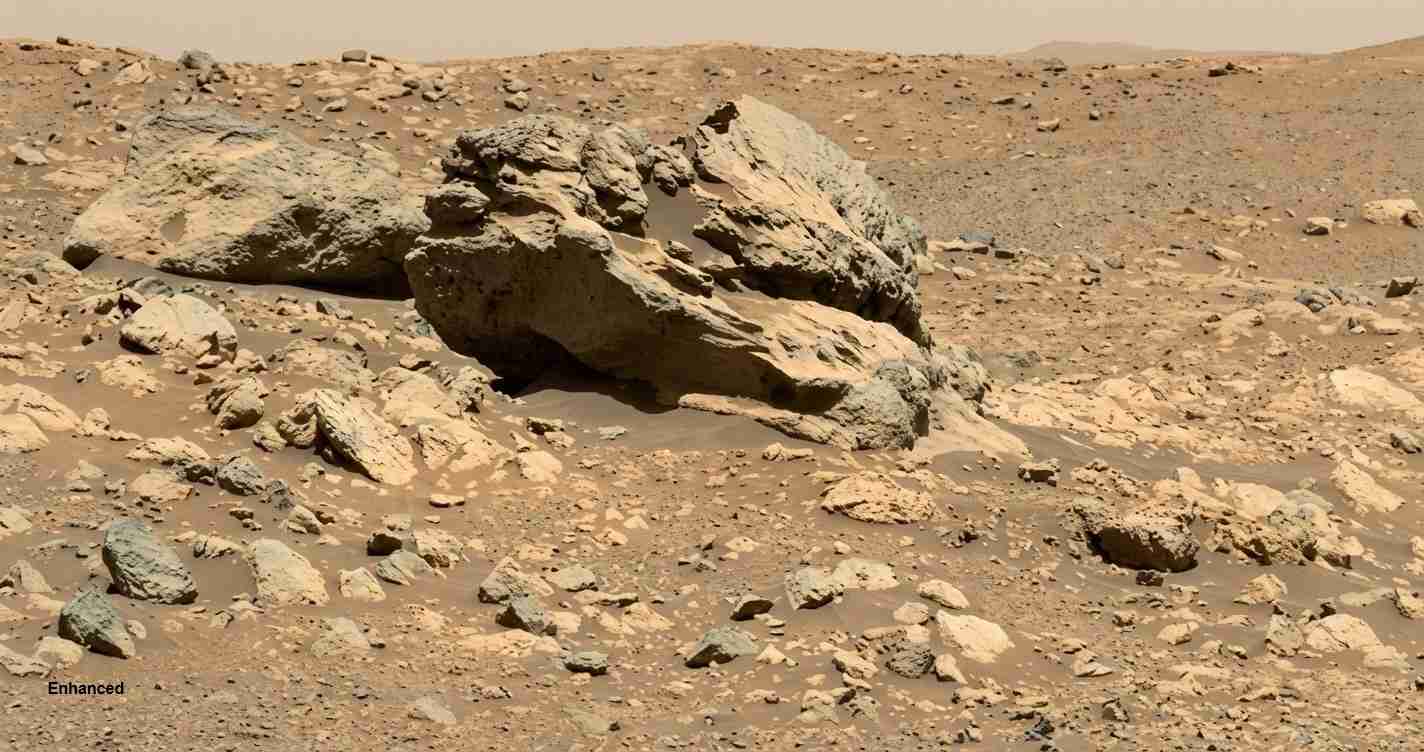
While driving through Vernodden, a section of the ancient Jezero lakebed, mission scientists noticed an object that did not match the hard, broken rocks around it. The object appeared glossy and sculpted, catching sunlight and standing out in Mastcam‑Z images taken on Sept. 19, 2025 — see the NASA Science mission blog: “A Stranger in Our Midst”. The team quickly gave it the nickname Phippsaksla because of its shiny, ridge‑like shape.
Photos show a smooth, reflective surface unlike nearby stones. Journalists and scientists flagged the find as unusual because Mars’ surface tends to be dusty and dull; Phippsaksla’s metallic gleam and clear edges made it easy to pick out in the rover’s photographs (reporting includes The Independent reporting and the NASA Science mission blog).
What the instruments found
Perseverance conducted a closer check with SuperCam, the instrument that fires brief laser pulses and analyzes the returned light to identify composition. SuperCam’s readings showed much higher levels of iron and nickel than surrounding Martian rocks — a signature consistent with metallic meteorites (see NASA mission notes and the ScienceAlert summary).
“Iron and nickel together are a classic sign of metallic meteorites, which resist weathering and keep a shiny face.”
Metallic meteorites are rarer than stony types but survive atmospheric entry better. That resilience helps explain how a large chunk of metal might sit on Mars’ surface in a relatively undamaged state (analysis and reporting: ScienceAlert; GB News coverage).
Why researchers think it came from the asteroid belt
The iron‑nickel composition suggests Phippsaksla didn’t form on Mars. Instead, it likely came from a parent body in the inner solar system — most often the asteroid belt between Mars and Jupiter. When asteroids collide, fragments can be sent outward and later fall onto planets. The metallic signature detected by SuperCam fits what scientists expect from iron‑nickel meteorites originating in such collisions (GB News; ScienceAlert).
Expert context: Dr. Gareth Dorrian of the University of Birmingham observed that metal‑rich rocks resist chemical weathering and are more likely to survive fiery entry — one reason Phippsaksla looks fresh amid battered stones (commentary cited in GB News).
How rare is this for Perseverance?
Mars rovers have found metal‑rich meteorites before — for example, NASA’s Curiosity saw a metal‑rich rock nicknamed “Lebanon” in Gale Crater. What makes Phippsaksla notable is that Perseverance had not encountered an obvious metallic meteorite during its first four years on Mars. The find adds a new data point about how different materials reach and survive on Mars’ surface (context and reporting: GB News; The Independent bulletin).
What scientists hope to learn
Analysts will continue studying SuperCam results and other rover data to confirm the rock’s makeup and origin. If Phippsaksla is confirmed as an iron‑nickel meteorite, it will help researchers understand the kinds of material Mars receives from space — important because impact‑delivered material can seed a planet with metals and organics that affect surface chemistry and, long ago, possibly habitability.
The team also plans to compare Phippsaksla with meteorites found on Earth. Metallic meteorites can preserve records of collisions and heating that reveal their parent bodies’ histories in the asteroid belt. Tracking those histories helps scientists piece together solar system evolution (ongoing analysis: NASA mission blog; reporting: The Independent; The Daily Beast).
Images and public interest
High‑resolution images of Phippsaksla taken by Mastcam‑Z show its sheen and shape, and those photos are drawing interest from hobbyists, students and the broader public. Perseverance’s images and SuperCam data are made available to scientists worldwide; the measurements for Phippsaksla will enter that public data stream for further study (mission blog: NASA Science mission blog).
Source notes and reporting
This article is based on NASA mission reporting and media coverage of the Perseverance discovery. Primary sources used:
- NASA Science mission blog: “A Stranger in Our Midst”
- The Independent reporting on the discovery and size estimate
- GB News science coverage with expert commentary
- ScienceAlert summary of the SuperCam findings
- The Daily Beast report
- AOL summary article
Implications for Redding, California
Economic and technological impact
Although Phippsaksla sits on Mars, the ripple effects reach Earth. NASA’s Perseverance mission is run by the Jet Propulsion Laboratory in nearby Pasadena, and technologies tested on Mars often feed private industry and the defense sector. For Redding and Shasta County, that means new tools, sensors and software developed for Mars could spur local firms or attract investment. Small engineering shops and manufacturing suppliers across California have historically found commercial work tied to federal space projects (see the NASA/JPL mission link).
Education and workforce development
Phippsaksla is a concrete classroom moment. Teachers at schools in Redding, at Shasta College and at nearby universities can use this find to spark interest in engineering, geology and computer science. Programs that encourage students to pursue STEM careers help build a homegrown workforce able to compete for jobs in aerospace, manufacturing and tech.
Civic and civic pride
Space achievements are a point of national and local pride. Redding residents following NASA can take satisfaction in American scientific success. Support for cost‑effective federal investment in research and development can translate into economic benefits for local communities; conservative leaders in the region may point to Phippsaksla as an example of government‑funded science yielding innovation and jobs.
Practical applications and readiness
Perseverance tests autonomy, remote sensing and robotics—tools with civilian and commercial uses. Improved remote sensing can help environmental monitoring, precision agriculture and even wildfire detection—issues important to Redding residents. As Mars mission technologies mature, they often find terrestrial uses that support local economies and public safety.
Political consequences
Space exploration typically commands bipartisan support, but debates focus on spending priorities. For conservative readers in Redding, Phippsaksla offers an example of measurable return: scientific data, tech spin‑offs and educational boosts. Local elected officials can highlight concrete benefits when weighing support for federal research funding.
A local call to action
Community leaders in Redding should consider partnerships with colleges, job training centers and local businesses to turn interest in Mars into opportunity. Hosting public talks, promoting STEM scholarships, and building supplier links with aerospace companies can translate curiosity about Phippsaksla into workforce gains and new business.
Key information (summary)
- Object nicknamed: Phippsaksla (nicknamed by mission team for its appearance)
- Location: Vernodden area, Jezero Crater on Mars
- Size: about 31 inches (nearly 80 centimeters) across — reported in The Independent reporting
- Spotted: Sept. 19, 2025, by Perseverance’s Left Mastcam‑Z camera — per NASA
- Analysis tool: SuperCam laser instrument detected high iron and nickel concentrations — see NASA mission blog and ScienceAlert
- Likely origin: asteroid belt — reporting and analysis via GB News