
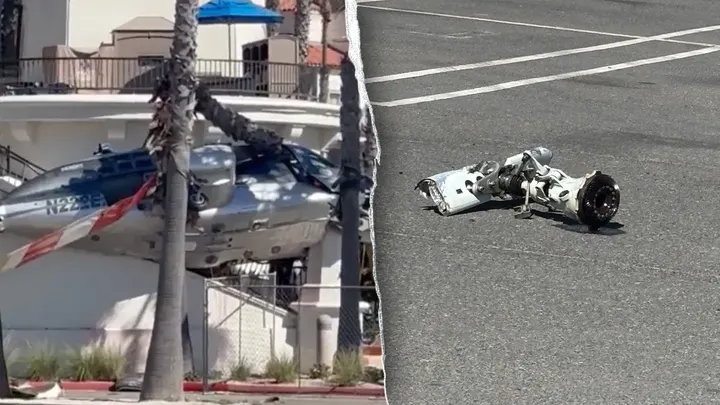
Dramatic video shows medical helicopter fall from sky and crash in California; five hospitalized after bystanders rush to help
Dramatic video shows a medical helicopter suddenly losing altitude and crashing in Southern California; bystanders rushed to the wreckage, freeing a trapped nurse and aiding victims. Five people were hospitalized and officials are investigating.
- A Southern California crash: A medical helicopter crash in Huntington Beach left five people hospitalized after bystanders helped free trapped crew members — see reporting from Los Angeles Times.
- Viral footage: Online video shows a helicopter spiraling down and civilians physically lifting wreckage to free a trapped nurse — covered by ABC News.
- Separate Sacramento incident reported: Some reports describe a Sacramento crash involving REACH Air Medical Services with three crew members seriously injured — local coverage from CBS Sacramento and ABC News.
- Investigations expected: Federal teams from the NTSB and FAA are typically involved in air-crash probes; video context and investigator notes are available in published footage such as YouTube video 1 and YouTube video 3.
What happened
Witness video and multiple news reports show a medical helicopter suddenly losing altitude and crashing near a Southern California parking area. In Huntington Beach, police said two people were pulled from the wreckage and three people on the ground were injured and taken to local hospitals, totaling five hospitalized. Officials described the scene as chaotic, with emergency crews and hotel staff assisting in the immediate response — see Los Angeles Times.
Simultaneous Sacramento footage
At roughly the same time, dramatic footage from Sacramento showed bystanders lifting part of a helicopter wreck to free a trapped crew member. That crash has been linked in reporting to REACH Air Medical Services and involved three crew members — a pilot, a paramedic and a nurse — who were taken to UC Davis Medical Center in critical condition, per local accounts (see ABC News and CBS Sacramento).
Video and bystander action
Multiple videos published by national outlets show bystanders running to the crash, physically prying or lifting parts of the wreckage to reach a trapped crew member. The footage is raw and urgent: people in shirts and sandals lifting metal and debris, carrying the injured to cover, and applying first aid before paramedics arrived.
One widely shared clip shows the moment rescuers free the nurse and place her on a stretcher while nearby bystanders continue to help with tourniquets and chest compressions. Coverage and video examples are available from ABC News and a viral clip on YouTube video 2.
“Citizens acted quickly and decisively to save lives, but emergency officials warn such rescues carry risk when fuel leaks, fire risk or unstable wreckage are present.”
Officials urge caution: Bystanders should follow directions from first responders and keep a safe distance if professional crews are on scene.
Victims and hospitals
Reporting indicates five people were hospitalized in the Huntington Beach crash: two taken from the helicopter wreckage and three injured on the ground. Hospitals in the area received the patients; officials have not released names or full medical updates for all victims. See initial coverage from the Los Angeles Times.
In the Sacramento incident, the three crew members — identified in reporting as the pilot, a paramedic and a nurse — were listed in critical condition and transferred to UC Davis Medical Center. Local reporting identified the nurse by name as Susan “Suzie” Smith; hospitals and officials have provided limited medical updates pending family notifications (coverage: ABC News).
Operator and aircraft details
Reports link the Sacramento crash to REACH Air Medical Services, a known air ambulance operator in California. Eyewitness accounts and video identify a REACH helicopter in the Sacramento footage; Huntington Beach reporting did not specify the operator or aircraft make. Some outlets cautioned that separate incidents may be conflated in early coverage (see ABC News and Los Angeles Times).
Investigators and next steps
Federal investigators typically lead probes when aircraft crash. The NTSB and FAA usually begin by collecting wreckage, reviewing maintenance records, interviewing crew and witnesses, and analyzing flight data or cockpit voice recorders if available. At the time of reporting, no official cause had been released for either crash, and both incidents remained under review.
Local police and fire agencies secured crash scenes to allow emergency teams and investigators to work. Officials emphasized fuel hazards and unstable debris made the scenes dangerous, requiring rapid coordination with fire crews. Video context of investigator involvement is available in public footage such as YouTube video 1 and YouTube video 3.
Reporting challenges: two separate crashes or one?
Early coverage and intense public interest produced many videos online; that attention sometimes mixed details from a Sacramento crash and the Huntington Beach crash, creating confusion. The pattern — a medical helicopter crashes, bystanders rush to help, and multiple people are hospitalized — is similar, but investigators and local officials warn the events appear to be separate and that operator, exact location and number of injured can differ between reports.
Officials ask media outlets and the public to rely on official statements from police, fire departments, hospitals and the NTSB as verified information is released.
Safety and oversight questions
Medical helicopter crashes prompt policy questions about aviation safety, air-ambulance regulation and public risk. Key areas likely examined in official inquiries include:
- Maintenance records and inspection history of the aircraft.
- Pilot training, duty hours, and mechanical or weather factors at the time of flight.
- Dispatch protocols and whether alternative transport options were considered.
- Operator oversight and contracting standards for any provider involved, including REACH Air Medical Services (coverage: ABC News).
Implications for Redding, California
Redding relies on air medical services for trauma care across wide rural areas. Events in Southern California and Sacramento have direct implications for local responders, hospitals and leaders:
- Emergency response and trauma transport: Any pause or scrutiny of air-ambulance operations could slow transfers; local agencies should confirm contingency plans for ground transport and mutual aid.
- Wildfire and remote-rescue readiness: Helicopters are essential for wildfire response; findings about technical or training weaknesses could prompt new regional requirements.
- Oversight and contract review: County leaders may pursue reviews of contracts with air ambulance providers and demand clearer performance standards.
- First responder training and bystander guidance: The footage underscores citizen courage and risk; agencies could refresh public messaging on safe bystander intervention and first aid.
- Hospital capacity and regional coordination: Five hospitalized in one crash can strain local trauma systems; hospitals should review surge plans and coordination with air services.
Sources and video links
Reporting note: This article draws on multiple local and national reports and on video evidence circulating online. Early accounts may combine elements from the Huntington Beach report and a Sacramento crash involving REACH Air Medical Services. Officials with police, fire departments, hospitals and federal investigators have provided limited public updates; more definitive information will follow as investigators complete their inquiries.



