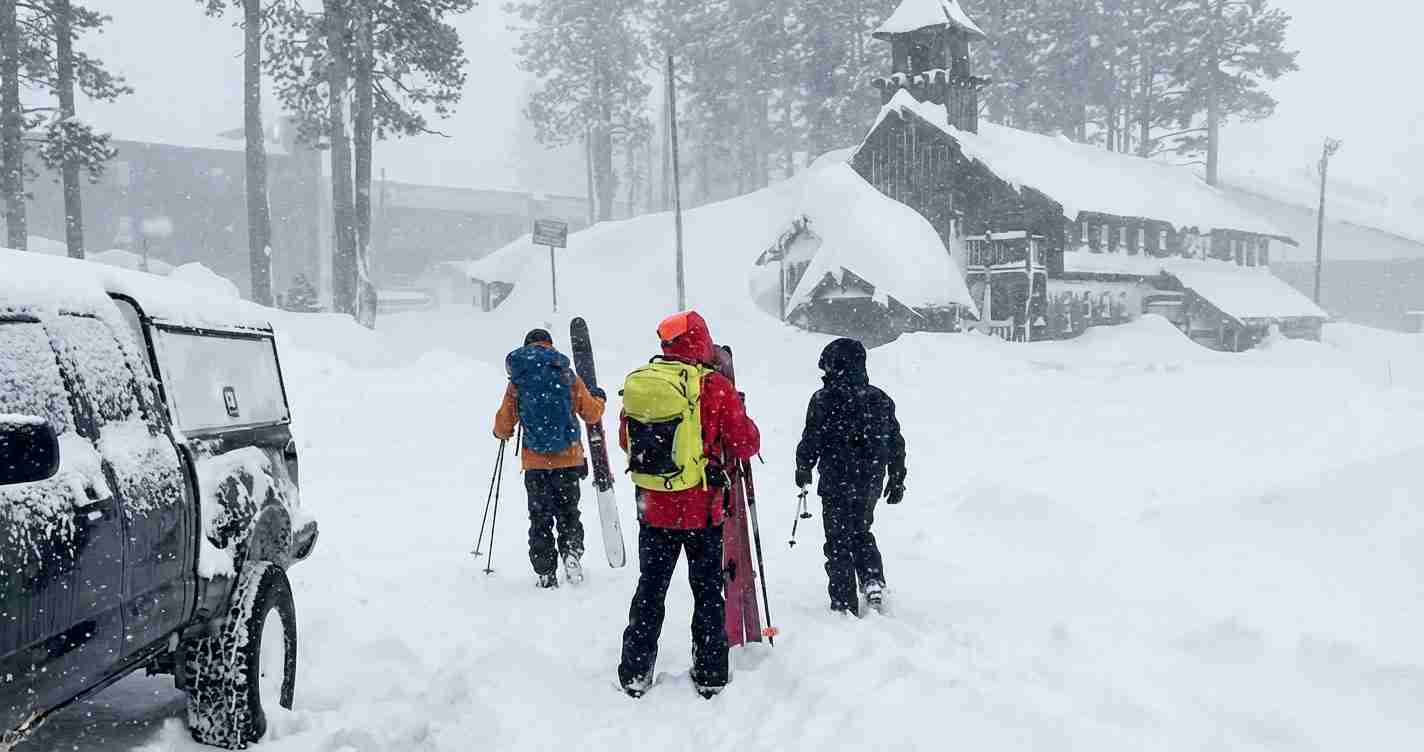
Deadly Lake Tahoe avalanche kills eight, leaves one missing; investigators probe guide decisions on Castle Peak backcountry skiing trip
On Feb. 17, 2026, a massive avalanche near Frog Lake and Castle Peak north of Lake Tahoe killed eight backcountry skiers and left one missing, striking a guided party amid a severe storm and prompting an overnight multi‑agency rescue effort.
- Eight dead, one missing: a Blackbird Mountain Guides party was struck while returning to the trailhead.
- Storm and warnings: the Sierra Avalanche Center issued a watch then upgraded to a warning for large D3 avalanches that day.
- Rescue turned recovery: crews reached survivors about six hours later in whiteout conditions; investigators now review guides’ decisions.
What happened
Trip timeline. A three‑day backcountry ski trip that began Feb. 15 ended in disaster on Feb. 17 when a football field‑sized slab of heavy new snow released from Castle Peak as the group skied toward the trailhead. The slab moved rapidly and overtook the party almost instantly.
Who was involved. The group included 11 clients and four guides from Blackbird Mountain Guides. Capt. Russell “Rusty” Greene of the Nevada County sheriff’s office said someone shouted “Avalanche!” but the moving snow overtook people very quickly.
Rescuers later found six survivors huddled in a tarpaulin shelter about two miles from the trailhead around 5:30 p.m. Survivors used emergency beacons and phone signals to help rescuers locate them; two were critically injured and taken to hospitals. (See the Tahoe Nordic Search and Rescue video.)
Search and rescue response
Multi‑agency effort. Local and regional agencies mobilized in dangerous conditions. Snowcats from Tahoe Nordic Search and Rescue pushed within two miles of the scene while sheriff’s deputies, volunteer teams and other agencies worked to find and aid victims.
Weather and road closures slowed access. Crews faced nearly whiteout conditions with heavy snowfall—3–6 feet in the area and rates up to 3–4 inches per hour in places—making the operation hazardous and slow. (See additional search-and-rescue footage.)
Investigators and questions about the decision to go out
Nevada County Sheriff Shannan Moon said investigators will examine whether the decision to proceed with the trip on Sunday matched the forecast and the Sierra Avalanche Center’s watch and later warning. It is not yet clear whether guides received the warning upgrade before leaving or whether they were aware of the increased risk.
“The mission pivoted from rescue to recovery once bodies were found and one person remained missing,” the sheriff’s office said.
Blackbird Mountain Guides issued a statement saying guides had consulted with base teams about conditions and urged the public to avoid speculation while officials investigate. The company has not released further operational details as investigators review communications and decision‑making.
Victims, survivors and community impact
Authorities and family members identified six of the deceased as clients: Carrie Atkin, Liz Clabaugh, Danielle Keatley, Kate Morse, Caroline Sekar and Kate Vitt. Victims lived in the Bay Area, Idaho, and the Truckee‑Tahoe region; families described them as skilled skiers, mothers and community members who carried avalanche safety gear.
Sugar Bowl Academy confirmed some victims were part of its community. Executive Director Stephen McMahon described deep grief and said support efforts were under way for students and staff.
Families have asked for privacy as they grieve; community leaders and rescue teams are coordinating counseling and support.
Weather and avalanche conditions
The storm was forecast days in advance, with models predicting heavy snowfall—more than 66 inches in some forecasts—and unstable layers in the snowpack. On the morning of Feb. 17, the Sierra Avalanche Center issued an avalanche watch at 6:49 a.m. and later upgraded it to a warning that D3‑sized avalanches were likely in the next 24–48 hours; that warning remained in effect through Feb. 19.
Investigators and rescuers said the heavy load of new snow and wind‑packed slabs likely produced the conditions for the large slab release that struck Castle Peak. Rescuers described the avalanche as fast and powerful, giving those caught very little time to react.
Accountability, regulation and guiding practices
The accident has prompted immediate scrutiny of backcountry guiding practices. Officials will review whether guides had current terrain and weather information, whether trip plans matched forecasted risk, and whether commercial guiding regulations and oversight are adequate.
- Communication: Did guides receive or check the avalanche warning in time?
- Judgement and risk management: Were route choices and timing appropriate for a D3-level forecast?
- Training and equipment: Were guides and clients using recommended avalanche gear—transceivers, probes, shovels and emergency shelters?
- Oversight and permits: Are standards for commercial backcountry operations clear and enforced?
Implications for Redding, California
Economic: Local guiding businesses that serve Redding residents may face higher insurance and compliance costs if investigations produce tighter oversight or new permit rules. Retailers could see shifts in sales as backcountry risk perceptions change.
Political and social: Expect calls for balanced accountability—holding parties responsible for mistakes while preserving local control and small‑business access. Community grief will likely prompt churches, schools and relief groups to organize support for families and rescue volunteers.
Cultural: The incident will renew debate over acceptable risk in backcountry recreation and how best to strengthen individual preparedness and guide-company standards without undue regulatory overreach.
Practical applications for residents
- Review and practice with avalanche gear: transceivers, probes, shovels, airbags and emergency shelters.
- Check forecasts and warnings before trips—sign up for alerts from the Sierra Avalanche Center.
- Consider formal avalanche training and vet guides carefully: ask how they monitor forecasts and make route decisions.
- Support local search‑and‑rescue teams through volunteering or donations to sustain response capacity.
Sources and reporting
This article draws on reporting by Times Media Service and other outlets, official statements from law enforcement and community leaders, and video and field reports from search‑and‑rescue teams. Key public sources include:
- Wikipedia summary of the incident
- Los Angeles Times coverage
- Tahoe Nordic Search and Rescue video
- Additional search-and-rescue footage
Authorities will release additional findings as investigations proceed. Community leaders and rescue organizations continue to coordinate support for families, volunteers and impacted students.