
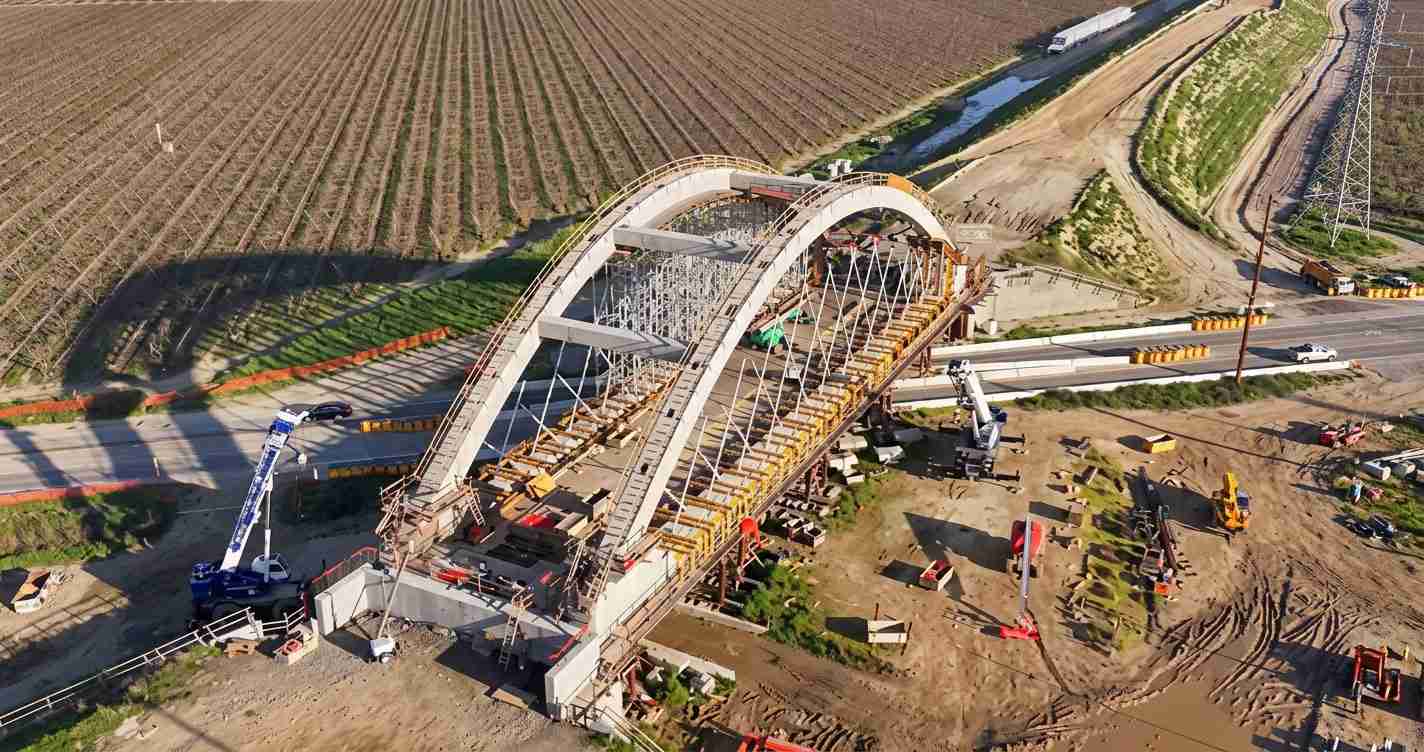
Gavin Newsom’s high-speed rail humiliation deepens as aide admits blunder, $126B line dubbed ‘Stonehenge’
California’s high‑speed rail project, approved in 2008 to link San Francisco and Los Angeles for $33 billion, has ballooned into an estimated $126 billion boondoggle plagued by delays, overruns, federal cuts and only limited Central Valley progress.
- Cost surge: The full San Francisco–Los Angeles system is now estimated at about $126 billion, far above the $33 billion voters were told in 2008.
- Scope reduced: Construction has been scaled back to a Central Valley segment (Merced–Bakersfield); no continuous SF–LA track exists.
- Federal pullback: About $4 billion in federal grants were rescinded in 2025 amid doubts the project will be operational by 2033.
Project timeline and scale-down
Voter promise: In 2008, Proposition 1A sold Californians a sub‑three‑hour SF–LA trip for about $33 billion, a commitment that drove support for bonds and statewide backing. By 2019, Gov. Gavin Newsom acknowledged the full SF–LA corridor “simply isn’t a path” under current plans, refocusing priority on a 171‑mile Central Valley stretch from Merced to Bakersfield.
Nearly two decades later there is still no continuous track between California’s largest cities. The most visible work consists of concrete piers, viaduct columns and other structures around Fresno locals have mockingly called “Stonehenge.” That nickname has become shorthand for a half‑built monument to what critics call failed planning.
Cost escalation and funding shortfall
Officials now estimate completing the full SF–LA corridor will cost roughly $126 billion — more than three times the original estimate — leaving an approximate $90 billion funding gap even after state and prior federal spending. Critics say at least $15–$20 billion has been consumed without delivering a single operating train along the intended route.
One conservative critic noted the $126 billion figure exceeds the total amount Amtrak has received from the federal government since 1971, a comparison used to underscore the magnitude of the projected spending.
Federal funding cuts and disputes
In 2025, federal transportation officials rescinded roughly $4–4.2 billion in grant funding, citing insufficient realistic progress toward operations by 2033. Secretary of Transportation Sean P. Duffy called the project “a humiliating emblem of government waste.” The decision followed scrutiny from lawmakers and inspector reviews noting billions in subsidies but no passenger service on the intended corridor.
California initially sued to block the pullback but later dropped the lawsuit while pledging to pursue other funding options. Conservative critics and some federal officials have sought repayment of funds and tighter oversight of any future disbursements.
“Mistakes have been made,” acknowledged California Transportation Secretary Toks Omishakin, adding that criticism was “very fair” even as he expressed confidence the necessary funds can ultimately be found to finish the project.
State admissions, governance and transparency concerns
State officials admit they underestimated the scale and cost. The Newsom administration has faced related controversies, including legislation proposed in 2026 to expand exemptions for public records requests tied to the project — criticized as creating a possible “veil of secrecy.” The rail authority’s CEO has also been the subject of a state probe over an arrest and potential conflicts of interest.
Accountability questions: Critics demand audits and more transparency before any new funding is committed; proponents say the project still warrants completion and that funding paths remain possible.
Political and public reaction
Republican Rep. Vince Fong called the project “a complete bait and switch,” saying voters were sold a promise that was never delivered. For many conservatives and taxpayers, the rail saga exemplifies alleged government waste and mismanagement. The federal pullback and critical congressional and inspector general reports have hardened opposition to more spending without strict accountability.
What remains unanswered is whether state leaders can close the roughly $90 billion gap without diverting money from other priorities or imposing new taxes. Officials insist they will find the money, while skeptics call for greater realism and transparency before additional funds are committed.
Implications for Redding, California
Economic impact
State dollars for large projects influence local budgets. If Sacramento must reallocate funds or seek new revenue for the rail gap, Redding could see reduced state support for roads, levees, or wildfire resilience. Local contractors and suppliers may miss work if spending shifts elsewhere or the project slows.
Political consequences
For Redding’s conservative voters, the rail saga reinforces calls for accountability. Local leaders and voters may press for audits and demand that Sacramento prioritize regional needs over speculative mega‑projects, potentially influencing upcoming state and local elections.
Social effects
Although Redding lies well north of the Central Valley corridor, statewide budget stress could delay services important locally — from flood protection to public safety and road repairs. Residents dependent on state programs could see slower responses during budget strain.
Cultural relevance
The “Stonehenge” image from Fresno resonates statewide as a symbol of half‑built projects. For many in Redding, the image highlights a cultural divide: Sacramento priorities may not match the needs of rural and Northern California communities.
Practical applications
Local leaders should monitor state budget language for cost‑shifting to counties or regional agencies, lobby for safeguards to protect north‑state funding, and press for stricter oversight of future statewide infrastructure spending. Residents can expect calls for audits or ballot measures to increase transparency.
Sources
- Video coverage and reporting on the project
- California Globe analysis
- U.S. Department of Transportation statement/op-ed
- U.S. Commerce Committee press release on federal subsidies
- CalMatters reporting on records exemptions
- Capital Public Radio reporting on transparency concerns
- Reporting on CEO probe and arrest
Reporting compiled for Times Media Service.



