
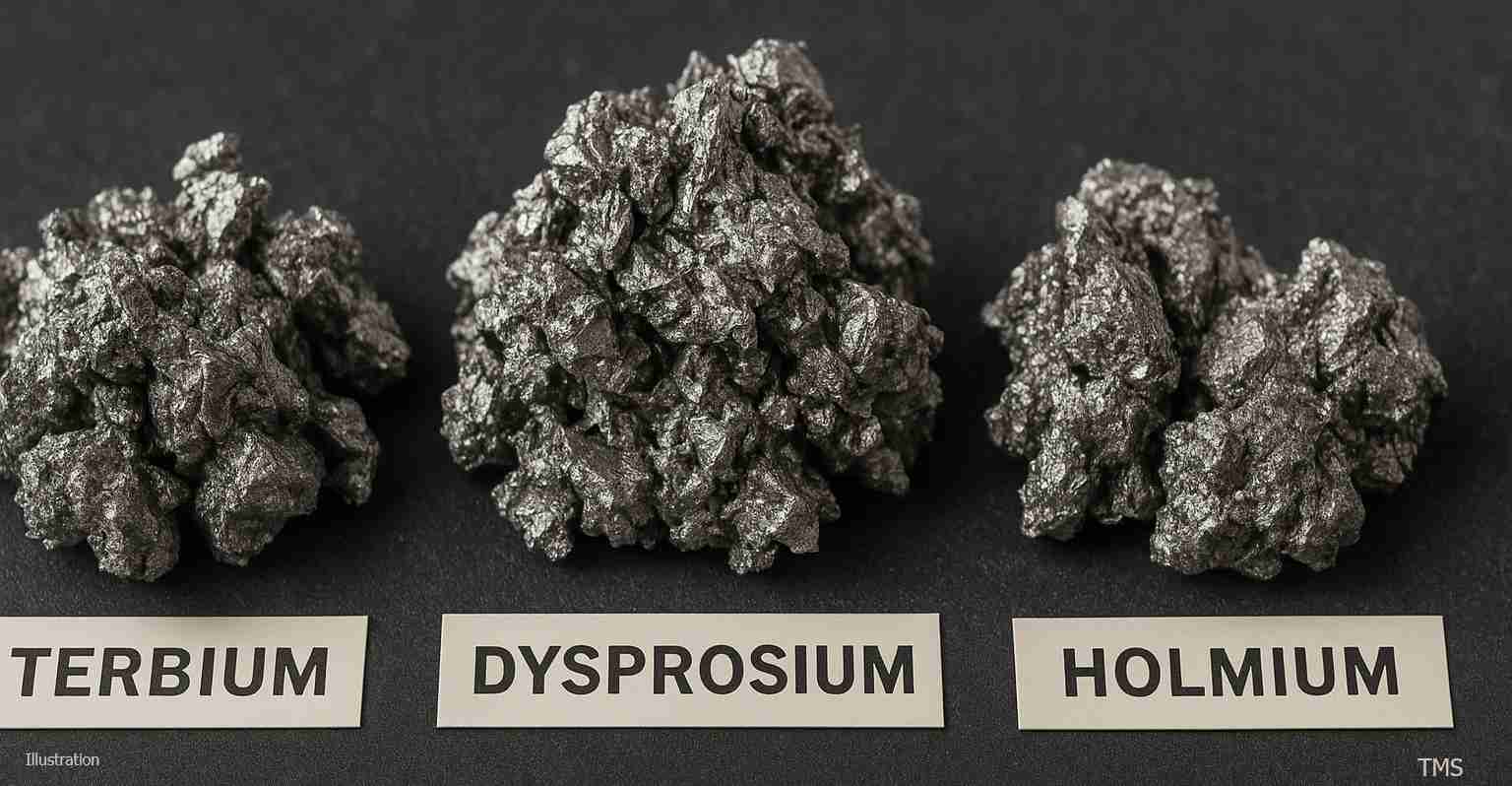
Trump’s “Art of the Rare Earth Deal” Presses Back Against China’s Grip on Critical Minerals
President Donald Trump launched an aggressive international and trade strategy to break China’s dominance over rare earth minerals — essential for technology and defense — seeking diversified supply chains amid concerns over Beijing’s control of mining, refining, and magnet production.
- China holds dominant share of mining, refining and magnet production, forcing a strategic U.S. response.
- Multi-track strategy: diplomatic pacts with allies plus trade pressure aimed to restore U.S. access.
- Short-term wins, long-term needs: exports resumed but domestic refining and magnet capacity require years of investment.
Key information
China controls an estimated 60–70% of global rare earth mining, roughly 90% of refining, and about 92% of magnet production, giving it deep leverage over technology and defense supply chains (sources: YouTube video on global rare earth control; YouTube video on supply chains; ABC News explainer).
The president pursued a multi‑track plan — what supporters call the Trump rare earth strategy — combining diplomatic pacts, trade threats and negotiation to restore U.S. access to these materials (ABC3340 report).
Memorandums of understanding were signed with Japan, Cambodia, Malaysia, Vietnam, Thailand and Australia to streamline and diversify U.S. supplies of rare earths (ABC3340).
Facing export curbs from Beijing, the administration threatened tough tariffs — including a 100% tariff option — to raise bargaining leverage, though officials later signaled a partial retreat when talks produced hope of restored exports (ABC3340; ABC News).
A deal was later announced to resume exports of rare earth minerals and magnets, easing short-term disruptions to supply chains (CSIS analysis).
How the Trump rare earth strategy worked
The administration’s approach mixed hardball and partnership. Officials pressed allies in Asia and Oceania to expand mining and processing cooperation. Memorandums with Japan, Australia and several Southeast Asian countries were meant to create alternate supply lines and reduce reliance on China’s refining and magnet-making capacity (ABC3340).
Trade pressure was used as leverage. Threatening tariffs on a broad swath of Chinese goods raised the political and economic cost to Beijing of keeping tight export controls on rare earths. U.S. officials framed the measures as protecting national security and the technology supply chain, arguing that access to U.S. critical minerals is essential for defense systems, semiconductors and electric vehicles (ABC News).
When China tightened export rules, U.S. negotiators pushed back publicly and privately. The pressure helped produce a pause in export restrictions and later a resumption of shipments after what U.S. analysts called an intense diplomatic push (CSIS analysis).
Why China’s position matters
China’s dominance is not only about digging ore out of the ground. Beijing built a full, vertically integrated rare earth industry that includes mining, chemical processing and the manufacture of finished components like permanent magnets. That vertical control — mining to magnet production — gives China the kind of leverage that can ripple across many U.S. industries (YouTube video on global rare earth control; YouTube video on supply chains).
U.S. analysts warn that even with stockpiles, the country remains vulnerable. Stockpiles can help short term, but without secure, diverse supply and processing capability, reserves could run down quickly if new supplies are cut off (YouTube; ABC News).
“Some U.S. officials described the export restrictions as ‘economic coercion,’ saying China could use rare earth controls to exert outsized influence over the technology supply chain,” ABC News reported (ABC News).
Short-term gains, long-term work
The administration’s maneuvers produced fast results: disrupted flows were restored and allies signaled greater willingness to cooperate. Analysts at the Center for Strategic and International Studies (CSIS) documented how negotiations led to resumed exports and improved access for U.S. firms.
But building domestic capacity to mine, refine and make magnets is a long-term project. Companies and governments face technical hurdles, environmental permitting, capital costs and workforce needs. Experts warn it may take years — even a decade — to construct the kind of alternative supply chain that reduces China’s current leverage (ABC3340; YouTube).
Trade policy plus partnerships
The Trump rare earth strategy combined trade policy with diplomatic outreach. Tariff threats were a bargaining chip; pacts with Japan, Australia and Southeast Asian partners were the long game. Supporters argue the approach signaled seriousness and forced Beijing to back down from the most extreme export restrictions. Critics say the strategy risks escalation and that threats alone will not build the U.S. critical minerals industry (ABC3340; CSIS).
What the numbers say
- Mining: China estimated 60–70% share of global rare earth mining (YouTube; YouTube).
- Refining: Roughly 90% of global rare earth refining capacity is in China (YouTube).
- Magnets: Around 92% of permanent magnet production is tied to China (YouTube).
These gaps explain why U.S. officials prioritized quick international arrangements while also pressing to rebuild domestic capabilities. The aim: blunt China’s rare earth monopoly power while buying time to invest in U.S.-based refining and manufacturing (ABC News).
Implications for Redding, California
Economic impact
Redding stands to gain if federal and private investment flows into U.S. mining and processing. While Shasta County has limited rare earth deposits, nearby Western states and off-shore partnerships could spur regional supply chains. New refining plants, processing facilities or logistics hubs could create jobs in construction, operations and transportation. Local suppliers and service firms could benefit from contracts tied to new projects.
Political consequences
Local leaders in Redding and across Northern California will face pressure to support projects that boost national security and jobs while managing environmental concerns. Conservative voters who value strong national defense and economic independence are likely to back moves that reduce reliance on China. City and county officials may be drawn into debates about permitting, public investment and zoning for industrial projects.
Social effects
New industrial activity could bring higher-wage jobs to the region, but it could also change local demographics and demand for services. Workers moving in for jobs will need housing, schools and health care. Local communities may welcome the economic boost but also push for safeguards against pollution and to protect recreational lands.
Cultural relevance
Redding’s values — a mix of independence, support for veterans and a focus on local business growth — align with the Trump rare earth strategy’s emphasis on U.S. resilience and national security. Messaging that ties new projects to defense readiness and domestic job creation will resonate with the city’s conservative base.
Practical applications for residents
- Jobs: Residents could see new hiring in construction, trucking, and plant operations if facilities are sited nearby.
- Local businesses: Suppliers and service providers may secure new contracts for equipment, housing, food services and transportation.
- Taxes and services: Increased commercial activity could expand the local tax base, funding schools and infrastructure — but it may also require upfront public investment.
- Environmental oversight: Residents should engage with planning processes to ensure that development follows strict environmental and safety standards.
Local officials should prepare by updating land-use plans, training workforce programs and building community engagement channels so Redding can attract jobs while protecting local values and quality of life.



