
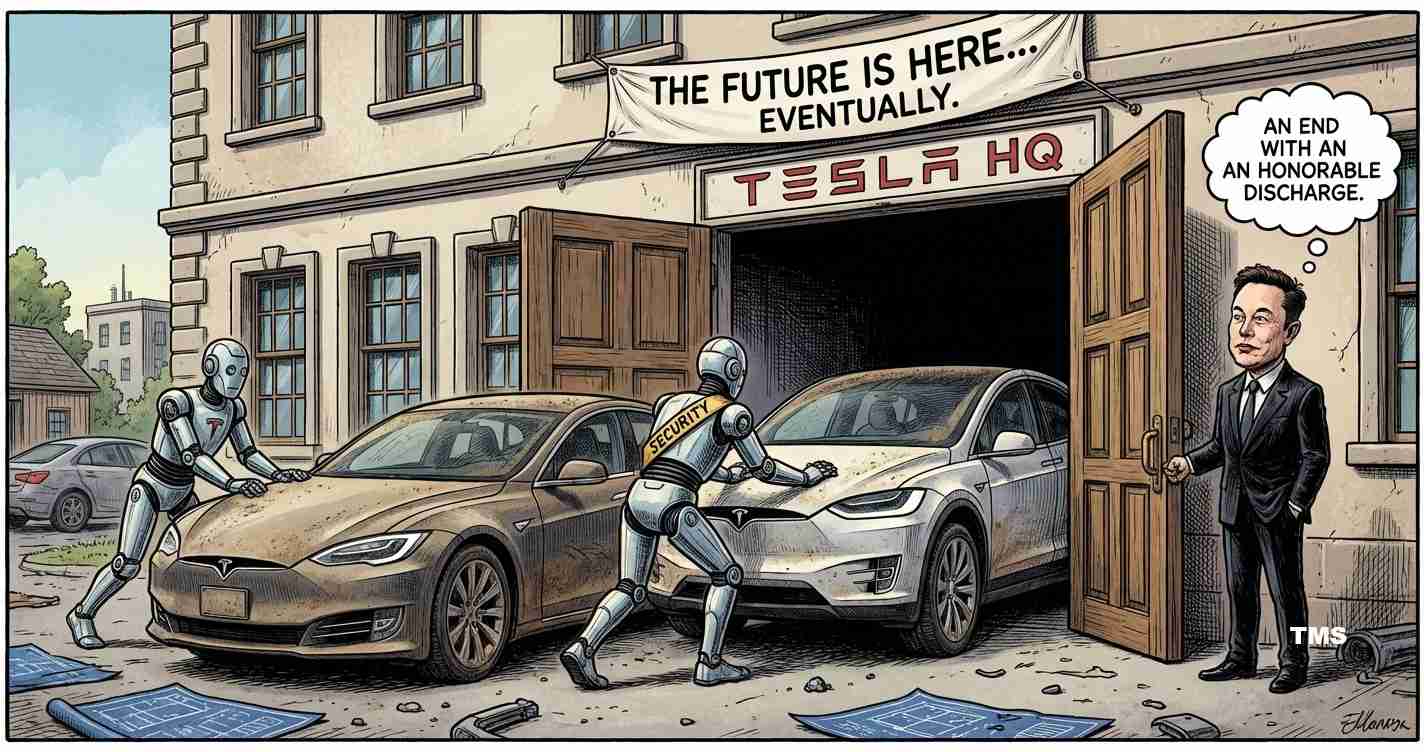
Tesla to End Model S and Model X Production, Frees Fremont Space for Optimus Robot Build
Tesla will discontinue Model S and Model X production by the end of Q2 2026, Elon Musk said, freeing Fremont factory space to pivot toward Optimus robot manufacturing as the company doubles down on autonomy amid falling luxury EV sales.
- Production end: Elon Musk confirmed Model S and Model X production will wind down in Q1 and end by the close of Q2 2026 (Fox Business).
- Factory pivot: Fremont capacity will be repurposed to build Optimus humanoid robots as Tesla reallocates lines and supply chains (Electrek).
- Financial context: Q4 2025 revenue slipped 3% to $24.9 billion; Tesla plans investments across vehicles, robots, energy storage and batteries in 2026 (Fox Business).
- Customer assurance: Tesla says it will continue to service Model S and X vehicles and maintain parts availability for existing owners (Drive).
What Musk said on the call
“It’s time to basically bring the Model S and X programs to an end with an honorable discharge,” Musk said, urging buyers that “now would be the time to order it.”
Musk framed the move as a strategic choice to prioritize autonomy and robotics over low-volume luxury flagships. He described the wind-down with respect and encouraged buyers interested in a Model S or X to act quickly.
Why Tesla is shifting
The Model S (launched 2012) and Model X (launched 2015) have become a small slice of Tesla’s lineup dominated by the Model 3 and Model Y. Sales for the S and X have lagged, prices were reduced to stimulate demand, and executives say the business priority is now autonomous systems and robotic hardware that could scale far beyond low-volume flagship cars (Electrek; Edmunds).
Factory repurposing and Optimus Robot Production
Fremont’s S/X line has capacity near 100,000 vehicles per year but has been operating well below that. Tesla plans to convert that space for Optimus robot production and related supply chains. Musk suggested Optimus could target up to 1 million units per year long term but noted it will require a “completely new supply chain” (Fox Business; Electrek).
Timeline and customer impact
Timing: Musk said production will begin to wind down in Q1 2026 and stop fully by the end of Q2 2026. Existing inventory and dealer stock could remain available after that date. Tesla has committed to continuing service for Model S and Model X owners in the years ahead (Drive; CarBuzz).
Historical context and sales figures
The Model S and X helped establish Tesla’s luxury identity. Estimates place total S and X deliveries at roughly 730,000 units globally over time, with only a small number added through late 2025. Recently, combined deliveries of S, X, Cybertruck and Semi were under 3% of Tesla’s total, illustrating the company’s shift toward mass-market models (Drive; Electrek).
Financial backdrop
Tesla reported Q4 2025 revenue of $24.9 billion, down 3% year-over-year. Management framed discontinuing low-volume flagships as a reallocation of capital toward areas they believe will drive growth, including production lines for vehicles, robots, energy storage and batteries in 2026 (Fox Business).
Reactions and industry takeaways
Writers and forums noted the decision is both practical—given low S/X volumes—and symbolic, since those models were Tesla’s early luxury statements. Observers warn that ramping Optimus to mass production poses major technical and logistical challenges and will require new suppliers and factory processes (CarBuzz; Tesla Motors Club).
Support and service for owners
Assurance: Tesla says it will continue servicing Model S and Model X vehicles indefinitely to support current owners and protect resale values, acknowledging the need to maintain parts and support for cars already on the road (Drive).
Implications for Redding, California
Economic impact
Although Fremont is nearly 100 miles south of Redding, local suppliers and logistics firms that serve Bay Area manufacturers could see ripple effects. Tier 2 and Tier 3 contractors in the North State may face fewer orders or different requirements as supply chains shift (Fox Business).
Opportunity for workforce shifts
If Optimus production creates new supplier demand, Northern California firms that adapt could benefit. Community colleges and training programs may be key to preparing workers for robotics and battery manufacturing roles (Electrek).
Political consequences
Local leaders may scrutinize potential state incentives or regulatory changes tied to advanced manufacturing. Some constituents may resist public spending to support private pivots; others may press for workforce development partnerships rather than direct subsidies (Fox Business).
Social effects
Redding residents who own Model S or X vehicles are assured ongoing service and parts support. Local used-car markets may experience price shifts for high-end EVs, and businesses that supply logistics or parts could see changing demand patterns (Drive).
Practical applications for residents
- Jobs training: Watch for openings in robotics, battery and automated manufacturing; community colleges can be a pathway.
- Small businesses: Logistics and parts suppliers that meet automation and battery standards may find niche opportunities.
- Vehicle owners: Keep maintenance records and service relationships; Tesla’s service commitment aims to preserve support.



