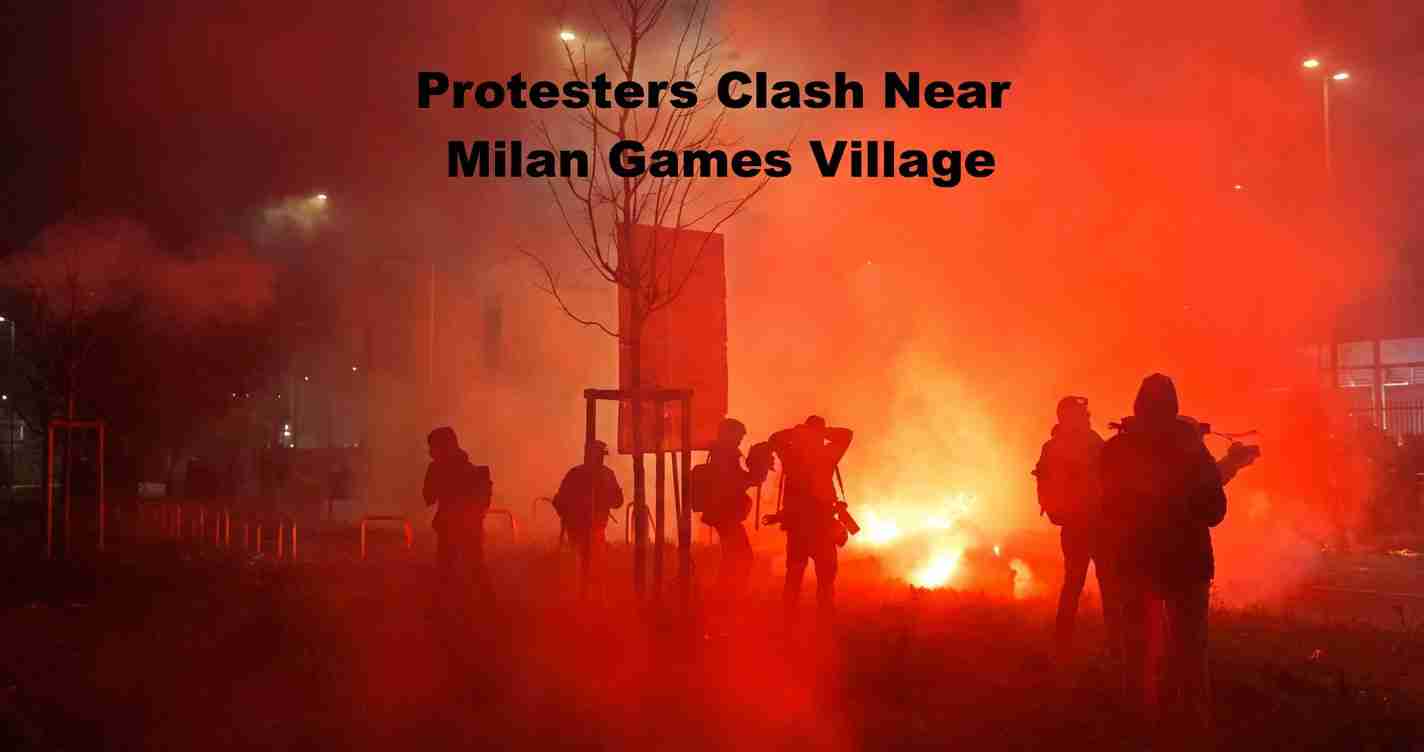
Milan Olympics Protest Turns Violent Near Santagiulia Ice Hockey Arena as Police Use Tear Gas and Water Cannons
Thousands marched in Milan’s Corvetto on Feb. 7, 2026, protesting the Milan-Cortina Winter Olympics over housing, environmental and spending concerns; clashes erupted near the Santagiulia Ice Hockey Arena as police used tear gas and water cannons.
Key takeaways
- Large demonstration: A peaceful march in Corvetto turned confrontational near the Santagiulia Arena; Euronews video and reporting documented the events.
- Escalation by a breakaway group: Authorities say roughly 100 masked protesters fired fireworks, flares and smoke bombs from a bridge; footage is available on YouTube.
- Police response: Officers used water cannons and tear gas; at least five arrests were reported and a travel advisory warned of disruptions.
- Wider debate: Protesters and organizers such as the Unsustainable Olympics Committee decried rising rents, diverted public funds and environmental impacts; see a detailed Euronews report.
What happened: march, breakaway group and escalation
Thousands gathered in Corvetto on the first full day of the Milan-Cortina Games to protest what organizers called an “unsustainable” Olympics, highlighting environmental harms, use of public funds and rising housing costs tied to post-Expo development.
The march remained largely peaceful until a smaller group—authorities estimate about 100 masked individuals—split from the main demonstration and moved toward a bridge overlooking a construction site near the Olympic Village. From that vantage point they set off smoke bombs, firecrackers and flares and hurled objects at police officers, as shown in on-the-ground footage (Euronews video; YouTube footage).
Police response: crowd control measures and arrests
Video and reporting show officers in riot gear moving to contain the unrest. Police deployed water cannons and fired tear gas to disperse the masked group and to prevent any spillover toward Olympic venues and the athletes’ village. Local authorities detained at least five people, according to contemporaneous footage and advisories (Euronews video).
“Officers concentrated on preventing protesters from approaching the village or interrupting competition schedules,” footage and reporting indicate.
Who organized the protests and what they demanded
Groups including the Unsustainable Olympics Committee helped organize the demonstrations. Protesters listed several grievances:
- Alleged prioritization of expensive, short-term Olympic projects over long-term community needs such as parks, schools and local sports facilities.
- Claims that the Games and related development have contributed to rising rents and displacement, worsening Milan’s affordability crisis.
- Concerns about public spending on venues with limited post-Games use and environmental impacts from construction and operations.
- Protests also touched on the reported presence of U.S. Immigration and Customs Enforcement (ICE) agents in Italy, adding an international political element (Euronews report).
Santagiulia Ice Hockey Arena: venue scrutiny amid delays
The clashes occurred near the newly built Santagiulia Ice Hockey Arena, a venue that has faced scrutiny over construction delays and controversy about rink size. Observers say the proximity of the unrest to this site amplified local anger about Olympic costs and planning.
Security and the athlete village
The escalation unfolded roughly half a mile from the Olympic Village housing about 1,500 athletes. Authorities and organizers moved quickly to secure athletes and venues; footage suggests officers prioritized preventing protesters from approaching the village. Officials reported no widespread damage or mass injuries and regained control of the area relatively quickly (Euronews video).
Wider context: why the protests matter
The Milan demonstrations reflect broader debates about hosting major events in large cities. Activists argue that short-term global spectacles can divert funds from long-term local needs, burden cities with costly upkeep and accelerate gentrification. Proponents counter that events boost tourism and spur infrastructure upgrades. The Corvetto march demonstrates those tensions remain active and sometimes volatile (Euronews reporting).
Implications for Redding, California
Economic impact
- Cost and tax lessons: Redding leaders should treat Milan as a cautionary example: require realistic cost estimates, transparent reuse plans for facilities and safeguards to prevent funds being diverted from core services.
- Housing policy parallels: Milan protesters blame the Games for rising housing costs. Redding should prioritize preserving affordable housing and protecting long-term residents from displacement when planning major events or developments.
Political consequences
- Law-and-order messaging: The unrest in Milan may reinforce calls for strong public-safety responses among conservative voters who prioritize order and protection of property.
- Scrutiny of public spending: Officials in Redding can expect sharper questions about the public benefits of major investments and may face demands for tighter oversight.
Social effects & cultural relevance
- Community services vs. spectacle: Residents should evaluate whether proposed projects prioritize daily community needs like parks, libraries and youth sports.
- Public values: Officials must make a clear case for local benefits and protections if Redding pursues large events, avoiding the image-driven decisions criticized in Milan.
Practical applications for residents
- Emergency preparedness: Monitor alerts during large events; Milan prompted travel advisories and route bypasses.
- Civic oversight: Demand binding legacy plans for publicly funded venues that guarantee community access and maintenance funding.
- Public safety support: Residents who value safe streets may favor robust law-enforcement planning to manage demonstrations without endangering athletes or the public.
Reporting and sources
This account draws on on-the-ground video and reporting of the Milan demonstrations and clashes, including Euronews video, a detailed Euronews article, and on-the-ground footage available on YouTube. Security advisories issued the same day warned of heightened security and advised avoiding protests.