
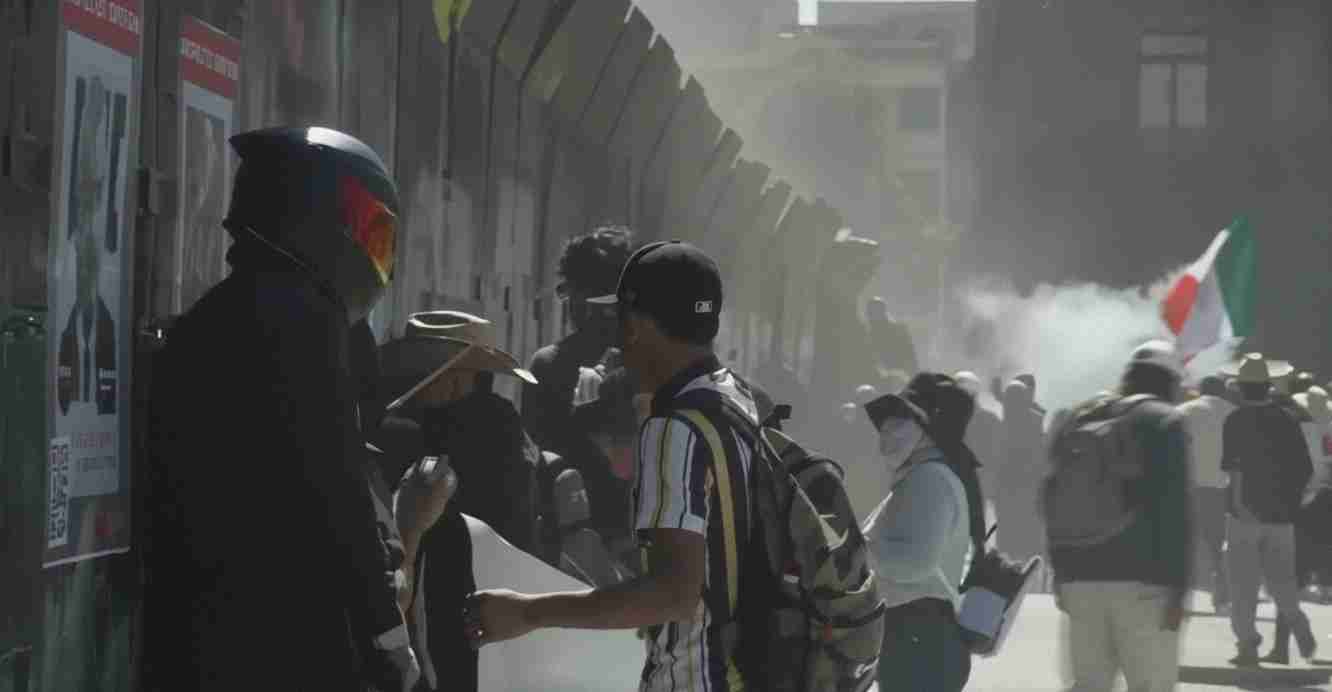
Thousands clash with police in Mexico City cartel protest; National Palace breach shocks nation after Mayor Carlos Manzo assassination
Thousands of protesters clashed with police and breached security barriers at Mexico City’s National Palace on November 15, 2025, after the assassination of Uruapan Mayor Carlos Manzo, prompting tear gas use and nationwide demonstrations against cartel violence.
- What: Violent nationwide protests and clashes at the National Palace, driven by outrage over cartel violence and government security policy — reported by Fox News.
- When: November 15, 2025 — coverage and scene accounts compiled by The Indian Express.
- Why: Sparked by the assassination of Uruapan Mayor Carlos Manzo and widespread anger over perceived failures in federal security policy — reported by Times Now News.
- Who & Response: Largely Gen Z-led demonstrators confronting federal police; law enforcement used tear gas and reinforced barriers as documented by AOL and other outlets.
What happened at the National Palace
On Saturday, large groups of mostly young demonstrators marched toward the National Palace, the seat of Mexico’s federal executive branch. Many tried to force their way through the outer security cordon surrounding the building.
Video and eyewitness footage show protesters pushing metal barriers and confronting police lines before officers deployed tear gas to break up the crowd. Authorities reported officers were attacked and objects were thrown as clashes intensified — scene reporting is available from Fox News and Times Now News.
“Protesters who reached the palace grounds aimed to send a direct message to the federal government about perceived failures in public security.”
Who led the demonstrations
Organizers were largely from Gen Z activist networks that used social media to coordinate rapid mobilization nationwide. Visible symbols — straw hats, anime or manga flags (notably the “One Piece” flag) — signaled a generational shift in protest aesthetics and tactics. Observers and reportage on youth-led mobilization include The Straits Times and Times of India.
Trigger: Mayor Carlos Manzo assassination
The immediate catalyst for the demonstrations was the killing of Uruapan Mayor Carlos Manzo, a vocal critic of organized crime and of President Claudia Sheinbaum’s security strategy. Manzo’s assassination raised alarms about the reach of cartel violence into political life and intensified calls for tougher action against criminal groups. Coverage referencing the assassination and its political reverberations appears in reports from Times Now News and The Indian Express.
Demands and rhetoric on the streets
Protesters chanted for justice, an end to corruption and cartel violence, and accountability for the deaths of public figures and ordinary citizens. Banners referenced high-profile killings and accused the federal government of failing to halt escalating violence. Many called for an overhaul of national security strategy and new policies to better protect communities and officials — themes documented by AOL and other outlets.
Police tactics and public safety concerns
Authorities deployed tear gas to disperse crowds after protesters breached police lines. Video and eyewitness accounts show chaotic scenes with smoke and panicked crowds; police reinforced barriers and called for calm. The confrontations raised concerns about both public safety and the federal government’s capacity to maintain order without further escalation, as reported by Fox News and Times Now News.
National spread and political fallout
Protests and solidarity actions were reported across several Mexican cities, signaling nationwide frustration with cartel violence and the security response. The murder of an outspoken mayor intensified political debate over how best to confront organized crime. Critics say President Sheinbaum’s approach has not stopped killings and kidnappings; supporters argue that complex, long-term strategies are required — analysis appears in The Straits Times and other reporting.
Symbolism and a new protest style
The use of youth-culture symbols — straw hats, anime flags and pop-culture references — highlighted how younger activists are reshaping public protest. Organizers leveraged social media to spread messages quickly, making future mobilizations more rapid and less predictable for security planners, as detailed by Times of India.
Implications for Redding, California
Economic impact: Redding’s ties to cross-border trade, tourism and agriculture mean instability in Mexico can disrupt supply chains and raise costs for local businesses. Local manufacturers and farms that rely on Mexican imports or labor may face delays or higher insurance expenses.
Public safety and migration: Escalating violence in Mexico can increase migration pressures northward. Redding could see greater demand for services from migrants or asylum seekers; county planners should review shelter capacity and coordinate with state agencies on humanitarian needs.
Political consequences: The National Palace breach and the killing of a mayor may intensify local political debates in Redding over immigration, border security and federal cooperation on cartel enforcement.
Social and cultural effects: The imagery of young protesters confronting federal forces may resonate with residents and youth in Redding, prompting interest in civic education and law enforcement outreach.
Practical steps for leaders: Update contingency plans for migration surges, coordinate with state and federal partners on border and supply-chain issues, expand communications for local businesses, and strengthen community policing partnerships — guided by reporting and analysis from multiple outlets including Fox News and The Straits Times.
Sources and reporting
Reporting notes
This article synthesizes reporting from the outlets listed above, using scene accounts, video footage and analysis to present the events of November 15, 2025. All original facts, information, and URLs from those reports are preserved and linked for reference.



