
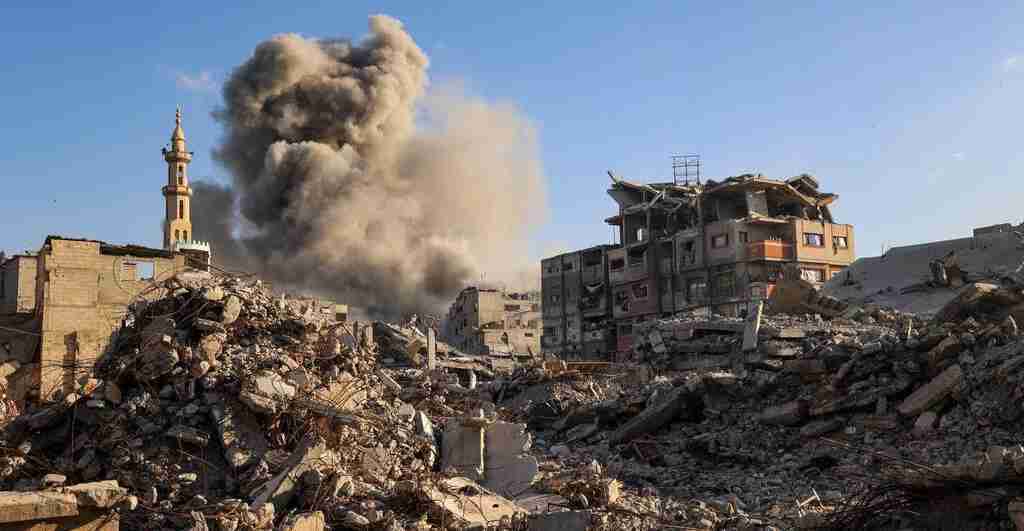
IDF fortifies ‘yellow line’ positions against Hamas tunnel threat as Gaza cease-fire strains
The Israel Defense Forces are fortifying positions along the Gaza border’s ‘yellow line’, deploying detection technologies and barriers amid intelligence of renewed Hamas tunnel activity — measures reflecting strains on a fragile cease-fire and readiness for escalation.
Key takeaways
- Heightened fortifications: The IDF has reinforced barriers, anti-tunnel fencing and subterranean obstacles near the Gaza border.
- Advanced detection: Ground-penetrating radar, seismic sensors and aerial surveillance are being used to detect digging and guide responses.
- Tunnel threat persists: Hamas continues tunnel construction for smuggling, storage and cross-border attacks, keeping tunnels central to Israeli security concerns.
- Cease-fire fragile: Repeated border probes and incidents are straining the truce and motivate defensive measures.
Fortifying the yellow line: what the IDF is doing
The IDF has concentrated engineering and surveillance efforts along the internal defensive perimeter known as the “yellow line.” Ground units and engineering corps have installed reinforced barriers and anti-tunnel fencing in frontline areas while excavating to create above- and below-ground obstacles intended to disrupt tunnel axes and deny subterranean approaches to Israeli communities.
These physical measures are paired with advanced detection tools. The IDF has deployed ground-penetrating radar and seismic sensors capable of picking up digging activity. Drones and manned aerial assets provide continuous surveillance, and systems that sense anomalous ground movement are integrated into the watch networks along the border to give early warning and direct rapid-response teams.
Hamas tunnel threat remains central
Tunnels have been a central component of Hamas strategy for years: moving fighters, storing weapons, smuggling supplies and staging cross-border attacks and abductions. Israeli military assessments indicate that despite prior IDF campaigns that destroyed many passages, Hamas has worked to rebuild or repurpose older routes. The IDF describes the tunnel threat as ongoing and evolving, noting clandestine subterranean engineering even during cease-fire periods.
“The combination of subterranean concealment and the ability to launch surprise attacks makes tunnels a top-priority threat that requires sustained countermeasures,” IDF and security analysts say.
Detection and disruption of tunnels remain a driving rationale for the current fortification push.
Cease-fire under strain: incidents and probes
The current truce has reduced large-scale fighting but remains fragile. Border areas have seen repeated low-level incidents — sniper fire, rocket or mortar launches, incendiary balloons and small incursions. Israeli commanders characterize some of these events as probes, possibly intended to test defenses or prepare for larger operations. Fortifying measures aim both to counter such probes and to signal readiness that could deter escalation.
International monitors warn that fortification without political progress risks prolonging the cycle of violence. Critics contend heavier defenses may further isolate Gaza’s civilians and be used in propaganda; Israeli officials argue these are necessary to save lives and prevent renewed mass-casualty attacks that previously exploited tunnels.
Political and strategic calculus
Israeli leaders and many security analysts frame the fortification drive as a pragmatic response to immediate danger rather than provocation. Officials say the IDF must protect border communities, maintain deterrence and preserve the ability to respond to attacks. The approach combines technological detection, engineering works and a rapid-reaction posture to reduce civilian risk and complicate Hamas operational planning.
Opponents warn the strategy risks hardening positions on both sides and argue that without political progress and humanitarian relief in Gaza, defensive measures alone will not prevent future conflict. Israeli authorities counter that effective defense is a prerequisite for political frameworks that depend on stability.
On-the-ground reporting and evidence
Israeli media have published video and photographic evidence of new barrier construction and sensor array installations along the Gaza envelope. Local residents on both sides report heightened military activity, more patrols and construction near the border. IDF briefings referenced tunnel discoveries in 2024 and 2025 and described ongoing engineering to harden the frontier.
Official sources and independent observers stress that much tunnel work is clandestine, so public confirmation is often slow and reactive. When tunnels are revealed or strikes against tunnel infrastructure occur, the IDF typically releases summaries and supporting evidence to justify operations and inform the public.
Sources and further reading
- Official Israel Defense Forces (IDF) site and press releases
- Reuters — international reporting on Gaza and border security
- BBC News — coverage of Gaza conflict dynamics
- The Times of Israel — reporting on tunnels and Israeli security
- Haaretz — analysis and commentary
- Al Jazeera — reporting from Gaza and regional perspectives
- United Nations — statements and monitoring reports
Implications for Redding, California
Economic impact
Defense and security firms may see increased demand for border defense and tunnel-detection technologies, potentially benefiting U.S. contractors and local investors in national security stocks. Renewed conflict can also spur energy price volatility, raising transportation, heating and grocery costs for Redding residents.
Political consequences
The situation may sharpen national and local debates in Redding and Shasta County about U.S. foreign policy and defense priorities. Local campaigns could reference the conflict in discussions about homeland security, veterans’ affairs and support for allies.
Social effects
Redding’s Jewish and pro-Israel communities may organize vigils, fundraisers and informational events. Veterans and first responders may increase involvement in advocacy or humanitarian efforts, coordinating local collections or support for relief organizations.
Cultural relevance
The story of border fortification resonates in communities that value preparedness and strong defense. Lessons about perimeter security and early-warning systems are likely to find sympathetic audiences and shape local media consumption and discourse.
Practical applications for residents
- Travel and safety: Follow State Department updates and airline advisories when planning travel to the region.
- Charitable action: Seek vetted humanitarian organizations and local nonprofits coordinating relief or support efforts.
- Community engagement: Attend local briefings, vigils or informational sessions organized by civic and faith leaders.
Parent Publication: Times Media Service



