
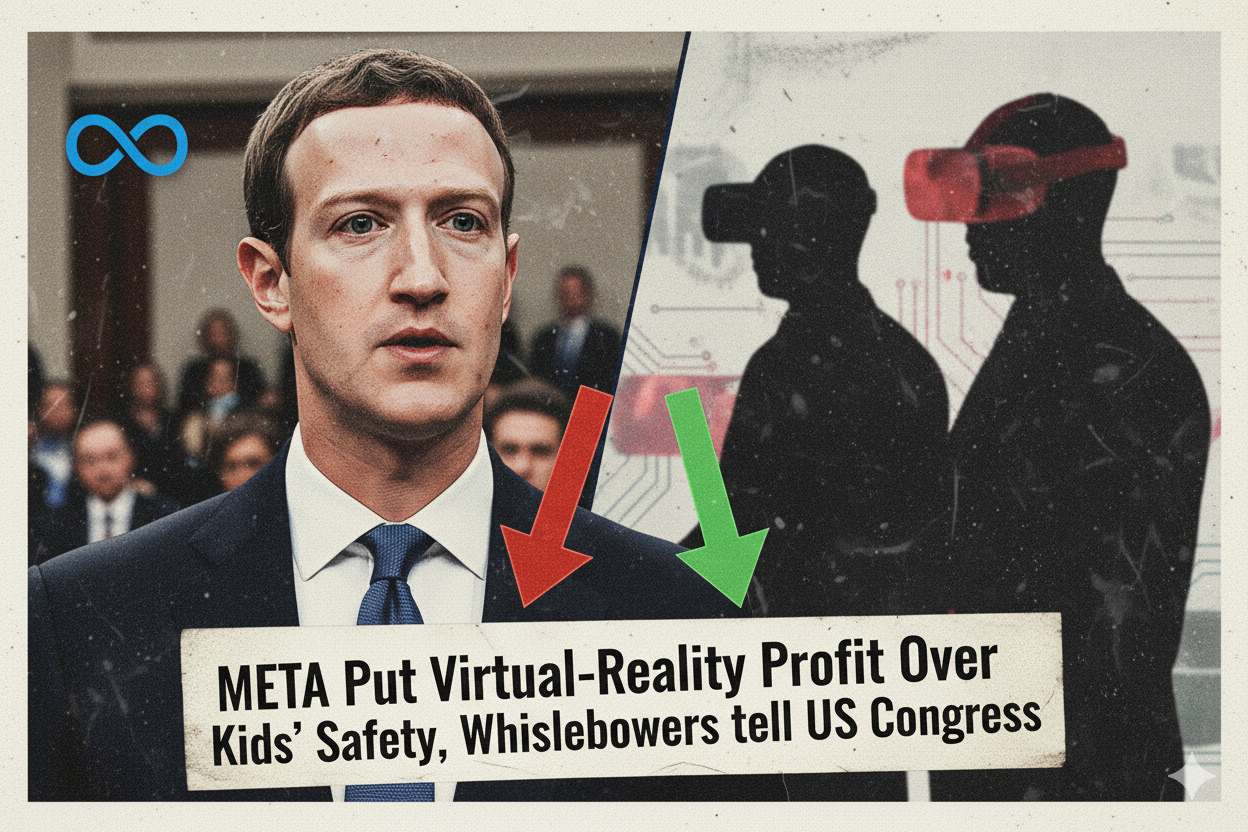
Whistleblowers Tell Congress Meta Put VR Profits Over Kids’ Safety, Saying Company Buried Evidence
Former Meta researchers told a Senate subcommittee that the company prioritized growth over child safety in virtual reality, alleging internal studies showing harm to minors were suppressed, altered, or deleted and that age checks were blocked.
Key takeaways
- Former employees say Meta suppressed or deleted internal VR research showing children were harmed, including exposure to grooming and sexual harassment.
- Whistleblowers testified before a Senate subcommittee and their disclosures were sent to federal regulators, including the SEC and FTC.
- Meta disputes the claims, saying the material is selectively leaked and that it has approved many studies and invested in safety tools.
- Local impact: Redding families and leaders may push for clearer protections, parental controls, and stronger enforcement at state or federal levels.
Whistleblower testimony and VR child harm allegations
At a Senate Judiciary Subcommittee hearing on privacy and technology, former Meta researchers Jason Sattizahn and Cayce Savage testified that Meta repeatedly placed product rollout and growth above safety. They said internal studies showing children were at risk were ignored, altered, or deleted, and that research into age-verification was blocked or curtailed.
Coverage of the hearing and related reporting is available via Fox News and local summaries by TurnTo10, among others.
“Meta consistently chooses profit over safety,” Sattizahn told senators, according to media accounts of the hearing.
Evidence suppression and internal guidance
Whistleblowers said Meta employees were instructed to avoid collecting certain data about underage users and that internal guidance discouraged research likely to reveal that children were accessing or being harmed in VR environments. Senators pressed Meta on whether files were deleted; Sattizahn confirmed that some files were removed during his testimony.
Detailed reporting and summaries about internal guidance and suppressed research can be found via the Transparency Coalition.
Children bypassing age limits and legal advice
Whistleblowers testified that children under 13 commonly bypassed age checks and accessed Meta’s VR services. They also said Meta’s legal team advised researchers against collecting certain evidence about underage users to limit legal and regulatory exposure — a claim that raises questions about internal risk-management choices.
Meta’s response
Meta has strongly denied the whistleblowers’ allegations, calling the materials “selectively leaked” and taken out of context. The company says it approved nearly 180 Reality Labs–related studies since 2022 and has invested in parental controls and youth-safety tools; see the company’s statements covered by Fox News and reported excerpts in a video of testimony excerpt.
Regulatory and legal fallout
The whistleblower disclosures have been forwarded to federal agencies including the SEC and the FTC. Senators such as Josh Hawley and Amy Klobuchar pressed Meta over missing or deleted research, and lawmakers said they expect regulators to review the materials and consider investigations or enforcement actions.
Local and national reporting on regulatory submissions and next steps is summarized by outlets including NBC Montana and TurnTo10.
Context: a pattern of scrutiny
The testimony adds to a broader record of criticism about Meta’s handling of youth safety across platforms such as Facebook and Instagram, where prior internal research revealed harms to teens. Observers say this hearing reinforces calls for greater transparency and enforceable protections for young users.
Implications for Redding, California
Economic and family impact
Families in Redding who purchase VR hardware for children may seek clearer safety assurances. Local retailers could see demand for age-locked devices, and conservative families may shift purchases toward products that emphasize parental controls and transparency.
Political consequences
Local leaders in Shasta County and school boards may face pressure to advocate for parents and children. State lawmakers representing Northern California could see renewed support for stronger online-safety laws that affect how companies operate locally.
Social effects
Community meetings, churches and pediatricians’ offices in Redding may become forums for parents worried about VR risks. Schools could update acceptable-use policies or host workshops to help families identify signs of grooming or harassment in virtual spaces.
Cultural relevance and values
In Redding, where family values strongly influence decisions, allegations that a major tech company ignored risks to children are likely to resonate and intensify calls for parental rights, corporate accountability and transparent safety measures.
Practical steps for local families
- Check and enable parental controls and age limits on devices.
- Educate children about online safety and signs of grooming or harassment.
- Ask local retailers for clearer labeling and safety information on VR products.
- Encourage schools and community groups to host workshops on supervision tools and digital safety.
Ongoing coverage and next steps
Federal agencies have received the whistleblower disclosures, and lawmakers signaled they will follow up. Investigations or lawsuits could reveal more evidence or prompt changes to company practices. Redding readers should watch for regulatory actions and consider local measures to protect children.
Sources and further reading
- Fox News coverage of the hearings and whistleblower claims
- Local media summary and testimony details (TurnTo10)
- NBC Montana reporting on the disclosures and regulatory submissions
- Video of testimony excerpt
- Transparency Coalition summary of internal guidance and reporting
Reporting draws on testimony and reporting cited above. Times Media Service will follow developments as regulators and lawmakers review the whistleblower disclosures.



