Archdiocese Demands Removal of “ICE Was Here” Nativity at Dedham Church as Parishioners and Neighbors Clash
At St. Susanna Parish in Dedham, Massachusetts, a Nativity crib replaced the Holy Family with a large “ICE was here” sign, prompting the Archdiocese of Boston to demand immediate removal amid debate over immigration, worship and political messaging.
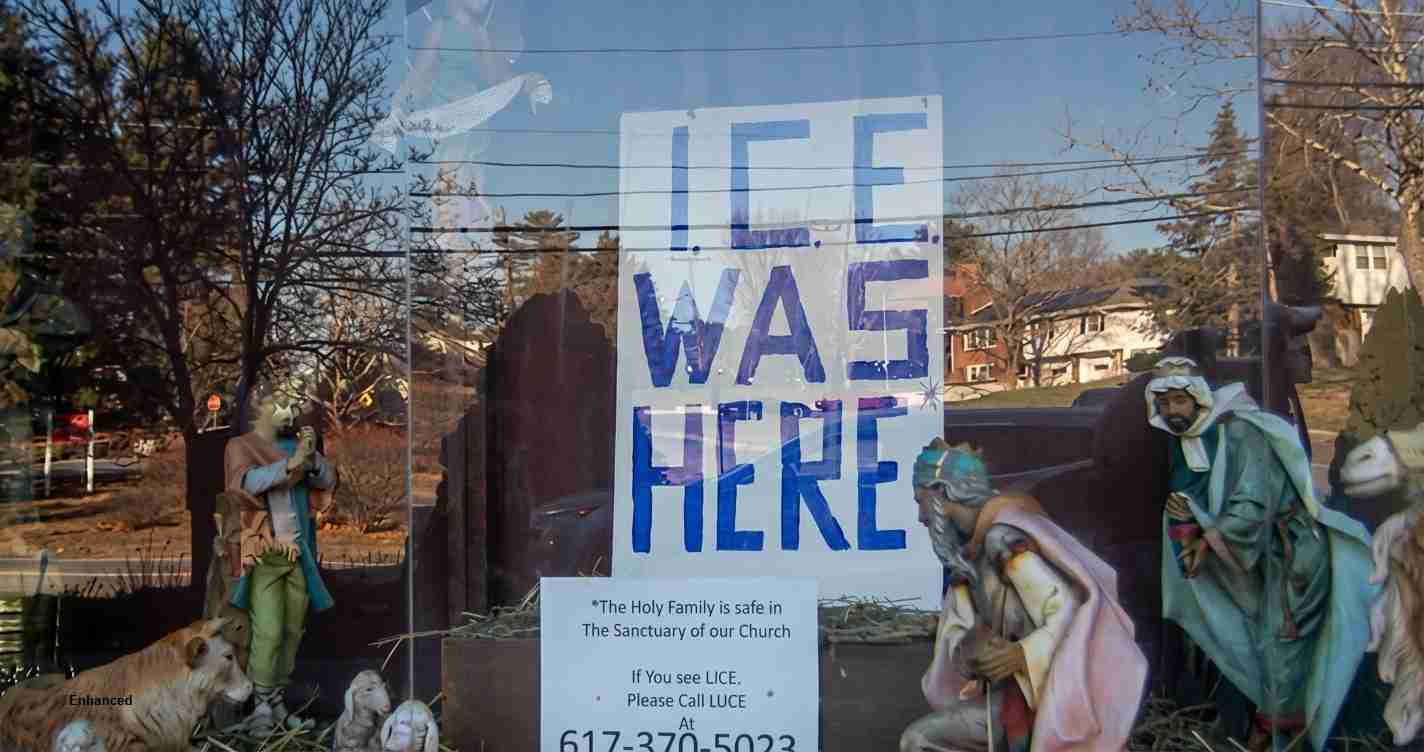
- Controversial display: The outdoor manger substitutes the Holy Family with a sign reading “ICE was here” while another sign directs witnesses to call LUCE; Patch documents the phone number and context.
- Archdiocesan demand: The Archdiocese of Boston / CBS Boston ordered the display removed, citing canonical norms and saying sacred images should foster devotion, not political messaging.
- Past precedent: St. Susanna has a history of politically themed Nativity displays that drew local and national attention, reported by CBS News and Patch.
- Local debate and wider implications: The episode highlights tensions over the role of religious symbols in political protest and may inform policies for other parishes, including those in Redding, California.
The display and its message
The outdoor crib at St. Susanna sits where parishioners and passersby can see it from the street. In place of baby Jesus, Mary and Joseph is a stark white sign with bold black letters: “ICE was here.”
Nearby, another sign states the Holy Family is “safe in the sanctuary of our Church” and provides a phone number for LUCE, an immigrant‑led coalition. Local reporting by Patch and video coverage on YouTube document the installation and LUCE contact details (617‑370‑5023).
Rev. Stephen Josoma, the pastor who conceived the scene, said the installation was meant to focus attention on people who are “really in dire need” and to ask how Christians are treating migrants today.
Archdiocese response and church norms
The Archdiocese of Boston / CBS Boston publicly rebuked the display and demanded it be removed, saying churches must not use sacred images for political purposes and parishioners should expect “genuine opportunities for prayer and Catholic worship — not divisive political messaging.”
Archdiocesan officials cited canonical norms that restrict the use of images of the Christ Child and sacred objects to foster faith and devotion, noting St. Susanna “neither requested nor received permission” to deviate from those norms. The archdiocese’s statement concluded: “The display should be removed, and the manger restored to its proper sacred purpose.”
Fr. Josoma told WBZ that the parish would discuss the future of the Nativity at a scheduled meeting after the archdiocesan demand. Local TV reports and CBS News coverage relay that follow-up.
A pattern of political Nativity scenes
St. Susanna’s use of the Nativity to comment on public issues is not new. Reporting notes previous displays: in 2017 the parish displayed names and death tolls from that year’s mass shootings alongside the crib; in 2018 a figure of baby Jesus was placed inside a cage with the Magi behind a wall to protest family separation policy at the U.S.–Mexico border (CBS News, Patch).
Those past displays drew criticism from conservative Catholic groups and commentators who called the moves inappropriate for a house of worship.
Community reaction and local debate
Local TV stations and outlets described the display as controversial and a flashpoint for debate in Dedham. Some parishioners and neighbors said they understood the message but questioned whether the church’s Nativity is the right venue for a political statement (CBS News).
On social media the parish’s Facebook post drew many messages of support per Patch, while conservative Catholic activists were sharply critical. C.J. Doyle of the Catholic Action League called Fr. Josoma a “dissident priest” and said the scene is “divisive, disrespectful, and distracts from the essential Christmas message.”
LUCE and the immigration angle
The sign advising witnesses to contact LUCE points to a coalition of immigrant‑led grassroots groups that monitor immigration enforcement and offer support to immigrants in Massachusetts. The explicit link between the Nativity display and an immigrant‑rights group makes the installation both a spiritual and an activist statement (Patch).
No formal ICE comment
Local coverage has not produced a public statement from ICE leadership about the Dedham Nativity. Reporting has focused on the parish‑Archdiocese dispute and reactions among Catholics and residents (CBS News; Patch).
Visual record
Photographs of the display circulated widely after local TV coverage and social posts. Getty Images distributed a widely used photo showing the bold “ICE WAS HERE” sign in the outdoor manger with other Nativity figures around it. Local TV segments and a YouTube clip show the second sign about the Holy Family being safe in the sanctuary and the LUCE contact information.
Broader context
The Dedham scene fits a broader pattern of churches using Nativity displays to comment on immigration, family separation and other national issues. Past examples around the country — including baby Jesus figures placed in cages or Nativity scenes altered to comment on border policies — have drawn both praise and sharp criticism. Reporting frames the Dedham case as part of ongoing culture‑war debates over the place of politics in churches and public holiday displays.
Implications for Redding, California
Economic impact
The Dedham controversy is unlikely to have direct economic consequences for Redding, but similar controversies could affect local giving, fundraising and foot traffic during parish events. Churches that prompt controversy risk drawing protests or boycotts that can influence donations.
Political consequences
For conservative audiences in Redding, the incident underscores tensions between church leadership and parish autonomy. Local officials and candidates may be asked to weigh in if a parish staged a politically themed Nativity, making the debate a potential campaign talking point.
Social effects
Religious symbols can become focal points for community division. In Redding, parishioners who value traditional worship may push leaders to avoid political messaging while others may want churches to speak on social issues, risking strain in small‑town congregations.
Cultural relevance
The Dedham episode is another chapter in the national “Christmas culture war” some conservative residents see as erosion of traditional holiday observance. Local faith leaders may be prompted to clarify policies about holiday displays and public worship spaces.
Practical applications
Redding parishes and community leaders can take concrete steps now: review church display policies, reaffirm proper use of sacred objects in liturgical spaces, hold open forums on activism in worship, and establish committees to vet seasonal displays for alignment with diocesan guidance.
Reporting sources
Reporting continues on whether St. Susanna will remove or alter the display after the Archdiocese’s demand and how parish leaders and diocesan officials will resolve the dispute.