
Mortgage rate trends shift north of the border as Bank of Canada holds; what U.S. buyers and Redding homeowners should watch
Canadian mortgage rates are shifting while the Bank of Canada held its overnight policy rate at 2.25% in December 2025, affecting fixed and variable pricing and shaping choices for buyers and homeowners across Canada and U.S. border markets.
- Bank of Canada held policy at 2.25%, with prime around 4.45%, signaling steadiness into early 2026.
- Mid‑December offers: advertised five‑year fixed near 3.89%–3.94%, five‑year variable around 3.45%; fixed rates recently rose ~20 bps as Gov’t bond yields climbed.
- U.S. headlines are not the driver: the December movement centers on Canada; check primary U.S. sources before linking U.S. claims to Fed action.
What the Bank of Canada decided and why it matters
On Dec. 10, 2025, the Bank of Canada left the overnight policy rate at 2.25%—its lowest since spring 2022—after earlier cuts. That pause reflects a view that inflation has eased enough to avoid further immediate tightening, and it directly influences prime rates and investor expectations for Government of Canada bond yields (True North Mortgage).
How Canadian mortgage pricing is set
Lenders set fixed mortgage pricing by watching longer-term government bond yields—especially five- and 10‑year Government of Canada yields—while variable-rate products link more directly to prime, which in turn follows policy rate moves. When bond yields rise, fixed mortgage rates typically follow, even if the central bank pauses.
“Fixed-rate pricing is more bond-driven; variable products reflect prime.”
Current offers and lender snapshots (mid‑December 2025)
Rates vary by product, term, borrower qualifications and promotions. Mid‑December snapshots show promotional and posted spreads across lenders:
- Vancity: promotional and insured five‑year offers near the low‑4% range; posted rates higher.
- RBC: special five‑year fixed promos typically ~4.59%–4.69%; variable offers around prime −0.50% (≈3.95% with prime ≈4.45%).
- National Bank and others: mixed posted vs promotional pricing; promos lower for qualifying borrowers.
- First National: posts varying rates by product and date; advertised vs special-offer differences apply.
Aggregated rate lists and commentary are available via Ratehub, which showed the lowest advertised five‑year fixed near 3.89%–3.94% and five‑year variable near 3.45% in mid‑December.
Why bond yields and the U.S. 10‑year still matter
Mortgage markets north and south often follow long-term government bond yields. In the U.S., mortgage pricing tracks the 10‑year Treasury; in Canada, lenders watch Government of Canada yields. Cross‑market investor flows make U.S. 10‑year moves relevant to Canadian mortgage pricing and vice versa.
Clarifying conflicting or unverified claims
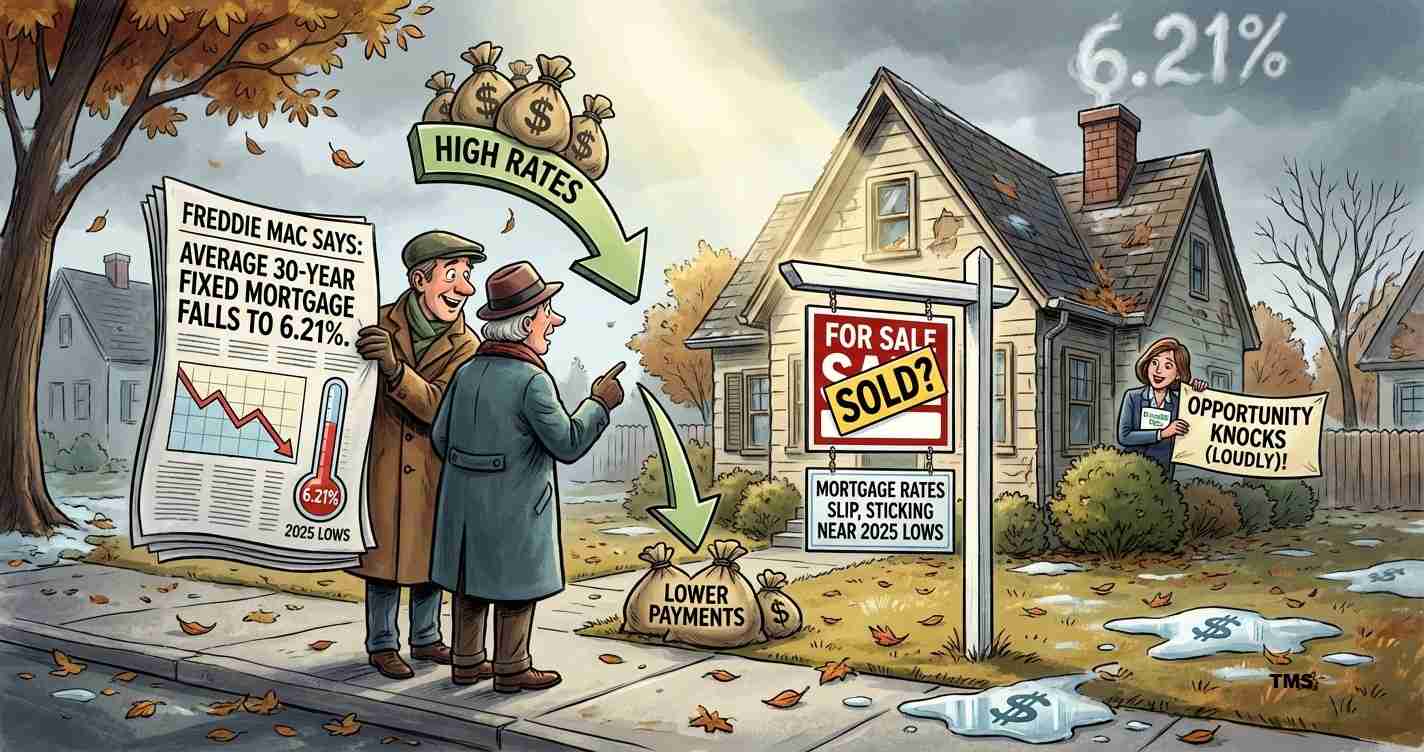
Some posts have tied a reported Freddie Mac 30‑year U.S. mortgage figure of 6.21% to a claimed Fed funds cut to 3.5%–3.75% in mid‑December 2025. Our review found no confirmed evidence of a recent Fed cut to that range or of Freddie Mac reporting 6.21% linked to such a cut. The documented December mortgage movement centers on Canada and the Bank of Canada decision—always verify with primary sources such as Freddie Mac and the Bank of Canada.
Forecasts and expert takes heading into 2026
Analysts are cautious: some expect the Bank of Canada to hold policy into mid‑2026, while others model gradual 25‑basis‑point easing if inflation continues down. Fixed rates could fall if bond yields soften, but stronger data or rising yields would push fixed offers higher (True North Mortgage, Nesto, Mortgage Sandbox).
Practical guidance for borrowers and buyers
- Shop both posted and promotional rates. Special offers can be materially lower for well‑qualified borrowers; check lender disclosures and aggregator lists like Ratehub.
- Consider term and product fit. A 5‑year fixed offers payment certainty; a 5‑year variable often has a lower initial rate but ties payments to prime (RBC).
- Watch bond yields, not just headlines. Fixed products are priced off government bond markets.
- If refinancing, run the math on penalties. Low promotional rates may not offset break costs on existing contracts.
Implications for Redding, California
Economic impact
Redding buyers and homeowners should follow U.S. bond yields and Freddie Mac releases for direct influence on U.S. mortgage pricing. A drop in the U.S. 10‑year would likely ease local borrowing costs, improving refinancing prospects and affordability.
Political consequences
Local policymakers in Shasta County and Redding monitor housing costs. Falling long‑term yields can be used to encourage private investment in housing or fund home‑buyer education programs that emphasize conservative stewardship of household finances.
Social effects
Lower or stabilizing mortgage rates benefit first‑time buyers more than high‑loan repeat buyers, easing household budget strain. Conversely, a rebound in rates could keep renters from buying, sustaining rental demand and higher rents.
Cultural relevance
Homeownership is culturally important in Redding and much of the U.S.; practical, conservative-leaning advice—shop carefully, avoid unnecessary risk, prioritize long‑term affordability—resonates with readers focused on protecting family wealth.
Sources and further reading
- Ratehub: Best mortgage rates and market commentary
- True North Mortgage: Canadian mortgage rate forecast and BoC analysis
- Nesto: Mortgage rate outlook and explanations
- Mortgage Sandbox: Interest rate forecasts and explanations
- Bank of Canada: policy and posted rates
- Vancity: lender rates, RBC: lender rates, National Bank: lender rates, First National: lender rates
- Freddie Mac: U.S. mortgage averages and weekly releases
Note: This article preserves the original facts and sources cited for mid‑December 2025 mortgage-market conditions and links directly to primary lender and market commentary pages for verification.



