
Artemis II Rocket Rolls to Pad as NASA Begins Final Tests for Crewed Lunar Flyby
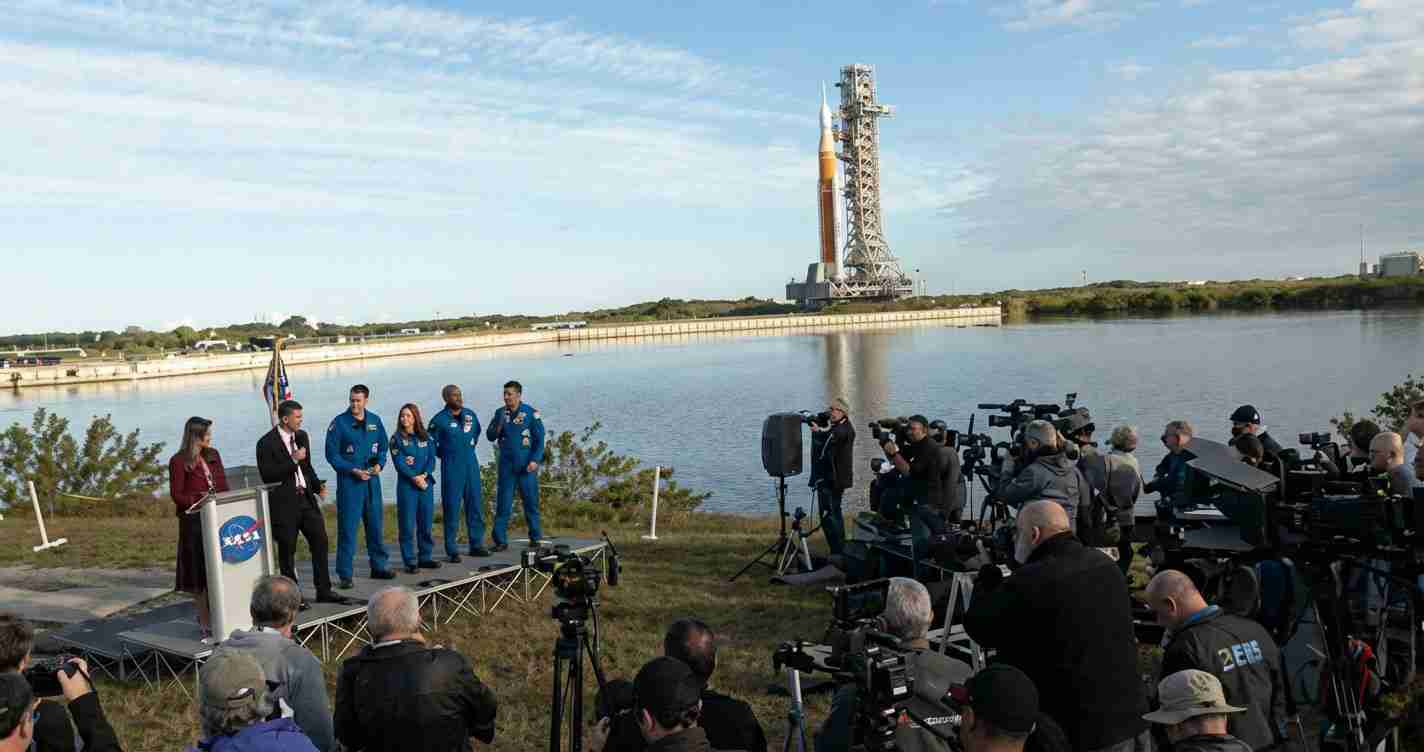
At Kennedy Space Center on Jan. 17, 2026, NASA rolled the 322-foot SLS rocket and Orion spacecraft to Launch Pad 39B, advancing final tests ahead of Artemis II’s crewed lunar flyby that will send four astronauts beyond Apollo-era distances.
Key takeaways
- Rollout completed Jan. 17, 2026: The SLS and Orion moved from the Vehicle Assembly Building to Pad 39B after a slow, multi-stop crawl. (nasaspaceflight.com coverage; Space.com live summary)
- Crew and mission: Four astronauts — Reid Wiseman (commander), Victor Glover (pilot), Christina Koch and Jeremy Hansen — will fly a roughly 10-day lunar flyby, reaching farther than Apollo 17. (NASA mission overview)
- Testing and timeline: A wet dress rehearsal is set for Feb. 2, 2026, with a target launch date of Feb. 6 and opportunities through Feb. 11 (with contingency windows later). (nasaspaceflight.com; NASA final-steps briefing)
Main
Rollout details: what happened and why it matters
What NASA moved: The 322-foot Space Launch System (SLS) rocket and the Orion spacecraft were placed atop a mobile launch platform and transported down the crawlerway to Launch Pad 39B at Kennedy Space Center. The stack traveled about four miles on crawler-transporter-2 at walking speed, pausing for routine checks along the way.
The journey began at 7:04 a.m. EST and concluded at 6:42 p.m. EST after planned stops for hardware checks and a pause to retract the crew access arm. These stops are normal but highlight the number of coordinated systems required for crewed flight. (nasaspaceflight.com rollout timeline; Space.com live coverage)
“These moves are milestones — they bring flight hardware to the pad for final integration and testing,” agency teams said, emphasizing readiness checks ahead of the wet dress rehearsal.
Mission overview: crew and objectives
The Artemis II crew consists of Commander Reid Wiseman, Pilot Victor Glover, and Mission Specialists Christina Koch and Jeremy Hansen of Canada. Over roughly 10 days, Orion will perform a distant lunar flyby — not entering lunar orbit but swinging about 7,500 kilometers beyond the Moon’s far side — carrying humans farther from Earth than any mission since Apollo 17.
The flight will test Orion systems with crew aboard, validate life-support and navigation systems in deep space, and inform procedures for the eventual Artemis III lunar landing attempt. (NASA mission overview; nasaspaceflight.com summary)
Testing and launch timeline
Wet dress rehearsal: Scheduled for Feb. 2, 2026, this exercise will include a full propellant load and a simulated countdown to verify launch systems, ground teams and procedures. The target launch date is currently Feb. 6, 2026 at 9:41 p.m. EST, with launch opportunities through Feb. 11 and contingency windows in March and April if required.
NASA notes launch timing is constrained by technical readiness, facility consumables and lunar-phase windows; even successful testing can require schedule adjustments if additional work or weather intervenes. (nasaspaceflight.com; NASA final-steps briefing)
Why this mission matters now
Artemis II is the first crewed flight of NASA’s SLS rocket and Orion capsule together. For policymakers and taxpayers it is both a technological test and a program-management signal — a successful mission will help pave the way to Artemis III and a return to the lunar surface. For astronauts, it offers an unprecedented operational test of life-support, navigation and communications systems in deep space.
Mission significance: Validates systems and procedures that will be essential for future lunar landings and sustained exploration.
Investigative perspective: questions to watch
- Readiness vs. schedule pressure: Are target dates driven by technical readiness or program timelines? The wet dress rehearsal will be a key check.
- Technical stops and system checks: Brief crawler pauses and the crew access arm retraction underscore system complexity and will be reviewed by oversight bodies.
- Budget stewardship: Artemis has received substantial federal funding; cost, schedule and risk reporting will shape public and legislative support.
- International partnerships and risks: Partners such as Canada add capability and responsibility; agreements on roles and liability will matter as missions scale.
Implications for Redding, California
Economic impact
Although Artemis II activity is centered in Florida, aerospace supply chains span the U.S. and some California firms participate in contracts or subcontracting. Direct jobs in Redding are unlikely from launch operations, but indirect benefits can flow if state suppliers win work. Local businesses may see a short-term bump in attention or tourism tied to national interest in space events.
Small businesses that organize STEM viewing parties or educational travel packages could capture brief demand, while local colleges might promote related training or outreach.
Political consequences
Taxpayer stewardship: Conservative voters and officials in Northern California often demand oversight of federal spending; Artemis II’s costs and schedule will be discussed by local leaders and representatives focused on fiscal responsibility.
National pride and defense ties: Success in crewed spaceflight is frequently framed as a demonstration of technological leadership that has civil and defense implications; local leaders may emphasize these themes.
Social effects
Artemis II can inspire students and communities in Redding. Schools and youth organizations may use the mission to promote STEM pathways. The crew’s veteran and military backgrounds also resonate in communities with strong veteran populations, potentially driving watch parties and events that honor service and leadership.
Cultural relevance
Spaceflight stories — meticulous engineering, crew readiness and careful fiscal oversight — align with Redding’s local values of resilience and self-reliance. Civic and faith groups may build community events around the mission to reinforce shared pride in national achievement.
Practical applications for residents
- How to watch: Follow live coverage from NASA and partner media for rollout, wet dress rehearsal and launch attempts. (NASA live coverage)
- Educational opportunities: Schools and colleges can hold watch parties, classroom activities and invite guest speakers to capitalize on interest.
- Civic engagement: Local leaders can press federal representatives on regional economic opportunities and advocate for training programs that prepare residents for aerospace work.
Sources and further reading
- Artemis II rollout coverage and timeline (nasaspaceflight.com)
- Live coverage summary of rollout day (Space.com)
- Mission overview from NASA
- Final steps and launch windows from NASA
Reporting compiled from Times Media Service and sources including NASA and independent coverage. (nasaspaceflight.com; Space.com; NASA; NASA final-steps briefing)



