
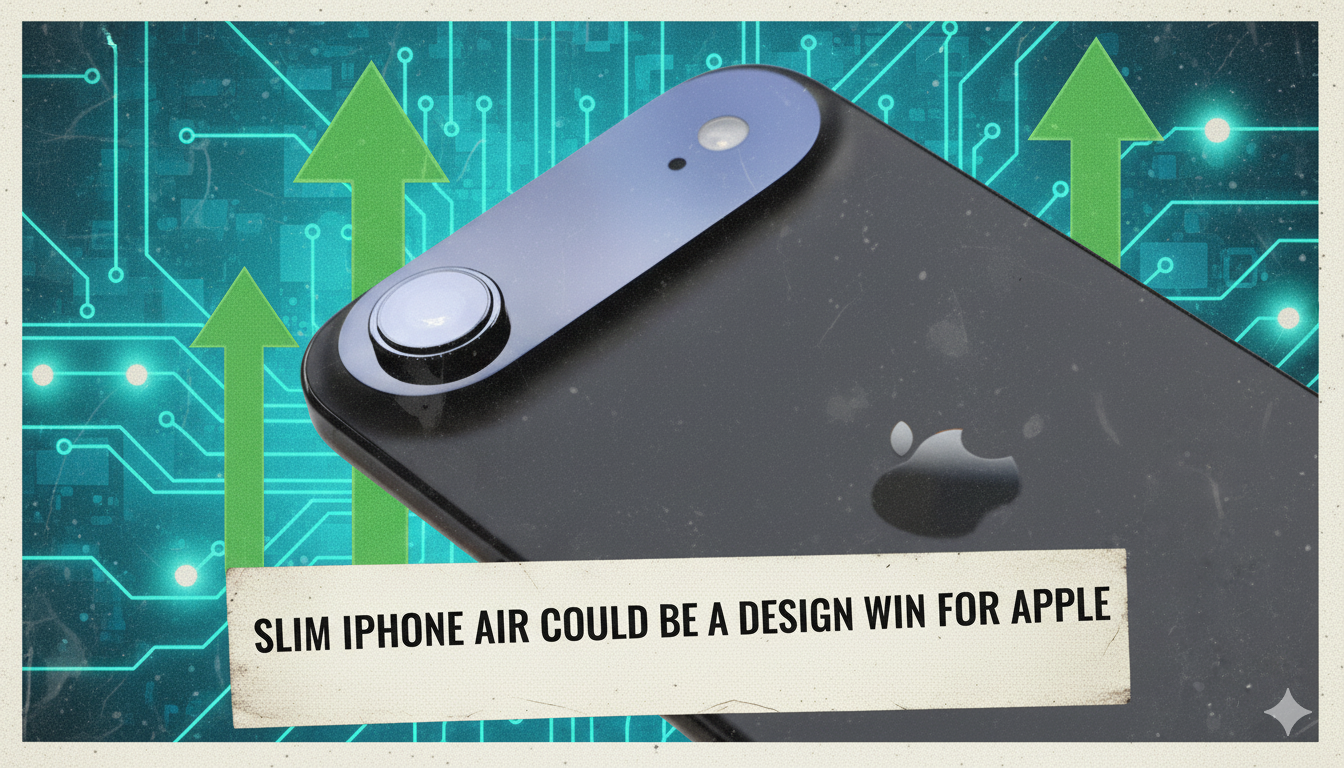
Apple’s iPhone Air could be a design win — and a seller, analysts say
Apple unveiled the iPhone Air, an ultra-thin titanium-framed smartphone starting at $999, featuring Ceramic Shield glass, a 6.5–6.6-inch ProMotion display and the A19 Pro chip — a design-focused halo device and recycled materials.
Key takeaways
- Ultra-thin engineering: At 5.6mm the iPhone Air claims Apple’s slimmest mainstream handset, enabled by a titanium frame and new internal architecture.
- Pro-level internals: Packs an A19 Pro with 5-core GPU, 120Hz ProMotion display, and upgraded connectivity (Wi‑Fi 7, Bluetooth 6).
- Strategic positioning: Starts at $999 as a halo product between the standard and Pro lines to emphasize design and desirability rather than pure volume.
- Local impact: Retailers, carriers and public-sector buyers in places like Redding stand to see effects on trade-ins, promotions and procurement choices.
Design and engineering: the slimmest iPhone design
Apple’s engineers pushed the iPhone thinner than ever. At 5.6mm, the iPhone Air unseats competitors to claim the title of the slimmest handset in the mainstream smartphone market. The thin profile is achieved through a titanium frame and new internal architecture that compresses components while retaining strength and durability.
Apple uses Ceramic Shield glass on both the front and back and says the material offers improved scratch resistance. The company also highlighted the use of recycled titanium in construction to lower environmental impact while keeping a premium feel.
Further reading at TechCrunch and CNET.
Performance and features: Pro-level tech in a lighter package
The iPhone Air borrows features that used to be exclusive to Apple’s Pro lineup. It includes a 6.5–6.6-inch ProMotion display with a 120Hz variable refresh rate for smoother scrolling and gaming. Inside, Apple fits its top chip, the A19 Pro, which the company says is its fastest smartphone CPU and includes a 5‑core GPU tuned for AI tasks.
Connectivity is upgraded with an N1 chip supporting Wi‑Fi 7, Bluetooth 6 and Thread, plus a C1X modem for improved network performance. Apple also touts advanced thermal management to sustain performance without excessive heat.
Sources covering specs and early impressions include TechCrunch, CNET, and AOL.
Market positioning: a halo product above the standard model
Apple places the iPhone Air between its $799 standard model and higher-priced Pro versions. With a $999 starting price, the Air effectively replaces the underperforming Plus line and aims to be a high-design option for buyers who want style and lightness without jumping to the top-tier Pro prices.
“Rather than chase volume, this may be a halo device that sets design expectations and signals future directions,” said analysts including IDC’s Nabila Popal.
Tom’s Guide provides analysis noting the Air’s role as a new design statement for Apple: Tom’s Guide.
Competitive landscape: edging past Samsung
By shaving millimeters off the body while keeping high-end internals, Apple positions itself ahead of Samsung in the ultra-thin segment. Reviewers observe this mirrors Apple’s history of changing market expectations through design emphasis.
Early reviews and analyst takeaways collected after the announcement point to a consensus: the iPhone Air is a design win that appeals to buyers prioritizing a lighter, sleeker handset over raw volume-driving features. So far, reporting shows more strategic praise than broad criticism.
Pricing and specs: what buyers should know
Starting at $999, the iPhone Air enters a price band that many conservative shoppers will weigh carefully. The phone offers premium materials and many Pro-level specs for roughly $200–$300 less than top Pro models, depending on configuration.
Buyers tracking the iPhone Air price specs should compare storage levels, carrier deals, and trade-in credits. Local retailers and carriers often bundle incentives and financing that spread the cost across monthly payments.
Notable spec highlights (preserved):
- Thickness: 5.6mm — Apple’s slimmest iPhone design
- Weight: 165 grams; titanium frame and recycled materials used
- Display: 6.5–6.6-inch ProMotion, 120Hz variable refresh rate
- Chipset: A19 Pro with 5-core GPU; N1 connectivity chip; C1X modem
- Materials & colors: Titanium frame, Ceramic Shield front and back; colors: black, white, gold, blue
Implications for Redding, California
Economic impact: Local retailers, Apple-authorized resellers and independent phone shops in Redding could see increased demand from sales, trade-ins and accessory purchases. Carriers and cell shops in Shasta County may roll out promotions and financing to help consumers manage the $999 price point.
Political & procurement effects: City and public-sector replacement cycles may consider the Air’s specs for fieldwork, though most agencies prioritize durability, battery life and long-term support over style.
Social & cultural relevance: Redding’s outdoor-oriented community may appreciate the Air’s lighter weight and claimed toughness. Apple’s emphasis on recycled materials could resonate with buyers who prefer durable, well-made tools.
Practical considerations: First responders and small businesses should note upgraded connectivity (Wi‑Fi 7, Bluetooth 6) and AI-ready chips but should test devices in real-world conditions due to tradeoffs inherent in slimmer designs. Local repair shops and IT departments should prepare for questions about trade-ins, cases and service plans.
Sources and reporting
Reporting on the iPhone Air comes from multiple technology outlets and Apple’s event stream. Notable coverage includes:
- TechCrunch
- CNET
- AOL
- Tom’s Guide
- Apple launch video (Tim Cook called it “a total game changer”)
Reporting and initial reviews referenced above provide the basis for specifications, pricing and early analyst commentary.



