
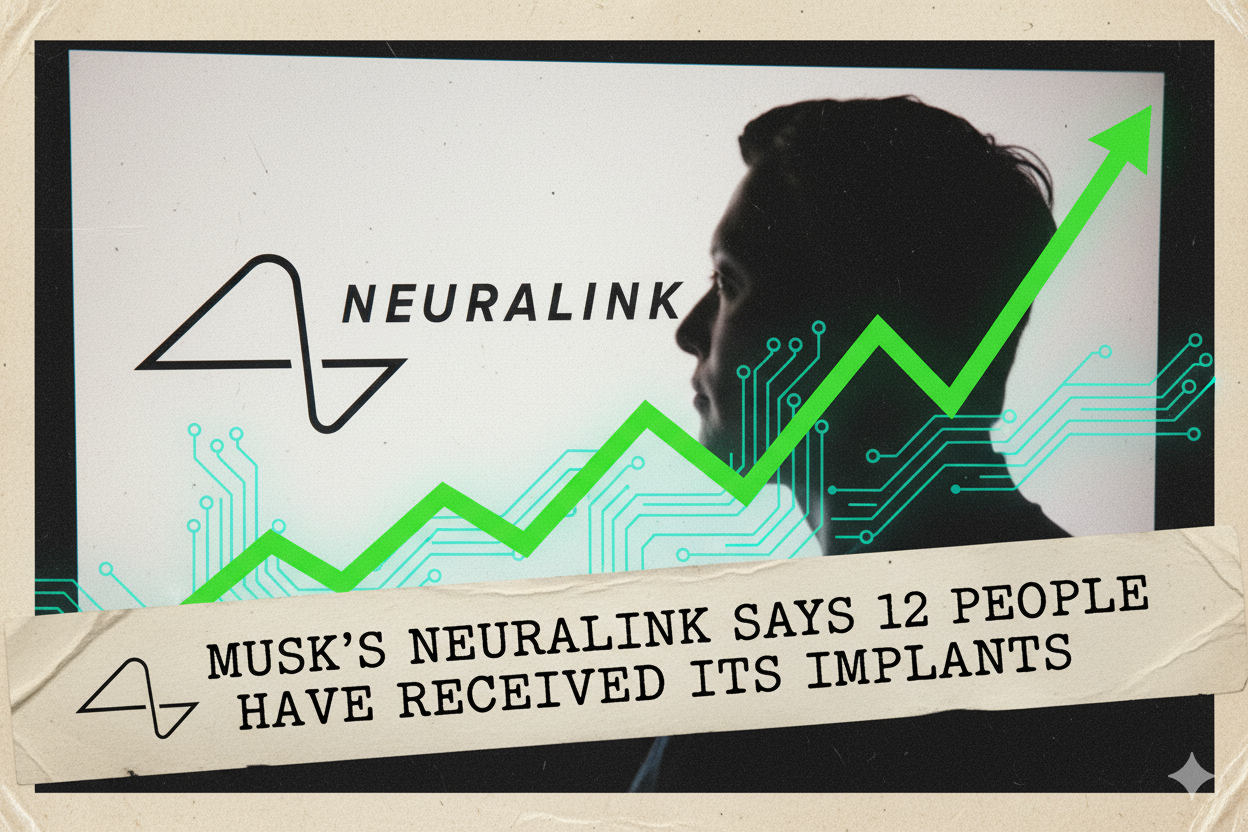
Neuralink says 12 people have received its BCI implants as company pushes toward wider human trials
Neuralink confirmed that 12 people worldwide had received its N1 “Telepathy” brain-computer interface implants by mid-2025, and the company is targeting more than 20 recipients by year-end to expand trials for paralyzed and ALS patients.
- Company update: 12 recipients of the N1 “Telepathy” BCI reported by mid-2025, with a goal to exceed 20 by the end of the year.
- Primary aim: Restore digital control for people with severe paralysis—allowing phones, cursors and simple apps to be driven by thought.
- Scaling: Neuralink completed two implants in one day and has raised over $650 million to fund expansion, including a vision project called Blindsight.
- Watchpoints: Regulators, disability advocates and independent researchers urge more peer-reviewed data and long-term follow-up on safety and efficacy.
How the implants work
Device overview: The N1 implant, nicknamed “Telepathy”, sits on the skull and connects to hair-thin flexible threads inserted into brain areas associated with movement and intention. A surgical robot places those threads, and the implant reads electrical signals and translates them into commands for computers and phones. The system is designed to be wireless so users can operate digital devices without external wires.
How the implants work
How the implants work
Who is in the trials
Neuralink’s PRIME clinical trial focuses on people with severe paralysis, including spinal cord injuries and ALS. Some early recipients have shown promising functional gains—for example, Noland Arbaugh, who demonstrated cursor movement and simple game control by thought after implantation.
Who is in the trials
Who is in the trials
Company goals and recent milestones
Neuralink says the PRIME trial is assessing safety and real-world use. Public updates show a rapid rise in implant counts—from earlier reports of seven or nine recipients to the current total of 12. An operational milestone: engineers completed two implants in a single day, signaling improved surgical throughput and robot capability.
Company goals and recent milestones
Company goals and recent milestones
Company goals and recent milestones
Funding, projects and international plans
Neuralink has raised more than $650 million to expand research and staff. The company is developing a vision-restoring implant called Blindsight and has discussed starting vision trials in the United Arab Emirates by 2026 as part of its global clinical strategy.
Funding, projects and international plans
Regulatory scrutiny and safety questions
As implantation expands, regulators and medical experts are watching closely. The PRIME trial must meet safety standards and withstand public scrutiny. Advocacy groups urge transparency; clinicians call for longer-term follow-up to monitor infection risks, device durability, and lasting functional benefits.
“Early results are promising, but independent, peer‑reviewed data and extended follow-up are essential.”
Regulatory scrutiny and safety questions
Regulatory scrutiny and safety questions
Why it matters to patients
For people with severe paralysis, BCIs could restore independence—sending messages, controlling phones, or operating wheelchairs by thought. That change could reduce caregiver needs, lower long-term costs, and improve quality of life and employment prospects for some patients.
Real-world impact depends on consistent, durable outcomes.
Why it matters to patients
Why it matters to patients
Competition and the broader field
Neuralink operates in a rapidly growing BCI ecosystem that includes academic groups and commercial competitors. That competition can accelerate innovation but raises the bar for proving safety, effectiveness, and regulatory compliance before widespread clinical adoption.
Competition and the broader field
Investigative notes on reporting and claims
Published totals and targets come from company statements covered by news outlets; independent, peer‑reviewed outcome data remain limited publicly. Reporters and experts recommend careful review of trial protocols, oversight capacity, and the balance between rapid enrollment and safety monitoring.
Investigative notes on reporting and claims
Investigative notes on reporting and claims
Implications for Redding, California
Economic and medical opportunities: Local hospitals, neurosurgeons and device-service firms could benefit if BCI devices gain approval—bringing jobs and new services.
Veterans and first responders: Redding’s veteran population and residents with service-related injuries may see BCI options as part of their care planning.
Regulatory and ethical oversight: Residents and leaders should press for clear long-term outcomes, cost transparency and neural data privacy safeguards aligned with community norms.
Insurance and cost concerns: Expect questions about coverage and maintenance; early engagement with insurers and county health officials can reduce unexpected costs.
Education and workforce: Local colleges could develop programs for biomedical device repair, surgical assistance and rehabilitation therapy to help residents access new jobs.
Where to follow updates
For ongoing coverage and the PRIME study, readers can follow company statements and independent reporting. Key recent reports include coverage at
TechSpot,
Benzinga,
CGTN,
NPR Illinois, and a technical overview at
EM360.



