
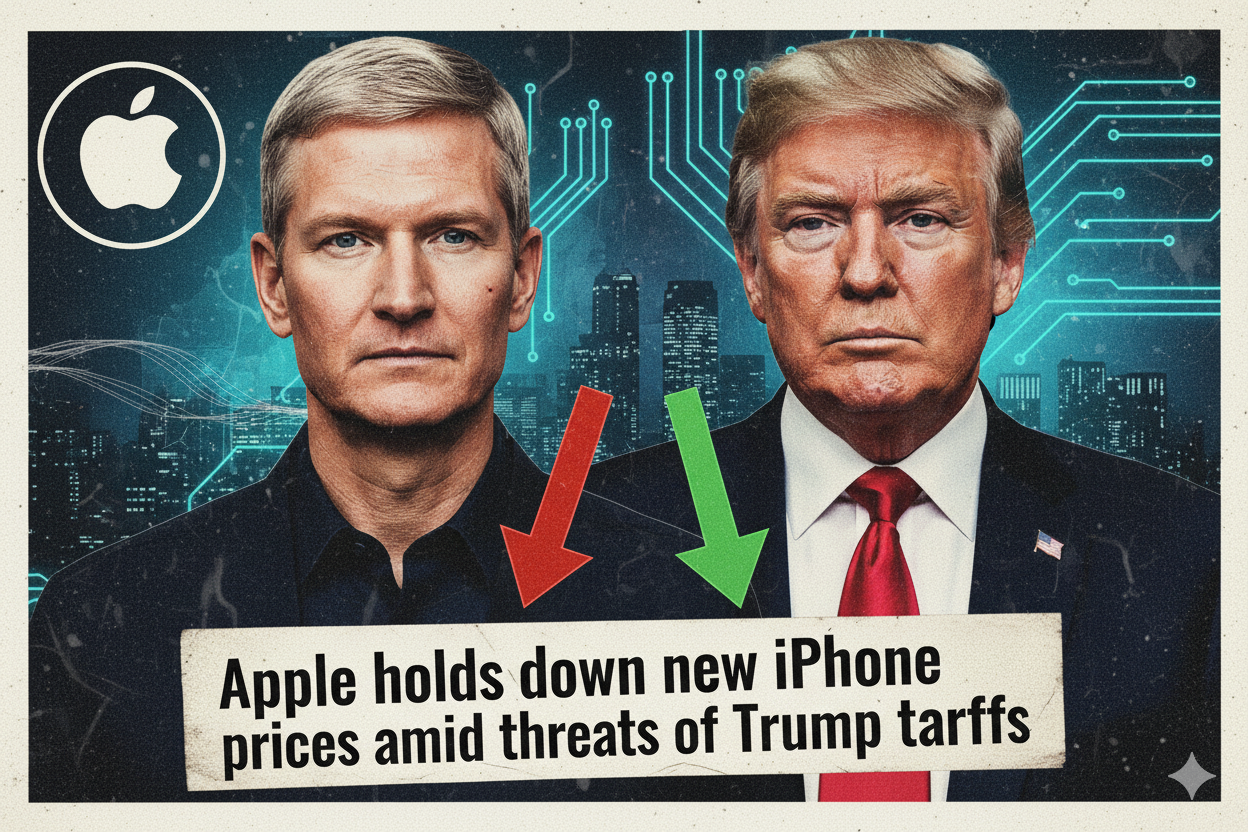
Apple holds prices steady for new iPhones despite Trump tariff threats, absorbs costs to protect buyers
Apple maintained retail prices for its September 2025 iPhone lineup, including the iPhone Air and iPhone 17, absorbing additional manufacturing and tariff costs while increasing base storage to offer customers better value without raising entry prices.
Key takeaways
- Price hold: Apple kept entry prices unchanged for the September 2025 lineup, including the iPhone Air and iPhone 17, despite tariff pressures (AsiaOne, Ground News).
- More storage: Base storage increased to 256GB for new models while entry prices remained the same; the iPhone 17 now starts at $799 for 256GB (BGR).
- New model: The iPhone Air, positioned between mainstream and Pro models, starts at $999 for 256GB and emphasizes slimness, durability, a high-density battery and an A19 Pro chip (AsiaOne).
- Strategy: Apple absorbed tariff and manufacturing costs to protect customers and market share rather than passing increases through to retail prices (Ground News, AsiaOne).
Main story
Pricing and what changed
Apple’s September event surprised observers by holding sticker prices while improving baseline value. The company raised base storage to 256GB for the iPhone 17 and iPhone Air but kept the iPhone 17’s entry price at $799 and the iPhone Air at $999 (BGR).
What that means: buyers get more built-in storage without paying more out of pocket. Apple also continues to sell prior-generation models as lower-cost options — for example, the iPhone 16e (128GB) remains available starting at $599 (BGR).
Tariff pressures and Apple’s response
Proposed tariffs tied to U.S. trade policy raised expected import costs for electronics, creating pressure for manufacturers to raise prices. Analysts expected Apple might pass these costs to consumers — particularly on higher-end models — but reporting indicates Apple chose to absorb additional manufacturing and tariff costs to keep retail prices steady (AsiaOne, Ground News).
“Apple appears to prioritize market share and customer loyalty over immediate margin protection,” industry sources say, viewing the move as defensive to prevent competitor gains and avoid slowing the upgrade cycle.
iPhone Air features and product positioning
The new iPhone Air is billed as slimmer and more durable, with a high-density battery designed to extend real-world life despite a thinner profile. Apple also promoted an A19 Pro chip focused on energy efficiency and improved processing for apps and camera functions (AsiaOne).
Positioned between the mainstream iPhone 17 and the Pro Max models, the Air — starting at $999 for 256GB — targets buyers who want portability, longer battery life and solid performance without the top-tier price (BGR).
How carriers and purchase options shape the real price
Nominal retail prices no longer tell the whole story. Carrier promotions, trade-in discounts and installment plans often lower effective consumer costs — sometimes substantially. Some high-end models show cheaper effective prices when purchased with a carrier preorder than at full retail, so shoppers can often find lower monthly payments or one-time costs by comparing offers (BGR).
Advice: compare cash versus financed prices, and factor in trade-in credit to get the best net cost.
Market context and competitor pressure
Maintaining prices while improving baseline specs also serves as a defensive tactic against rivals such as Samsung. If Apple had raised prices, competitors could exploit that shift to position lower-cost alternatives. By absorbing costs, Apple keeps product comparisons focused on features rather than higher prices (AsiaOne).
Supply chain and longer-term risks
Absorbing tariff costs can squeeze margins if tariffs persist or supply-chain costs rise further. Apple may offset pressure through operational cost reductions, stronger services revenue, or future price adjustments. For now, the choice reduces immediate sticker shock and supports the upgrade cycle.
Reporting notes and attribution
This article draws on coverage of Apple’s September 2025 product launch and pricing decisions. See AsiaOne’s coverage of Apple holding down prices amid tariff threats, Ground News’ summary of market reaction, and product pricing and comparisons from BGR.
Implications for Redding, California
Economic impact: Redding-area consumers benefit from steady Apple iPhone prices and increased base storage — upgrades now offer more built-in value at the same entry cost (BGR).
Local businesses and carriers: regional wireless providers and retailers may see more stable demand, and carrier promotions tied to trade-ins or installment plans can attract budget-conscious customers.
Political/regulatory angle: voters and local leaders should note that tariffs intended to shift production or protect domestic industry can lead firms to absorb costs in the short term, affecting margins and strategy rather than immediately raising retail prices (AsiaOne).
Social and practical effects: students, first responders and families who rely on robust phones may find Apple’s pricing decision reduces the temptation to delay upgrades or choose lower-capability alternatives.
Cultural relevance: Redding’s practical spending values align with Apple’s approach — keeping prices steady while improving value lets local buyers choose payment and trade-in options that fit household budgets (AsiaOne).
Practical advice for Redding buyers
- Check local carrier promotions and compare cash versus financed pricing.
- Consider the improved base storage: the $799 iPhone 17 (256GB) may offer better long-term value than older, lower-storage models.
- If you want lower upfront cost, evaluate remaining inventory of the iPhone 16e at $599 or seasonal trade-in offers (BGR).



