
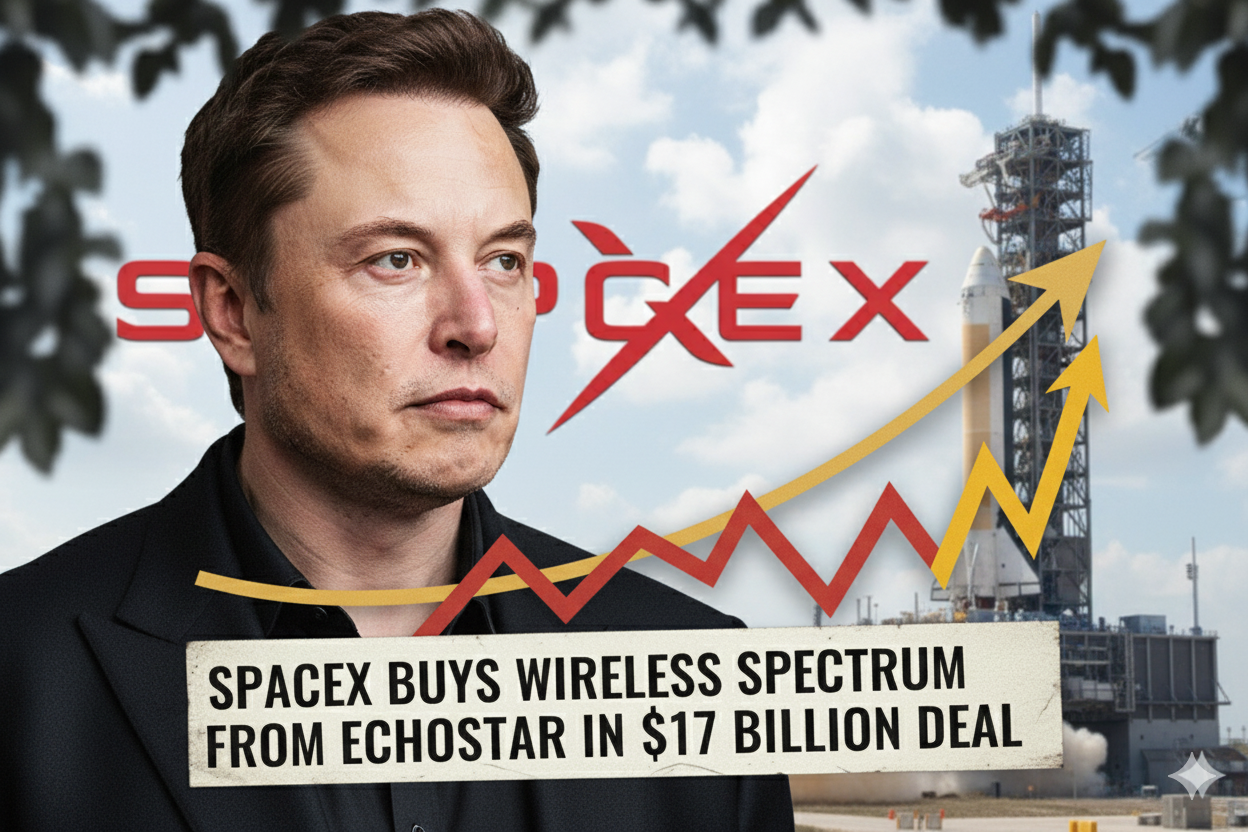
SpaceX buys EchoStar spectrum in $17 billion deal to supercharge Starlink direct-to-cell and tackle wireless dead zones
SpaceX has acquired wireless spectrum licenses from EchoStar for $17 billion to expand Starlink’s direct-to-cell service, enabling ordinary phones to connect to satellites and promising to reduce mobile dead zones and improve coverage globally without special hardware.
- Deal value: $17 billion consideration, roughly split between cash and SpaceX stock; includes interest support and a Boost Mobile commercial tie. Sources: Los Angeles Times, Axios.
- Spectrum acquired: AWS-4 and H-block licenses in the 1.9 and lower 2 GHz bands — frequencies well suited to in-building and long-distance coverage. Sources: Fierce Network, CNET.
- Operational impact: SpaceX says Starlink capacity could increase dramatically and allow standard phones to get satellite links without special antennas. Sources: Los Angeles Times, CNET, Axios.
Deal details and how it works
SpaceX’s purchase gives the company control of AWS-4 and H-block licenses in the ~1.9–2.0 GHz range — bands that are especially useful for satellite-to-phone links because they penetrate buildings and travel long distances. The transaction is structured at approximately $17 billion in total consideration, split roughly half in cash and half in SpaceX stock, and includes provisions for SpaceX to cover about $2 billion in EchoStar interest payments through November 2027. The agreement also includes a commercial arrangement to give Boost Mobile customers access to Starlink direct-to-cell services.
How direct-to-cell works: Starlink satellites and ground systems will use the acquired spectrum to send and receive signals to ordinary cell phones, removing the need for special handset attachments. SpaceX already operates thousands of satellites (more than 8,100 in service) and has dedicated hundreds to first-generation direct-to-cell tests; the EchoStar purchase accelerates designs for next-generation satellites optimized for this spectrum.
Sources: Los Angeles Times, CNET, Axios.
Market reaction and competitive effects
The announcement produced immediate market moves: EchoStar shares rose on the cash and debt relief, while some major U.S. carrier stocks slid as investors considered the competitive threat of satellite-delivered coverage. Observers highlight that T-Mobile may gain operationally given existing partnerships with SpaceX, while AT&T and Verizon could face pressure to add paid satellite options or new service tiers.
Analysts note: satellite ownership of consumer-oriented spectrum changes strategic dynamics and can pressure wholesale and retail pricing across MVNOs and incumbent carriers.
Sources: coverage and commentary summarized in CNET, Fierce Network, and a public briefing captured on YouTube.
Regulatory backdrop and compliance matters
The sale resolves part of an ongoing regulatory narrative: EchoStar was under FCC scrutiny over how it deployed certain spectrum, and SpaceX previously filed complaints about EchoStar’s compliance with deployment rules. Transferring contested spectrum to SpaceX reportedly eases some FCC pressure on EchoStar. The transaction follows EchoStar’s earlier sale of 600 MHz and 3.45 GHz assets to AT&T — part of a broader reshaping of EchoStar’s wireless holdings.
Sources: Axios, Fierce Network.
Technical and operational implications
Frequencies in the 1.9–2.0 GHz range are prized because they provide superior building penetration and longer-range propagation than higher bands, making them suitable for reaching phones inside homes, vehicles, and remote terrain. SpaceX plans both immediate use via existing satellites and a rollout of next-generation Starlink Direct to Cell satellites engineered to handle much larger volumes of mobile traffic.
SpaceX’s public statement projects that network capacity could increase by more than 100× in relevant service areas as satellite resources supplement terrestrial towers.
Sources: CNET, Los Angeles Times.
Company statements and strategy
SpaceX President Gwynne Shotwell said the acquisition “will advance our mission to end mobile dead zones around the world,” noting plans for satellites optimized for the newly acquired bands. EchoStar described the sale as a necessary move to strengthen finances and resolve regulatory concerns while retaining value for shareholders through SpaceX-linked consideration.
Source: Los Angeles Times.
Financial mechanics and obligations
The $17 billion consideration includes SpaceX stock as part of the payment mix, giving EchoStar shareholders exposure to SpaceX equity value. SpaceX agreed to cover roughly $2 billion in EchoStar interest through late 2027, which analysts say provides near-term balance-sheet relief. The Boost Mobile commercial tie gives an immediate distribution path and early customer base for Starlink direct-to-cell.
Sources: Los Angeles Times, Axios, Fierce Network.
Industry trends and demand drivers
U.S. mobile data use continues to grow rapidly, pressuring carriers to find capacity beyond terrestrial towers. Satellite-based services like Starlink aim to fill gaps in rural and sparsely served markets and provide redundancy in urban networks. The EchoStar sale signals that owning consumer-capable spectrum is critical for satellite operators to compete with traditional carriers.
Source: industry commentary referenced in reporting, including a public briefing on YouTube.
Implications for Redding, California
Redding and Shasta County could see practical, local benefits and shifting competitive dynamics:
- Improved rural and emergency coverage: Satellite links to ordinary phones could reduce dead zones in mountain valleys and remote roads, aiding residents and first responders during wildfires, floods, and remote travel.
- Economic and business effects: Small businesses that rely on mobile payments, remote monitoring, and logistics may gain reliability; tourism operators could market better connectivity for hikers and visitors.
- Competitive and regulatory concerns: Local wireless providers and MVNOs may face new competition or partnership pressure; officials should monitor contract terms and emergency-communications agreements to ensure appropriate public-safety integration.
- Practical daily effects: Fewer dropped calls on country roads, improved reception in remote neighborhoods, and more reliable emergency texting are likely — but rollout will be gradual as satellites and carrier agreements come online.
Sources on expected local effects: Los Angeles Times, CNET, Axios.
Reporting notes and sources
This article draws on reporting and briefings from multiple outlets that detailed the transaction structure, spectrum bands, regulatory context, and operational implications for Starlink Direct-to-Cell:
What local officials and consumers should watch
Regulators, local officials, and consumers in Redding should monitor technical integration timelines, carrier commercial terms, emergency-communications agreements, and competition impacts. While the deal promises meaningful improvements in coverage and emergency resilience, it also raises questions about market power, wholesale pricing, and long-term service terms for rural Americans.
Bottom line: the EchoStar sale gives SpaceX spectrum that could materially expand Starlink direct-to-cell reach — a major step toward reducing wireless dead zones, but one that will require careful oversight to ensure public-safety and competitive outcomes.



