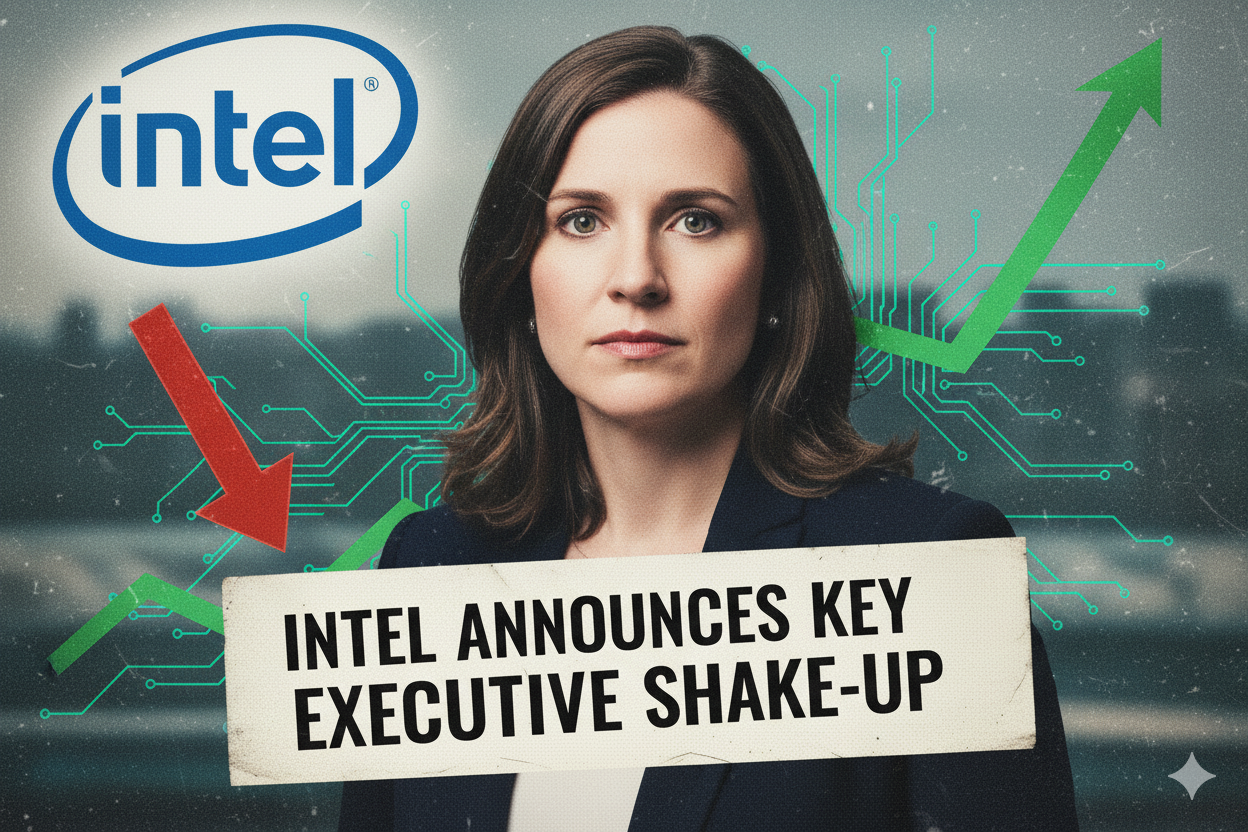
Intel leadership shake-up: Chief product officer Michelle Johnston Holthaus to exit as company pivots to custom chips
Intel is undergoing a major leadership overhaul after Chief Product Officer Michelle Johnston Holthaus announced her departure; CEO Lip‑Bu Tan named new senior leaders as the company reorganizes to accelerate custom silicon, foundry services and AI-focused chip development.
Key takeaways
- Michelle Johnston Holthaus is leaving Intel but will remain briefly as a strategic advisor to ensure transition continuity — per Intel’s announcement and media reports (Intel press release, The Register, TechCrunch).
- Intel will not directly replace the CPO role; responsibilities are being reallocated to new leaders and a newly created Central Engineering group to speed custom silicon and AI chip development.
- Senior appointments include Srinivasan “Srini” Iyengar to lead Central Engineering, Kevork Kechichian to DCG, Jim Johnson to CCG and Naga Chandrasekaran adding Foundry Services to his portfolio.
- The reorganization aims to align product development, manufacturing and services to better pursue foundry customers and compete in the booming AI/custom chip market.
What happened
Intel announced a sweeping leadership change after Michelle Johnston Holthaus, a more than 30‑year Intel veteran and the company’s chief executive of products, said she would leave the company. Intel said Holthaus will stay briefly as a strategic advisor to help with the transition. The company also unveiled a set of senior appointments and a reorganization intended to accelerate custom silicon, foundry services and AI-focused products (Intel press release, The Register, TechCrunch).
Why it matters
CEO Lip‑Bu Tan framed the shake-up as a move to strengthen execution, speed product development and sharpen Intel’s go‑to‑market for AI and custom chips. Industry observers say the changes respond to competitive pressure and scrutiny of Intel’s foundry strategy, and are meant to better align product architecture with manufacturing and services to win external customers.
Background on Michelle Johnston Holthaus
Holthaus has been at Intel for more than 30 years, holding several senior roles including interim co‑CEO alongside CFO David Zinsner after Pat Gelsinger’s exit in late 2024. Her recent title — chief executive of products — spanned roughly ten months. Intel credited her with transforming businesses and building teams that served both consumer and data‑center markets during intense competition from AMD and Nvidia.
CEO Lip‑Bu Tan: “She transformed major businesses, built high‑performing teams and worked to delight our customers. She has made a lasting impact on our company and inspired so many of us with her leadership.”
Details of the restructuring
Intel created a Central Engineering group to coordinate product architecture and chip design across lines of business, aimed at speeding custom chip work for both external customers and internal teams. Srinivasan “Srini” Iyengar, who joined from Cadence Design Systems in July 2025, will lead Central Engineering.
Other appointments include Kevork Kechichian to lead the Data Center Group (DCG), Jim Johnson as senior vice president and general manager of the Client Computing Group (CCG), and Naga Chandrasekaran — already EVP and chief operating officer of Intel Foundry — who will add Foundry Services to his duties. Intel said it will not directly backfill the CPO title, preferring the consolidated model to speed decisions and execution (TechCrunch, Intel press release, The Register).
Industry reaction and strategic implications
Analysts view the shake‑up as a signal that Intel is repositioning aggressively for the AI chip market and to sell more custom silicon to cloud providers, device makers and governments. The Central Engineering group and Chandrasekaran’s combined responsibilities aim to make Intel more responsive to customer needs and shorten development cycles, while addressing scrutiny over its foundry plans (TechBuzz, TechCrunch).
Holthaus’s ~ten‑month tenure as CEO of Products and her interim co‑CEO role have raised questions about leadership continuity during rapid industry change. Investors and watchers will judge the reorg by whether product launches become faster and more reliable and whether Intel’s custom silicon business gains traction versus specialized competitors.
Implications for Redding, California
Economic impact
- Jobs and suppliers: A successful push for custom silicon contracts and expanded foundry services could strengthen the broader U.S. chip supply chain and increase demand for regional suppliers and service firms in Northern California, including machine shops, logistics firms and professional services around Redding (Intel press release, TechCrunch).
- Investment and pensions: Regional investors and pension funds holding Intel shares will watch whether leadership changes improve returns as custom silicon and foundry services scale (TechBuzz).
Political consequences
- Local policymakers: Redding’s officials and business development agencies may see opportunities to lobby for incentives to attract manufacturing and technical jobs as Intel refocuses on foundry and custom silicon — conservative leaders will likely favor private investment and lighter regulatory burdens (TechBuzz).
- Federal scrutiny: The reorg comes amid government attention on domestic semiconductor capability; related funding and oversight could create grant or contract opportunities for regional projects and contractors (TechCrunch).
Social effects
- Workforce development: If Intel’s strategy yields additional foundry work, community colleges and vocational programs across the North State could partner with industry to train workers for higher‑paying manufacturing and tech roles (Intel press release).
- Talent competition: Expansion of services outside Silicon Valley could force regions like Redding to promote quality‑of‑life advantages to attract technical and managerial talent (The Register).
Cultural relevance and practical applications
Intel’s pivot toward custom silicon reflects a broader industry shift to specialized hardware for AI. Local businesses using smart systems, edge devices or small data centers could benefit from chips tailored to sectors such as agriculture and healthcare. For residents, near‑term effects may include new job postings, contractor opportunities and school‑industry partnerships — with an emphasis on private‑sector solutions and job creation that appeals to conservative readers.
Reporting and sources
This article draws from Intel’s official announcement and independent industry reporting. Primary sources and coverage include: