
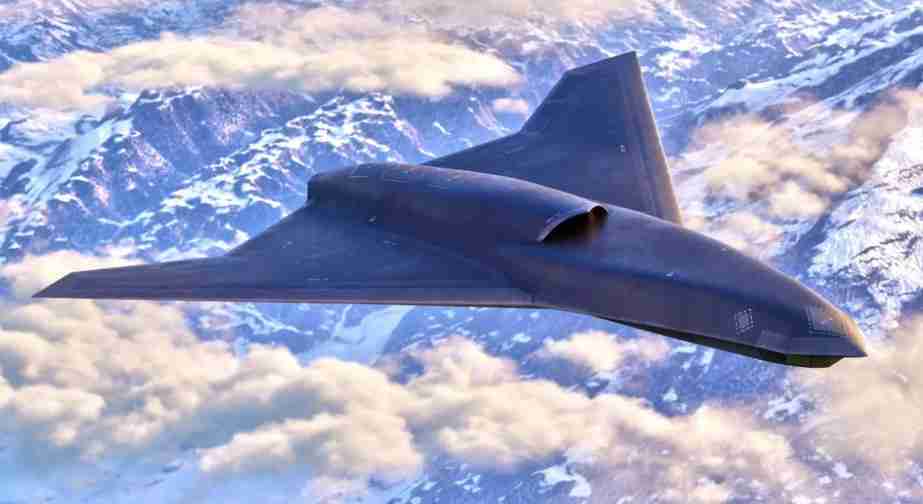
Lockheed Skunk Works unveils Vectis stealth combat drone — a low-cost “loyal wingman” built to fly with the F-35 and future fighters
Lockheed Martin’s Skunk Works unveiled Vectis on Sept. 19, 2025 — a low-observable Collaborative Combat Aircraft designed for ISR, strikes and electronic warfare, built as a low-cost “loyal wingman” to team with the F‑35 and future fighters.
Key takeaways
- Vectis is a tailless, stealthy Group 5 UAS designed as a Collaborative Combat Aircraft (CCA) for ISR, strike and EW roles; Lockheed says it will fly within two years of the Sept. 19, 2025 unveiling.
- Modular mission packages let the same airframe swap quickly between ISR, precision strike, decoy, electronic warfare and air-to-air roles — intended as an affordable “loyal wingman.”
- High autonomy and teaming are central: Lockheed positions Vectis to share sensors and operate alongside F‑35, F‑22 and future NGAD fighters while keeping human pilots in the loop.
- Open questions include propulsion details, supersonic capability, costs and policy/oversight around autonomous weapons.
Key information
Name: Vectis stealth combat drone; classified as a Group 5 unmanned aerial system (weighs more than 1,320 pounds and can fly above 18,000 feet). (Sources: Air & Space Forces; Lockheed Martin)
Role: Collaborative Combat Aircraft (CCA) for ISR, precision strike, electronic warfare, offensive and defensive counter-air, decoy and data-relay missions; can act as a “loyal wingman” with F‑35, F‑22 and future NGAD systems. (Sources: Air & Space Forces; Fox Business)
Form and features: Tailless lambda wing, chine lines, blended antennas and a top-mounted air intake to lower radar signature; modular architecture for mission packages. (Source: Lockheed Skunk Works presentation/video)
Timeline: Public unveiling September 19, 2025; first flight planned within two years, possibly by late 2027. (Sources: Air & Space Forces; Lockheed Martin)
Program fit: Pitched for U.S. Air Force CCA Increment 2 and joint/allied needs; Lockheed emphasizes affordability and an “agile drone framework” for rapid updates. (Sources: Fox Business; Air & Space Forces)
Design, missions and claimed advantages
Vectis is designed from the ground up to be low-observable and flexible. Lockheed Skunk Works says the drone uses a tailless lambda wing and other stealth features to reduce radar returns in contested airspace. The company calls Vectis a Collaborative Combat Aircraft — a platform meant to team with crewed fighters, extend their sensors and act as a force multiplier on the battlefield. (Sources: Lockheed Martin; Skunk Works briefing/video)
Lockheed officials told reporters the platform will carry swappable mission modules. That allows the same airframe to perform intelligence, surveillance and reconnaissance (ISR); precision attack; electronic warfare; decoy roles; or even air-to-air missions. Skunk Works president OJ Sanchez described Vectis as “an entirely new paradigm for affordable, highly customizable airpower” that builds on Lockheed’s fighter and autonomy work. (Sources: Fox Business; Lockheed Martin)
Autonomy, teaming and weapons
A central selling point for Vectis is high levels of autonomy. Lockheed says Vectis can navigate, hunt targets beyond visual range and share sensor data with crewed fighters in real time — enabling pilots to manage larger battlespaces while keeping humans in the decision loop. (Source: Skunk Works briefing/video)
The company frames Vectis as both a cooperative partner for aircraft such as the F‑35 and F‑22 and as an affordable way to add capability across allied air forces. Lockheed is positioning the drone for the USAF’s CCA Increment 2 competition and potential Navy and allied roles, emphasizing speed and cost as selling points. (Sources: Air & Space Forces; Fox Business)
Open questions and gaps in public information
Several technical and policy details remain undisclosed. Lockheed has not released specifics on the Vectis powerplant, fuel type or whether the aircraft will be supersonic. Public briefings state it can “keep up with fifth-gen fighters,” but Lockheed avoided committing to supersonic performance. (Source: Air & Space Forces)
Policy and oversight questions accompany highly autonomous weapon systems: How will fire-control decisions be handled? What safeguards will prevent mission creep or misidentification in crowded theaters? Lockheed stresses human-machine teaming, but public documents have yet to show detailed rules of engagement or software-assurance plans. These remain important issues for Congress, the Department of Defense and allied partners. (Sources: Fox Business; Air & Space Forces)
Program timing and cost realities
Lockheed says Vectis will fly within two years of the unveiling — a privately ambitious schedule that industry watchers and the Air Force will scrutinize. The CCA arena already includes rapid prototypes from multiple contractors; Lockheed emphasizes an “agile drone framework” to allow frequent software and sensor upgrades rather than prolonged hardware cycles. (Source: Skunk Works materials)
The company promises affordability, but precise unit costs have not been released. Affordability claims are central because the CCA concept depends on buying many drones to field persistent, distributed capability — which requires a clear budget case for Congress and allied customers. (Sources: Fox Business; Air & Space Forces)
Strategic context and allied interest
Vectis arrives as the Pentagon pushes to pair crewed fighters with unmanned systems to offset numbers and costs. The CCA concept is part of a larger shift toward mixed manned-unmanned teams, using smaller, less costly systems to extend the reach of expensive fifth‑generation fighters. Proponents argue this approach will add sensors, decoys and weapons while reducing pilot risk. (Sources: Air & Space Forces; Fox Business)
Lockheed has also highlighted export potential, framing Vectis to meet allied needs — which could attract partners seeking stealthy, networked drones. That raises questions about export rules, technology-transfer protections and how allies would share sensitive autonomy frameworks. (Source: Fox Business)
Implications for Redding, California
Economic impact: Northern California suppliers and small manufacturers could see new contract opportunities if Lockheed expands its supply chain to include regional firms. While primary manufacture will likely remain in major aerospace hubs, Lockheed’s push for affordability and modular parts could open work for metal fabricators, electronics shops and software firms across the state. Local firms that certify to defense standards could bid on parts, test fixtures or software services. (Source: Lockheed program materials)
Jobs and workforce: Redding’s labor pool — veterans, technicians and small manufacturers — could be retrained for aerospace supply roles. Community colleges and vocational programs may introduce short courses in composites, avionics and cyber work to meet local demand, producing skilled, higher-paying jobs.
Political consequences: National defense projects tend to draw bipartisan support. Local representatives who back airpower modernization may press for federal contracts and workforce-development funding, shaping campaigns and state budget priorities.
Social and cultural effects: Redding’s strong veteran community may welcome advanced airpower investment, while also raising debates about the ethics of autonomous weapons — an issue that spans the political spectrum and could prompt local forums and civic discussion.
Practical applications: Nearby airports, testing ranges and tech firms could see increased activity if Lockheed or primes use regional facilities for testing, software integration or limited assembly. Even if major manufacturing remains elsewhere, surge work and subcontracted parts can produce near-term business opportunities.
What to watch locally: Residents should monitor announcements about subcontracting fairs, workforce grants and community-college programs tied to aerospace skills. Elected officials and business groups can press Lockheed and primes to consider Northern California suppliers and training partners. Expect federal and state grant activity aimed at workforce development if Vectis progresses to production. (Sources: Fox Business; Air & Space Forces)
Sources and reporting
This article draws on Lockheed Martin’s announcement and public materials and reporting by defense outlets. See Lockheed Martin press release and overview; coverage and analysis by Air & Space Forces Magazine; additional reporting by Fox Business; background and commentary on the CCA concept at National Security Journal; and the Lockheed Skunk Works technical brief and video.



