Trump’s 50-Year Mortgage Proposal Draws Fire From Experts — What It Could Mean for Redding Homebuyers
A government-backed 50-year fixed-rate mortgage proposed by President Trump and FHFA Director Bill Pulte aims to lower monthly payments and expand access to homeownership, but experts warn of much higher lifetime interest and slower equity growth.
Key takeaways
- Lower monthly payments could help more buyers qualify, but total interest paid would rise sharply.
- Equity builds slower, increasing the risk of owing more than a home’s value early on.
- Price pressure: cheaper monthly costs may push buyers to bid up local home prices.
- Systemic risk for lenders and taxpayers if guarantees extend to 50-year loans.
How a 50-year mortgage would work
A 50-year fixed-rate mortgage spreads principal repayment over 600 months, lowering monthly payments for the same loan amount and potentially allowing buyers with the same income to qualify for larger mortgages. Proponents argue it could be a “game changer” similar to earlier expansions of long-term lending (Fox Business; Fortune).
Financial trade-offs: more months, more cost
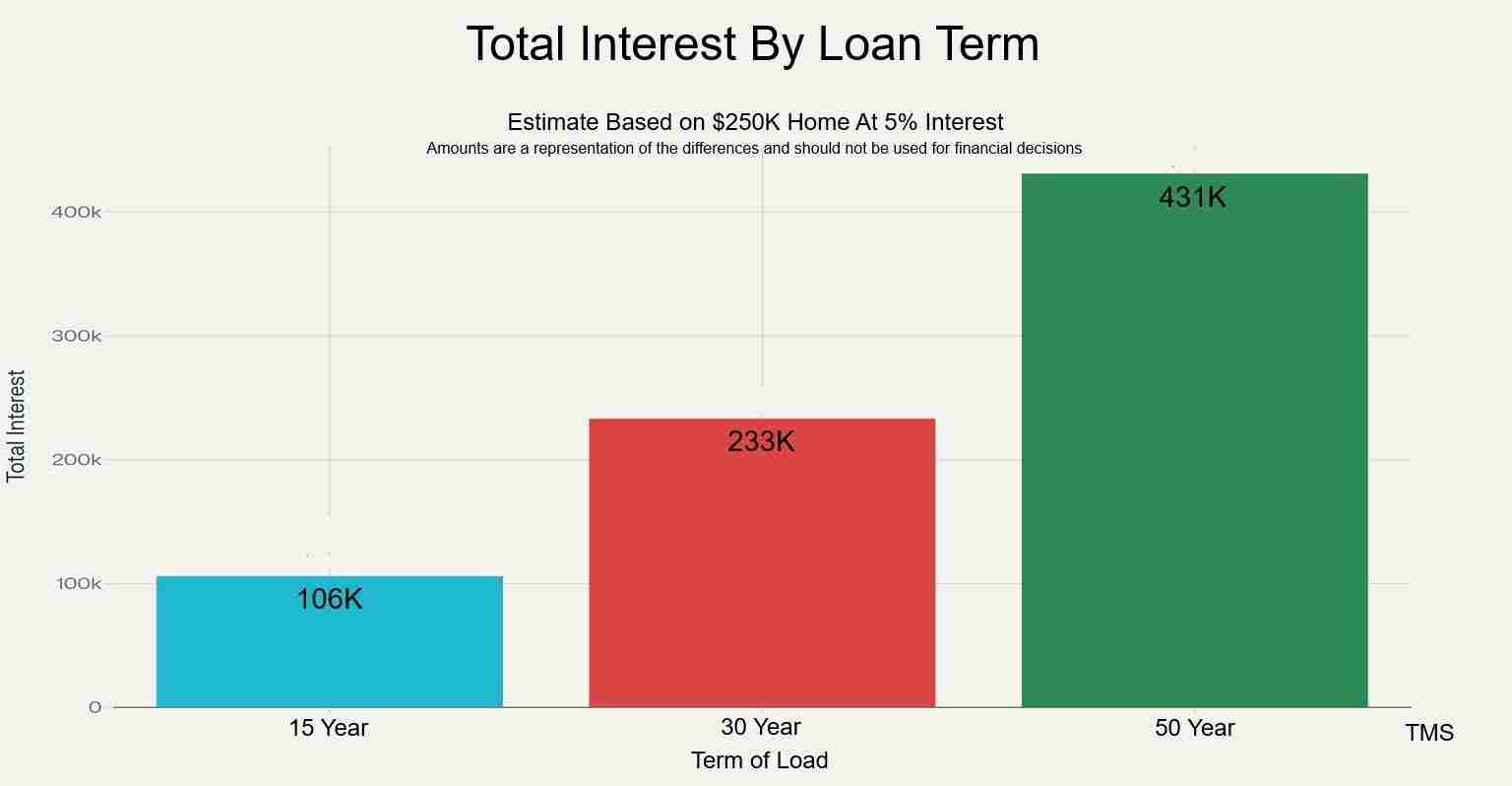
Stretching amortization to 50 years typically carries a higher interest rate than a 30-year loan because lenders price in longer repayment horizons and greater exposure to economic cycles. The result: substantially higher cumulative interest and much slower equity accumulation — in many scenarios adding tens or hundreds of thousands of dollars in interest over the loan’s life (HousingWire; Fortune).
“A lower monthly bill does not mean a cheaper home,” analysts note — slower principal paydown can leave homeowners vulnerable if they must sell during a market downturn (Politico).
Potential to raise home prices
Economists warn that expanding buyers’ purchasing power via lower monthly payments can drive up demand and prices, potentially offsetting affordability gains. In competitive markets, the apparent monthly savings may be absorbed by higher sale prices as buyers bid more aggressively (Fox Business; CBS News).
Market and regulatory risks
Extending government guarantees to 50-year loans would change the known risk profile of mortgage-backed securities and taxpayer exposure. Critics call it a short-term fix that avoids addressing core supply constraints — namely insufficient homebuilding and restrictive zoning (Politico; HousingWire).
Political framing and reactions
Supporters, led by President Trump and FHFA Director Bill Pulte, frame the plan as expanding homeownership. Opponents warn of shifting long-term risk to taxpayers and argue for supply-side reforms such as zoning changes and incentives for new construction (Fox Business; CBS News).
Implications for Redding, California
Economic impact
- Monthly payments: Redding buyers could see lower monthly requirements, helping some first-time buyers and fixed-income households qualify.
- Total cost: Local households would likely pay far more in cumulative interest over decades, reducing equity gains that build generational wealth.
- Local prices: If more buyers can qualify for larger loans, Redding home prices could rise — helping current owners but making entry harder for new buyers and public servants.
Political consequences
Local officials in Shasta County and Redding may be pressured to respond. Conservative leaders may favor supply-side fixes — cutting red tape and encouraging private building — over expanded federal guarantees that shift long-term risk to taxpayers.
Social effects and cultural relevance
Mobility & risk: Slower equity growth can reduce mobility and increase the chance of selling at a loss. Generational wealth: Families may find homeownership less effective at building wealth under longer-term, interest-heavy loans. Homeownership is culturally valued in Redding, but extended-debt proposals may clash with local priorities of self-reliance and fiscal responsibility.
Practical applications for Redding residents
- Read the fine print: Compare cumulative interest, not just monthly payments. Use calculators and get total-cost estimates for 30- vs 50-year options (HousingWire).
- Consider alternatives: Larger down payments, shorter terms, or different products may better preserve equity and long-term wealth.
- Watch local policy: Advocate for zoning reform and build-ready land policies that increase supply and address affordability structurally.