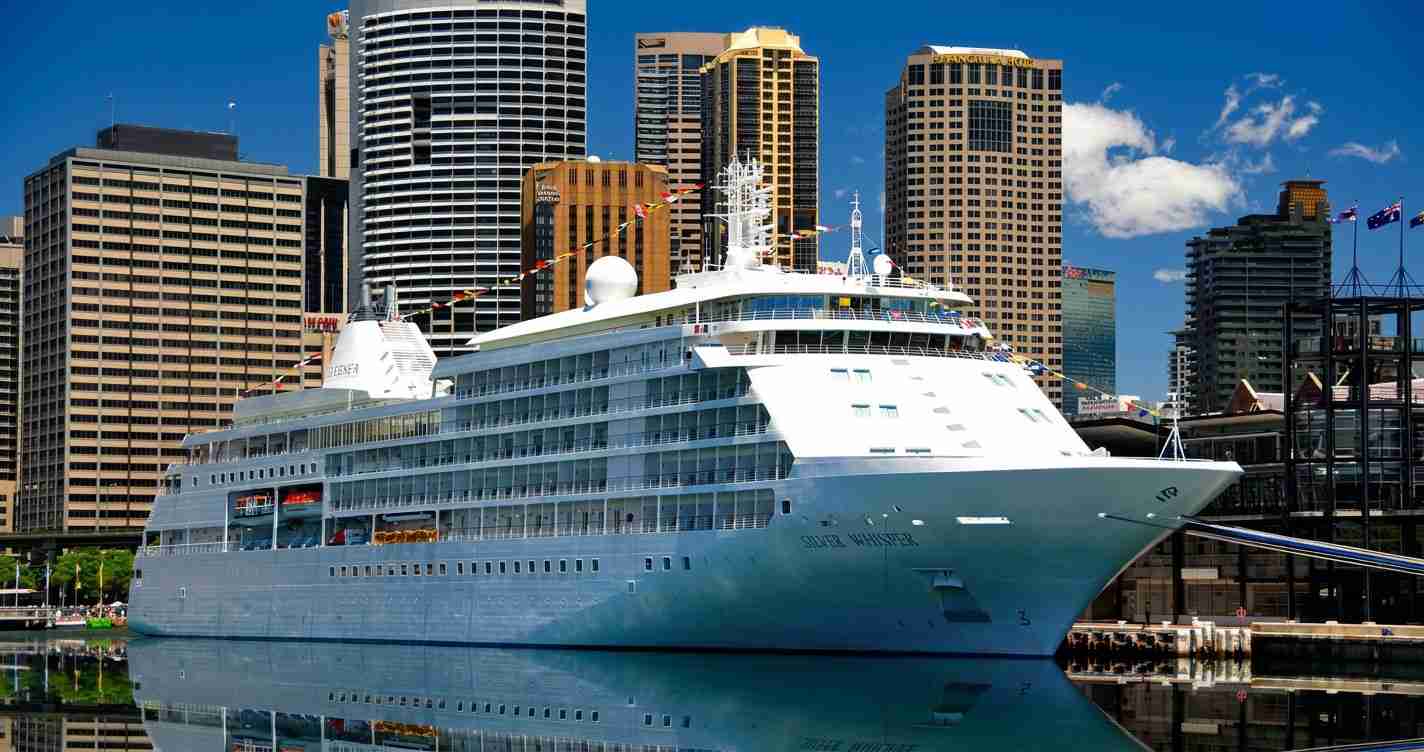
Luxury ship Silver Whisper diverts through gale-force winds in daring Pacific Ocean rescue of injured sailor
On May 26, 2026, the luxury cruise ship Silver Whisper diverted through gale-force winds and heavy seas to rescue a 74-year-old Canadian sailor from the dismasted 29-foot sailboat April Alice, hundreds of miles offshore off the U.S. West Coast.
Key takeaways
- Silver Whisper diverted roughly seven hours after AMVER identified it as the closest ship and retrieved a 74-year-old Canadian with a broken left shoulder.
- Rescue coordination involved JRCC Victoria, the U.S. Coast Guard (including long-range C-27J aircraft), AMVER and the cruise ship’s crew under SOLAS obligations.
- Conditions were severe: gale-force winds, heavy seas with waves up to ~30 feet; the dismasted vessel April Alice was adrift and initially without reliable communications.
- Aftermath the sailor received onboard medical care and was to disembark in Vancouver; the diversion added roughly seven hours to the ship’s schedule.
Main
What happened
The disabled vessel, reported as April Alice (also reported as Alice), is a roughly 29-foot sailboat that began a passage from Hawaii to British Columbia. In gale-force winds and heavy seas—with waves reported up to about 30 feet—the boat lost its mast and engine power and was left without communications.
Passengers described the search as like finding “a needle in a haystack” as the sailboat drifted in heavy seas.
A Mayday distress call was relayed via the Joint Rescue Coordination Centre (JRCC) Victoria to the U.S. Coast Guard (USCG) Northwest District. The sailor’s handheld satellite communicator provided position fixes and two-way contact; because the scene was nearly 500 miles offshore, helicopter rescue was not feasible.
How the rescue was coordinated
The USCG activated AMVER (Automated Mutual-Assistance Vessel Rescue System), which flagged Silver Whisper as the closest suitable vessel—about 120 miles away. Captain Michele Macarone Palmieri complied with SOLAS duties to divert and attempt the rescue.
Long-range aerial overwatch was provided by at least one C-27J Spartan fixed-wing aircraft from Sacramento; reports indicate two C-27J deployments were used at different times to maintain coverage during the extended operation.
Search and transfer under rough conditions
Silver Whisper steamed for roughly seven hours to reach the search area. Passengers reported the ship had no precise coordinates at first and that crew stabilized operations as best they could. On arrival the crew conducted a transfer operation in worsening conditions; stabilizers were reportedly retracted, guests were told to remain in cabins, and motions aboard became more pronounced.
Result: the sailor was found alive but injured—passengers reported a broken left shoulder. He was brought aboard within about an hour of the ship’s arrival and received treatment from the ship’s medical team; plans were made for disembarkation in Vancouver.
Impact on the voyage and passengers
The diversion and on-scene time added roughly seven hours plus transfer time to Silver Whisper’s schedule. Industry tracking placed the ship near Neah Bay, Washington, after the rescue, with a planned arrival in Vancouver on May 28. Some passengers reported potential missed flights or onward travel issues, while many praised the crew’s actions and emphasized that saving a life outweighed schedule inconvenience. One passenger also reported a crew injury during the transfer; that report is not consistently confirmed across all sources.
Legal and maritime context
International maritime law and SOLAS obligations require ships to assist persons in distress at sea when safe and feasible. AMVER is routinely used when distress calls are beyond the reach of Coast Guard vessels and helicopters; it locates merchant and passenger ships that can divert to help. This event is a clear example of multi-agency coordination—JRCC Victoria, U.S. Coast Guard districts, AMVER, long-range fixed-wing aircraft, satellite communications, and a willing merchant vessel.
About Silver Whisper
Silver Whisper is a 28,258-gross-ton, 392-guest luxury cruise ship operated by Silversea Cruises, a Royal Caribbean Group brand. The vessel is marketed for high-end amenities—including a wellness spa, boutiques and multi-tiered entertainment—which contrasts with the tough seamanship demonstrated during this rescue.
Implications for Redding, California
Economic: Though inland, Redding connects to Pacific travel and tourism networks; delays can ripple through regional airports, shuttle services and travel businesses.
Political: The episode highlights federal-local partnerships and could reinforce calls for Coast Guard investment and support for AMVER.
Social and practical: The rescue reinforces search-and-rescue values in communities like Redding and underscores the importance of satellite communicators, float plans, and weather preparedness for long passages.
Practical takeaways
- Mariners: Carry a satellite communicator, file float plans, and prepare for severe weather.
- Travelers: Allow buffer time for connections—dramatic rescues can cause schedule changes.
- Officials: Use the case to review coordination between federal agencies and private vessels for long-range incidents.
Sources and reporting
Additional reporting options
Further examinations could compare this event to past cruise-ship rescues or analyze SOLAS, AMVER and long-range rescue policy—including how federal funding and capability decisions influence outcomes. The sources linked above provide starting points for deeper technical reporting.