
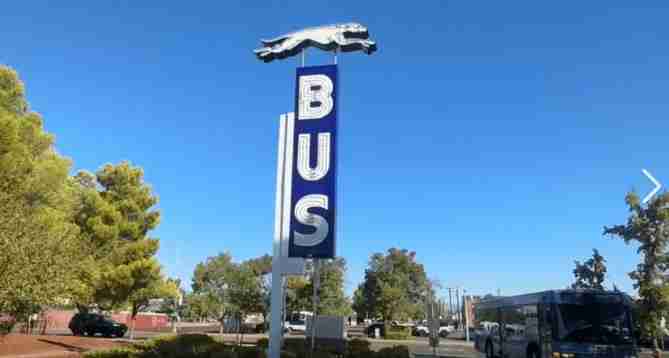
Redding Lights Restored Greyhound Sign in Public Ceremony, Marking Win for Local Preservation and Downtown Revival
Redding, California re-illuminated its restored Greyhound sign in a public ceremony at the Greyhound bus station on Yuba Street, celebrating historic preservation, downtown revitalization, and renewed local interest in the transportation landmark and city heritage.
- Historic preservation: The restored Greyhound sign returns to 1530 Yuba St as a mid-century landmark.
- Downtown impact: The lighting aims to draw evening foot traffic and support local businesses on Yuba Street.
- Community pride: Residents and officials used the event to celebrate shared memories and civic identity.
- Context and sources: Station details and historical context are documented for verification and follow-up.
A landmark returns: background on the Greyhound sign
The Greyhound sign is a classic piece of mid-20th-century Americana — an art‑deco fixture featuring the running greyhound silhouette. Restorations of neon and historic signage have become common methods for cities to preserve visual identity and celebrate transportation heritage.
The sign now stands at the Redding Greyhound bus station at 1530 Yuba St, anchoring a visual reminder of the city’s transit past. Confirmed station details appear in the Greyhound station listing.
What happened at the lighting ceremony
Organizers staged a public event to reintroduce the sign. Typical elements included official remarks, a countdown, and the moment of illumination that brought the neon back to life. Long-time residents attended and shared memories, making the event both celebratory and communal.
“The lighting celebrated continuity with the past while drawing attention to Yuba Street’s evening life.”
Why the sign matters to Redding
The restored sign is more than neon; it ties Redding to a national transportation story. For decades, Greyhound linked communities across California and the U.S., and preserving signage acknowledges the role of transit hubs in shaping downtown commerce and daily life.
Practical benefits include increased foot traffic for restaurants and small retailers, potential heritage tourism, and an attractive evening streetscape that can encourage further private investment.
Context and broader history
Redding’s restoration is part of a national movement to revive neon and mid‑century signage as visual anchors of local identity. The broader history of Greyhound includes both expansion of service and episodes of labor tension; archival reporting offers additional background. See contextual reporting on Greyhound labor history for one example of that complex past.
Sources and verification
At the time of reporting, comprehensive mainstream coverage of the specific lighting ceremony is limited. Station information helps verify the location: Redding Greyhound bus station listing and station details. Local event context and downtown programming examples are available at local events context. Further details may be obtained from city press releases, the Shasta Historical Society, or local news outlets.
Redding historic preservation and downtown planning
The Greyhound sign restoration exemplifies targeted preservation: visible, cost-aware projects that can be executed through public-private partnerships. Such collaborations reduce taxpayer burden while producing measurable downtown benefits — increased visitors, evening activity, and potential private investment.
- Partnership model: Public, private, and nonprofit cooperation is typical.
- Conservative-aligned outcomes: Emphasizes fiscal prudence and tangible returns like commerce and tourism.
- Scalable proof point: The project can support grant applications for future restorations.
Community response and local pride
Reaction to the lighting was broadly positive. Restorations can spark storytelling across generations, galvanize volunteerism, and create inexpensive civic celebrations that benefit downtown merchants.
Practical considerations and next steps
To extend the ceremony’s value, leaders and business owners can coordinate follow-up activities:
- Timed promotions and evening events near the sign.
- Heritage walks and signage maps linking nearby historical points.
- Marketing to photography and heritage-tourism audiences.
Implications for Redding
Economic: Potential boost to Yuba Street commerce and modest heritage tourism revenue.
Political: Demonstrates a targeted, cost-conscious preservation approach that appeals to fiscal prudence while delivering visible results.
Social and cultural: Strengthens civic pride, encourages local storytelling, and preserves a distinctive piece of Redding’s urban fabric.
Sources and further reading
- Redding Greyhound bus station listing and station details
- Historical context on Greyhound and labor history
- Local event and downtown context (example community events)
For exact timing, full remarks, and attendee lists, contact the City of Redding communications office, the Shasta Historical Society, or local news bureaus that covered the downtown event.



