
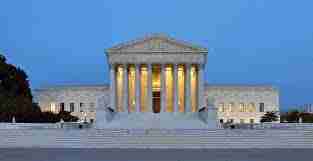
Louisiana Voters Ask Supreme Court to Strike Down Major Voting Rights Act Provision in Redistricting Fight
A group of Louisiana voters has asked the U.S. Supreme Court to overturn Section 2 of the Voting Rights Act, a move arising from disputes over Louisiana’s congressional map that critics say dilutes Black voting strength statewide.
Key takeaways
- What’s at stake: Petitioners ask the Court to overturn Section 2, which lets voters challenge maps and rules that dilute minority voting strength; see Invest Louisiana.
- Case origin: Plaintiffs say Louisiana’s congressional map leaves Black voters able to elect their preferred candidate in only one of six districts despite Black residents comprising nearly one-third of the state.
- Dual litigations: Black voters sued under Section 2 for vote dilution while a separate group asked the Supreme Court to declare Section 2 unconstitutional; see Brennan Center and League of Women Voters.
- Court activity: The Supreme Court heard oral arguments in Louisiana v. Callais and later asked for new briefs in the related redistricting litigation, signaling broad consequences; see SCOTUSblog.
Main story
What the case is about
At the heart of the dispute is a legal tension between two principles: the prohibition on using race as the predominant factor in drawing districts, and the federal protection against maps that have the effect of diluting minority votes. Petitioners argue Section 2 effectively forces states to draw districts by race and thus conflicts with the Equal Protection Clause of the Fourteenth Amendment; for background reporting see Invest Louisiana.
How the Louisiana maps triggered the fight
After the 2020 census, Louisiana’s population data showed a large Black population share. Lawmakers made only minor changes to the congressional map, leaving a structure where Black voters could elect their candidate of choice in only one of six U.S. House districts, plaintiffs say. Those plaintiffs contend a second district could be drawn under neutral rules that would enable Black voters to elect their preferred candidate — an argument rooted in Section 2 protections; see Brennan Center and League of Women Voters.
Competing viewpoints
Petitioners’ argument: Section 2 allegedly forces mapmakers to account for race when drawing districts, which petitioners say conflicts with equal-treatment principles and asks the Court to stop courts from ordering race-based maps; see Invest Louisiana.
Opponents’ view: Civil-rights advocates say Section 2 is a critical federal guardrail that allows challenges to maps that dilute minority voting power even absent explicit racist intent. They warn that voiding Section 2 would remove a key remedy against packing and cracking; see Brennan Center and League of Women Voters.
What legal experts warn
Voting-rights lawyers caution that narrowing or striking Section 2 would remove one of the last broad federal tools to challenge race-based vote dilution. They warn state-level protections are uneven and that plaintiffs would face a higher burden to prove discrimination if Section 2 is weakened; see analysis from the State Court Report.
Recent procedural moves
The Supreme Court heard oral arguments in Louisiana v. Callais (March 24, 2025) and later requested new briefs in the related redistricting litigation — a sign justices are weighing the constitutional challenge carefully; see SCOTUSblog. Meanwhile, some Louisiana state officials have shifted their litigation posture, at times not defending the congressional map and instead backing the constitutional attack on Section 2; see Invest Louisiana.
National significance
Scholars note a ruling that narrows or voids Section 2 would reshape decades of precedent and likely prompt new litigation nationwide. Voting-rights groups say minority voters across many states could lose an important legal avenue for protecting representation; see Brennan Center and State Court Report.
Implications for Redding, California
Economic impact
A sweeping decision could spur new lawsuits in California. Counties and cities, including areas around Redding, may face legal fees and diverted public funds. Local election offices in Shasta County might need to spend more on compliance or legal counsel.
Political consequences
California uses an independent redistricting commission, but national precedent affects litigation strategies. A ruling that limits Section 2 could alter claims in state courts and change pressures on local maps and campaigns.
Social effects
A high-profile change to federal voting protections could intensify local debates about election fairness, community relations, and voter confidence. Clear local communication will be important to maintain trust in election administration.
Cultural relevance
The case raises issues about federal power vs. local control, equal treatment under the Constitution, and civic duties—topics that resonate strongly with many Redding readers who prioritize rule of law and local governance.
Practical applications for residents
- Watch local election notices; national changes don’t instantly alter local ballots.
- Contact state legislators or local supervisors to express views on how California should respond.
- Stay informed on local legal notices and news in case new lawsuits are filed.
Sources and further reading
- Invest Louisiana: “Louisiana asks Supreme Court to gut Voting Rights Act”
- League of Women Voters (LWV): “Racial vote dilution and gerrymandering — Louisiana v. Callais”
- Brennan Center for Justice: “The Voting Rights Act Returns to the Supreme Court”
- State Court Report: “What happens if the U.S. Supreme Court guts the Voting Rights Act?”
- SCOTUSblog: “Court asks for new briefs in Louisiana redistricting case”
“The Supreme Court’s handling of the Louisiana challenge will be watched closely in state capitals and county courthouses across the country.”
Bottom line: The Court’s decision on Section 2 and related redistricting litigation could remake how race and voting interact in U.S. elections, with practical effects that ripple from Washington to communities like Redding.



