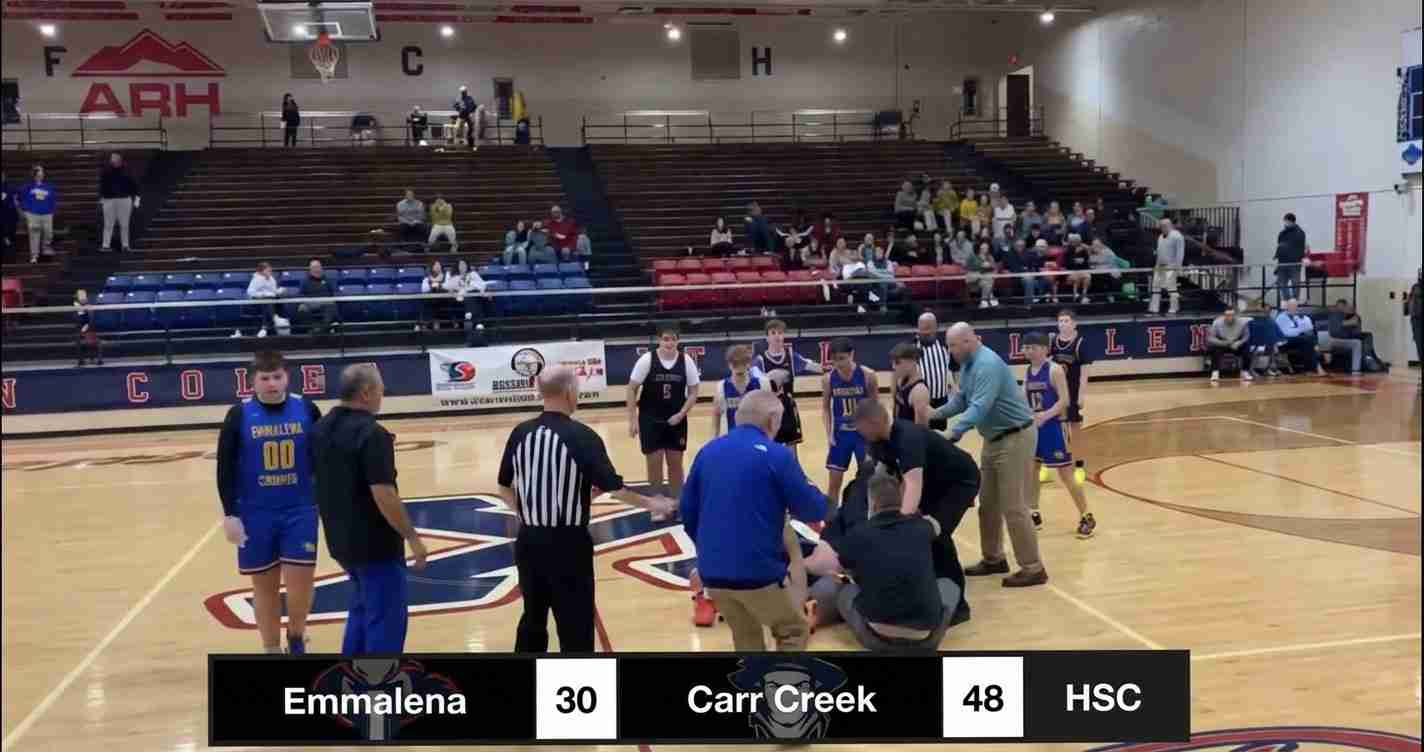
Middle school basketball fight in Kentucky ends with adult tased; announcer’s casual call draws online backlash
A middle school basketball game in Hindman, Kentucky, erupted into a chaotic scene when a player scuffle escalated as parents entered the court, prompting authorities to tase an adult while an announcer’s flat delivery of the incident went viral.
Key takeaways
- Player scuffle escalated: Two players tackled each other, sparking a larger confrontation when parents entered the playing area.
- Use of force: Authorities subdued at least one adult with a Taser to end the altercation.
- Viral reaction: The game announcer’s calm line — “They just tased Ryan” — drew social media attention and criticism.
- Safety questions: The episode raised concerns about spectator conduct, event security, and how to protect children at youth sports events.
What happened at Knott County Central High School
During the A‑Team Championship between Emmalena and Carr Creek elementary schools at Knott County Central High School, two players collided and fell to the court, touching off a scuffle. Coaches and nearby players rushed in to separate the youths, but several parents left their seats and entered the playing area, witnesses said. Those adults’ involvement escalated the incident from a youth altercation to an adult confrontation.
Authorities were called, and video circulated online shows officers using a Taser on at least one adult on the floor. The clip includes an announcer’s updates amid the chaos, notably saying,
“Look here, this ball game’s gotta get over.”
and later,
“They just tased Ryan.”
The matter‑of‑fact delivery prompted many viewers to react on social media. (Source: WFIN)
Why the announcer’s tone drew attention
Expectations vs. delivery: Public‑address announcers are often the first voice the crowd hears during incidents; viewers expected urgency or a call to clear the court. Instead, the announcer’s flat description of the tasing felt jarring to many, blurring the line between reporting events and normalizing force where children were present.
The clip spurred debate: was the announcer attempting to avoid panic, or was the tone indicative of familiarity with such scenes? The video itself does not resolve that, but it did ignite discussion about how broadcasters and event staff should communicate during safety incidents. (Source: WFIN)
Safety, supervision and the role of parents
Local youth sports rely on volunteers, parents and school staff. When adults leave the stands and enter the playing area, the risk of escalation increases. Coaches typically train to de‑escalate conflicts between players and are not always equipped to handle adult confrontations. The Knott County episode underscores the need for clear pregame guidance and enforced boundaries.
Experts recommend measures such as pregame reminders, posted spectator rules, designated seating boundaries, visible event staff at high‑stakes games, and a formal plan for removing disruptive spectators. These steps can help prevent a sudden shift from a youth scuffle into an incident requiring law enforcement. (Source: WFIN)
Law enforcement and use of force in public spaces
Officers used a Taser to end the immediate confrontation. While Tasers can be a less‑lethal option to subdue aggressive individuals, the optics of a tasing on a middle school gym floor are stark. Authorities must weigh safety and the possible emotional trauma to children who witness forceful interventions.
This incident will likely prompt reviews of response protocols for youth sporting events — including guidelines on when to call law enforcement, how to isolate incidents from young spectators, and how to provide post‑incident support for children. The initial report did not include official statements from law enforcement or school officials, which readers expect in follow‑up reporting. (Source: WFIN)
Community reaction and social media
The clip circulated widely online. Comments ranged from incredulous to darkly humorous, with many users focused on the announcer’s nonchalant line and others criticizing parents who entered the court. The episode became a broader conversation about accountability at youth sporting events and the duty of adults to model appropriate behavior for children.
Several viewers noted the announcer’s tone sounded as if he were accustomed to such incidents, while others urged stricter enforcement of spectator rules. The debate highlighted tensions between protecting children, preserving public safety, and ensuring proportionate use of force. (Source: WFIN)
Implications for Redding, California
School and event security: Redding officials and youth‑sports organizers should review spectator conduct policies and consider visible event staff or roving security at championship games.
Parental responsibility: The incident underscores the need for parents to model calm, law‑abiding behavior; pregame reminders and booster‑club coordination can reinforce expectations.
Law enforcement transparency: If a similar response occurred locally, residents would expect prompt public explanations from police about the use of force and steps taken to protect children.
Liability and policy updates: School districts should consult counsel on spectator policies, liability waivers, and emergency response plans to mitigate risks when adults breach boundaries.
Practical steps for local leagues: Adopt pregame announcements, train volunteer ushers to enforce boundaries, post clear signage, and set written discipline policies (e.g., ejection/suspension for adults who interfere with play).
Civic opportunity: Use the episode as a teachable moment to reinforce community standards and support coaches and volunteers who run youth activities.
What next — reporting and accountability
The initial WFIN report and the viral clip present the basic facts but lack official statements from Knott County school officials, the sheriff’s office, or the announcer/broadcast operator. Follow‑up reporting should seek those perspectives to clarify response decisions, identify any charges or disciplinary actions, and explain how officials plan to support children who witnessed the event.
Transparency from local authorities and schools will be important to maintain public trust and to prevent speculation after the clip’s online spread. (Source: WFIN)