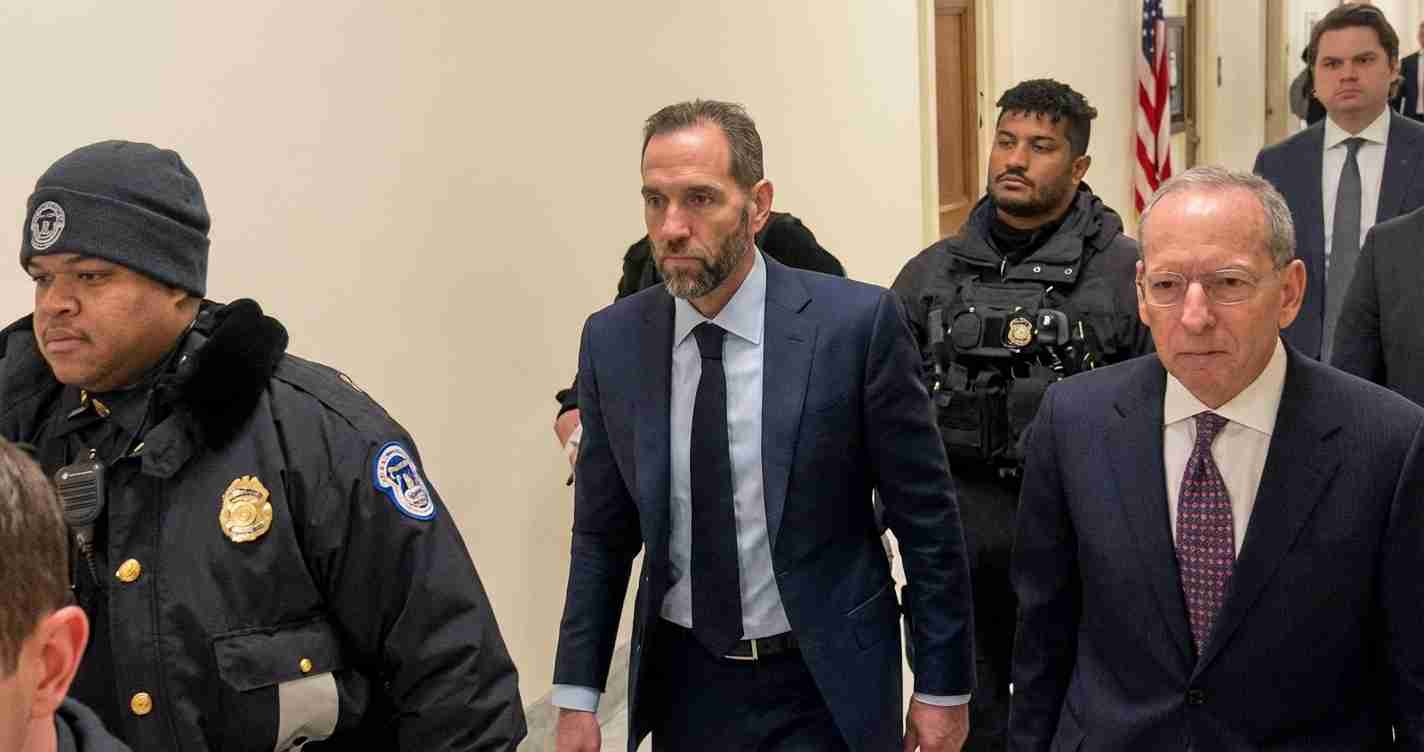
Jack Smith’s eight-hour House deposition: Key takeaways from the special counsel’s defense of the Trump probes
Special Counsel Jack Smith spent eight hours in a closed House Judiciary Committee deposition on December 17, 2024, defending his prosecutions of former President Donald Trump, asserting strong evidence, impartiality, and warning about witness intimidation in released transcript.
- Deposition and transcript: The closed-door testimony lasted about eight hours; the full transcript was released on Dec. 31, 2024.
- Burden of proof: Smith said his office developed what he described as “proof beyond a reasonable doubt” supporting charges in both the January 6 election interference and classified documents cases.
- Impartiality claimed: He said he made decisions “without regard to President Trump’s political association, activities, beliefs, or candidacy in the 2024 presidential election.”
- Witness safety & integrity: Smith warned that witness intimidation is “probably the most corrosive thing that can happen to the rule of law,” and described steps taken to avoid any appearance of partisanship.
What Smith told the committee: evidence and impartiality
Across more than 250 pages of transcript, Smith repeatedly emphasized that prosecutorial choices were grounded in evidence and legal analysis, not politics. He stated plainly,
“I made my decisions in the investigation without regard to President Trump’s political association, activities, beliefs, or candidacy in the 2024 presidential election.”
On the question of proof, Smith used the phrase “proof beyond a reasonable doubt” when describing the strength of evidence in both the January 6 and classified documents matters, indicating his office believed available evidence met the criminal standard required for charges.
He also sought to neutralize partisan critiques by saying he would pursue prosecution on the same facts regardless of party: “If asked whether to prosecute a former President based on the same facts today, I would do so regardless of whether that President was a Republican or a Democrat.”
Witnesses, threats and steps to protect integrity
A recurring theme in Smith’s testimony was the centrality of cooperating witnesses and the risks posed by intimidation. He warned that efforts to threaten or dissuade witnesses undermine criminal justice:
“probably the most corrosive thing that can happen to the rule of law.”
Smith described concrete steps taken by his team to preserve the appearance and reality of impartiality, including removing an FBI agent from the matter after review of a private email exchange — a removal Smith said was precautionary, intended to avoid any appearance of partisanship even where no misconduct occurred.
He credited allies and associates of Trump who cooperated as essential to building timelines, motives, and factual records that supported elements of the election interference case.
On accountability and potential retaliation
Smith said he anticipated efforts to discredit him and his staff, pointing to public posts on the former president’s social platform that labeled Smith with harsh epithets. He noted he was not surprised by threats of retaliation and had planned for political fallout.
He also told lawmakers there had been a moment when he considered not indicting — underscoring that he would have been “perfectly comfortable” declining prosecution if facts or law did not support charges. That statement was offered to illustrate caution and professional judgment rather than inevitability.
Procedural context and aftermath noted in the transcript
Appointed by then-Attorney General Merrick Garland in 2022, Smith was charged with investigating two strands: the alleged effort to overturn the 2020 election and alleged retention of classified documents at Mar-a-Lago. He filed charges in both matters; reporting and the transcript note later legal setbacks, dismissals in court on some fronts, and Smith’s resignation in early 2025 after a report concluded sufficient evidence existed in the election interference matter.
Smith requested a public hearing to verbally defend his team and career prosecutors who, he said, had been “vilified by President Trump and people who work for him.” Republicans on the committee denied that request, keeping the deposition closed until the transcript release on Dec. 31 opened the exchanges to public view.
How the deposition fits into the larger election interference probe and documents case
Throughout his testimony, Smith framed the prosecutions as applications of criminal law where facts justified it, emphasizing documentary evidence, witness testimony, and public statements as the foundation of the election interference case. He described the classified documents prosecution as grounded in evidence about custody and retention of sensitive material at Mar-a-Lago.
Implications for Redding, California
While federal legal developments in Washington and Florida are unlikely to produce direct economic shifts in Redding, the national attention can affect donor activity, campaign spending, and political travel — with secondary effects on local fundraisers and campaign offices.
Economic impact
Local businesses are unlikely to see immediate change, but sustained national focus on the Trump legal fights can influence political donations, campaign events, and volunteer time, which in turn may raise revenue for local campaign organizations.
Political consequences
Smith’s testimony is likely to deepen divisions among Redding voters. Conservative residents may cite the deposition to call for increased oversight of special counsels, while others may reference Smith’s insistence on evidence when arguing for adherence to rule-of-law standards.
Social effects
Smith’s warnings about witness intimidation may prompt local forums, town halls, and civic conversations focused on safety, civility, and limits of political speech. Such events could either calm tensions or amplify them depending on local leadership and tone.
Cultural relevance
In Redding’s conservative-leaning community, Smith’s assurances of impartiality may not persuade all residents. Expect continued debate in local media and among officials about federal authority, prosecutorial discretion, and the role of special counsels.
Practical applications for residents
Voters and local campaigners will have material to cite in evaluating candidates and measures. Conservative groups may push for additional oversight or hearings, while volunteers and potential witnesses should heed Smith’s warnings and consider safety measures when participating in politically sensitive matters.