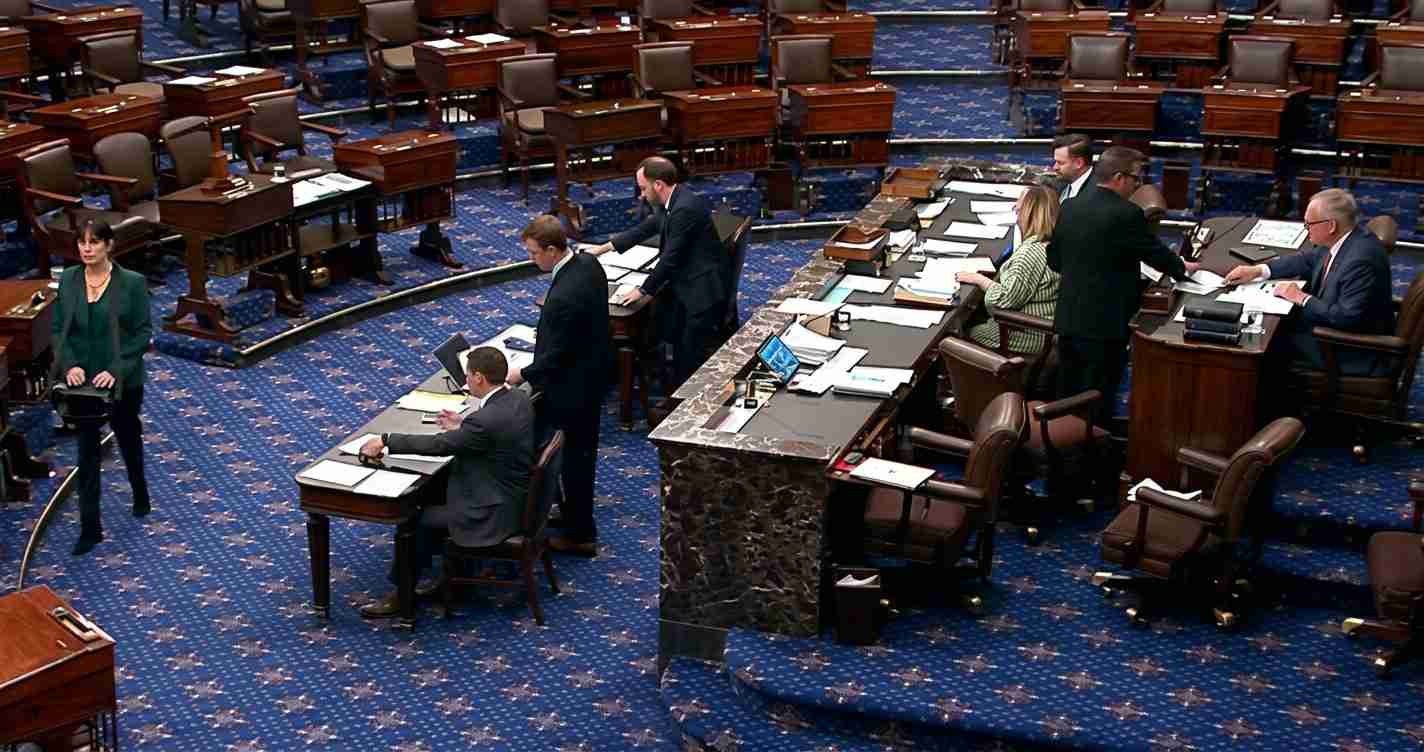
Senate unanimously OKs plan to withhold senators’ pay during future shutdowns in push to make lawmakers share the pain
The U.S. Senate unanimously passed a resolution to withhold senators’ pay during future government funding lapses, holding withheld wages in escrow until appropriations are restored — a move Sen. John Kennedy called “shared sacrifice” to deter shutdowns.
Key takeaways
- What passed: A Senate resolution directing the secretary of the Senate to withhold senators’ pay during a government shutdown and hold it in escrow until the shutdown ends.
- Who pushed it: Sen. John Kennedy (R-La.) led the effort, framing the change as shared sacrifice after repeated shutdowns left federal workers unpaid.
- Scope & timing: The measure applies only to senators, not House members, and would not take effect until after the upcoming November election cycle.
- Pay details: Rank-and-file senators earn $174,000 per year; party leaders earn more than $193,000, so withholding pay would create a direct financial consequence during a shutdown.
What the resolution does and how it would work
Sen. John Kennedy’s resolution does not permanently cut senators’ salaries. Instead, it instructs the secretary of the Senate to withhold paychecks while funding lapses prevent parts of the federal government from operating. The withheld salary would be held in escrow and released once lawmakers resolve the funding standoff and normal operations resume.
“We ought to hide our heads in a bag. It’s got to stop,”
Kennedy said on the Senate floor, arguing that Congress should not be insulated from the economic pain it imposes on federal workers. He cited recent shutdowns that left thousands of federal employees unpaid and disrupted services, including airport screening by Transportation Security Administration staff.
Practical mechanics: The resolution directs administrative withholding rather than legislative pay cuts; funds are preserved and returned after the lapse ends.
Why lawmakers pushed the measure now
Senators backing the measure describe it as part of a wave of proposals intended to reduce incentives for using shutdowns as leverage. Two recent high-profile funding lapses produced widespread disruption, unpaid work for federal employees and interruptions to services that affected travelers, contractors and communities.
- Withholding congressional pay: Led by Sen. John Kennedy to make shutdowns more personally costly for lawmakers.
- Guarantee federal worker pay: Sen. Ron Johnson supports legislation to ensure federal employees receive pay even during funding lapses.
- Automatic short-term extensions: Sen. James Lankford has proposed automatic, short funding extensions to prevent gaps altogether.
Political context and limitations
The unanimous vote signals bipartisan frustration with repeated shutdowns, but the resolution’s delayed effective date — it would not apply until after the next election — limits its immediate effect. Critics call it largely symbolic because current senators would remain paid during any lapse before November.
Some Republicans remain skeptical that threats of shutdowns will not return as bargaining leverage in high-stakes budget negotiations. Even with Senate leadership statements opposing shutdowns, the tool has reappeared in recent budget fights.
Impact on federal workers and public services
Supporters argue withholding senators’ pay mirrors hardships federal employees face during shutdowns — missed paychecks, delayed vendor payments and disrupted public services. The resolution itself does not guarantee federal worker pay during a shutdown; separate bills, such as the one backed by Sen. Ron Johnson, aim to ensure federal employees continue to receive pay if appropriations lapse.
Why that matters: Frontline workers like TSA screeners and public health staff can be required to work without pay or be furloughed, creating immediate financial strain and disrupting services.
Source attribution and reporting notes
This article is based on statements on the Senate floor and reporting summarized by Times Media Service. For official Senate information and legislative text, see U.S. Senate and individual senator pages such as Sen. John Kennedy’s Senate office. Coverage of shutdown impacts and legislative proposals is available from national outlets including Reuters and AP News. For transportation and homeland security context, consult the Transportation Security Administration and the Department of Homeland Security.
Reporting by Times Media Service; for more localized follow-up in Redding, contact your local congressional offices and county administrators to see how federal funding decisions could affect services in Shasta County.
Implications for Redding, California
Economic impact
Redding and Shasta County rely on federal spending and services: federal employees, contractors and benefit recipients support local commerce. A shutdown that delays federal pay and contracts can depress consumer spending, slow federally funded projects, and delay payments to local vendors. Businesses serving airport travelers — taxis, ride-shares and hotels — could see declines if TSA staffing or air travel are disrupted.
Political consequences
For a politically conservative audience in Redding, Kennedy’s measure may be seen as accountability and a check on shutdown brinkmanship. However, because it takes effect after the election, some may view it as political theater without immediate reform power.
Social effects
Local families who rely on federal programs — veterans’ services, Social Security interactions and federal health programs — can experience stress from administrative slowdowns even if benefit payments continue. Federal workers furloughed or working without pay can suffer immediate hardship affecting schools, health care and other community services.
Cultural relevance
Framing the Kennedy resolution as making “shared sacrifice” may resonate in Redding, where values of self-reliance and fiscal discipline are prominent. For conservative readers, the policy can be presented as a step toward discouraging budget brinkmanship that harms ordinary citizens.
Practical applications for residents
- Watch federal announcements: Residents who rely on federal services (veterans, seniors, contractors) should monitor local offices for changes during funding debates.
- Local businesses: Firms contracting with federal agencies or serving travelers should develop contingency plans for payment delays and reduced passenger volumes.
- Voter engagement: Because the measure starts after the election, voters can press candidates about preventing shutdowns and protecting federal worker pay.