
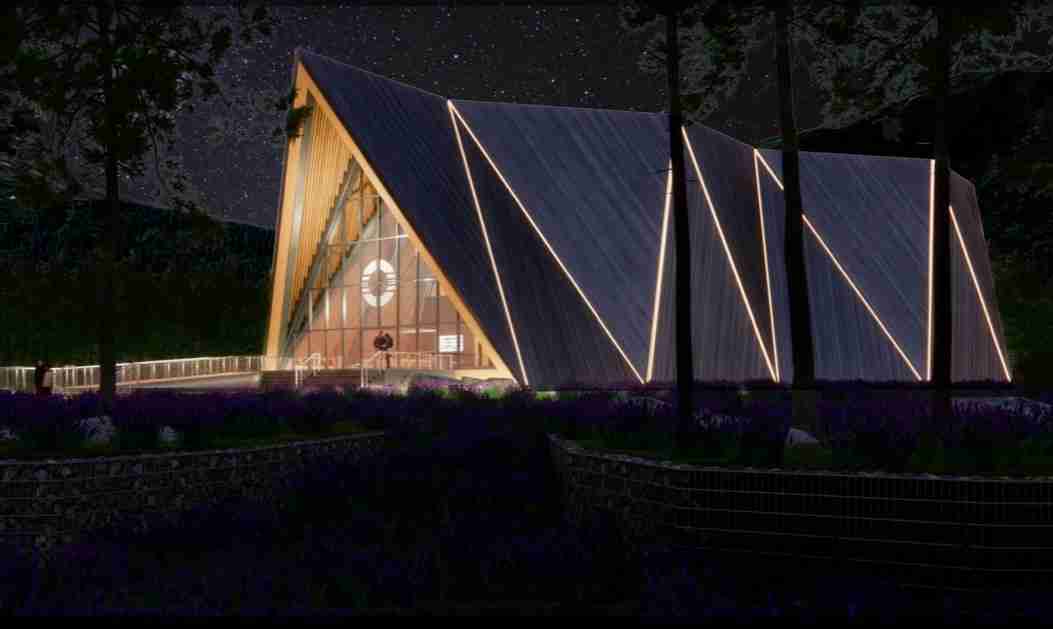
Groundbreaking Begins on Aurora Powerhouse — Idaho’s First Commercial-Scale Advanced Nuclear Reactor in Decades
Idaho National Laboratory and Oklo broke ground in September 2025 on the Aurora Powerhouse, the first U.S. commercial-scale advanced nuclear reactor in decades, aiming for carbon-free operation by late 2027 and hundreds of regional jobs.
- First commercial-scale advanced reactor in decades: Aurora Powerhouse began construction on INL federal land in September 2025 with a targeted commercial start by late 2027.
- Technology: A sodium-cooled fast reactor design intended for higher efficiency and fuel recycling.
- Jobs: ~400 construction jobs and about 80 long-term operational positions expected.
- Construction leadership: Kiewit Corporation selected as lead constructor.
- National significance: Seen as a test bed for Generation IV designs and a milestone in U.S. advanced-nuclear efforts.
What broke ground and why it matters
Federal and private leaders gathered at Idaho National Laboratory in September to mark the start of Aurora Powerhouse construction. Oklo—partnering with INL—says the plant will deploy a sodium-cooled fast reactor that supports fuel recycling and higher thermal efficiency. Project sponsors describe Aurora as a source of carbon-free energy to meet growing grid demand from data centers, AI systems and other high-load consumers (Fox Business; NucNet).
Technical profile: sodium-cooled fast reactor
The Aurora Powerhouse will use a sodium-cooled fast reactor design. Liquid sodium transfers heat efficiently and remains molten at reactor operating temperatures, enabling a compact core and improved thermal performance. Fast-spectrum systems can use varied fuel forms and enable recycling of certain fuel components to extract more energy and reduce some categories of waste (NucNet; Oklo).
“Regulators will monitor construction and testing closely,” project documents and trade reporting note, emphasizing licensing, safety reviews, and rigorous oversight before commercial operation.
Jobs, local spending and regional economic lift
Oklo projects roughly 400 construction jobs during the build and about 80 permanent positions afterward. Local officials highlighted near-term spending on lodging, food services and skilled trades, plus long-term demand for technicians and suppliers supporting the facility ([Fox Business]).
Kiewit Corporation serves as the lead constructor and will coordinate subcontractors, on-site safety and scheduling (Oklo press release; NucNet).
National implications: energy resilience and technology leadership
Supporters call Aurora a milestone in a U.S. nuclear renaissance. Generation IV designs aim for higher efficiency, improved safety characteristics and better fuel-use economics; proponents say such reactors can supply steady baseload power to complement intermittent renewables and support critical infrastructure needs. The project also complements INL programs like Project Pele, illustrating INL’s role as a test bed for advanced nuclear technology (ANS News; NucNet).
Questions and scrutiny: safety, timelines and regulation
Delivering commercial operation by late 2027 requires steady construction, supply-chain performance and timely regulatory approvals. Advanced reactors may have construction advantages in some respects, but they still face rigorous testing and federal licensing. Local stakeholders and watchdog groups are expected to demand transparent timelines and public safety reviews (NucNet; Oklo).
Sodium-cooled reactors have distinct chemistry and fire considerations compared with water-cooled designs, placing added emphasis on emergency planning, worker training and supply of specialized materials.
Funding, partnerships and broader investment
Aurora combines private investment from Oklo with INL technical support and federal land access. Kiewit’s construction leadership adds major project-management capacity. Observers say success on cost control, reliable operation and regulatory compliance could attract additional private capital and encourage policies to bolster domestic manufacturing and supply chains (Oklo; NucNet).
Implications for Redding, California
Economic impact: Redding-area firms could compete for subcontracts (construction, equipment, consulting) and benefit if West Coast supply chains expand to serve projects like Aurora.
Political consequences: The project may bolster arguments for energy independence and federal-state-private partnerships among conservative audiences and policymakers focused on resilient domestic energy.
Social effects: Workforce development opportunities exist for community colleges and trade schools to create curricula and apprenticeships aligned to advanced-nuclear construction and operations.
Practical applications: Redding utilities and planners can study advanced reactors as an option for dispatchable, carbon-free power and pursue partnerships to prepare workers for emerging jobs in the sector.
Source links and reporting notes
- Fox Business — primary reporting and timeline details.
- Oklo press release — project and construction announcement, Kiewit selection.
- NucNet — groundbreaking coverage and technical context.
- ANS News — related INL context and Project Pele background.
Reporting this story required cross-checking public company releases, national lab announcements, and trade reporting. Officials and industry sources emphasize jobs, safety oversight, and enhanced energy resilience as central benefits of the Aurora Powerhouse. Continuous public updates and regulatory transparency will be important as the project moves from groundbreaking into full construction and testing.



