
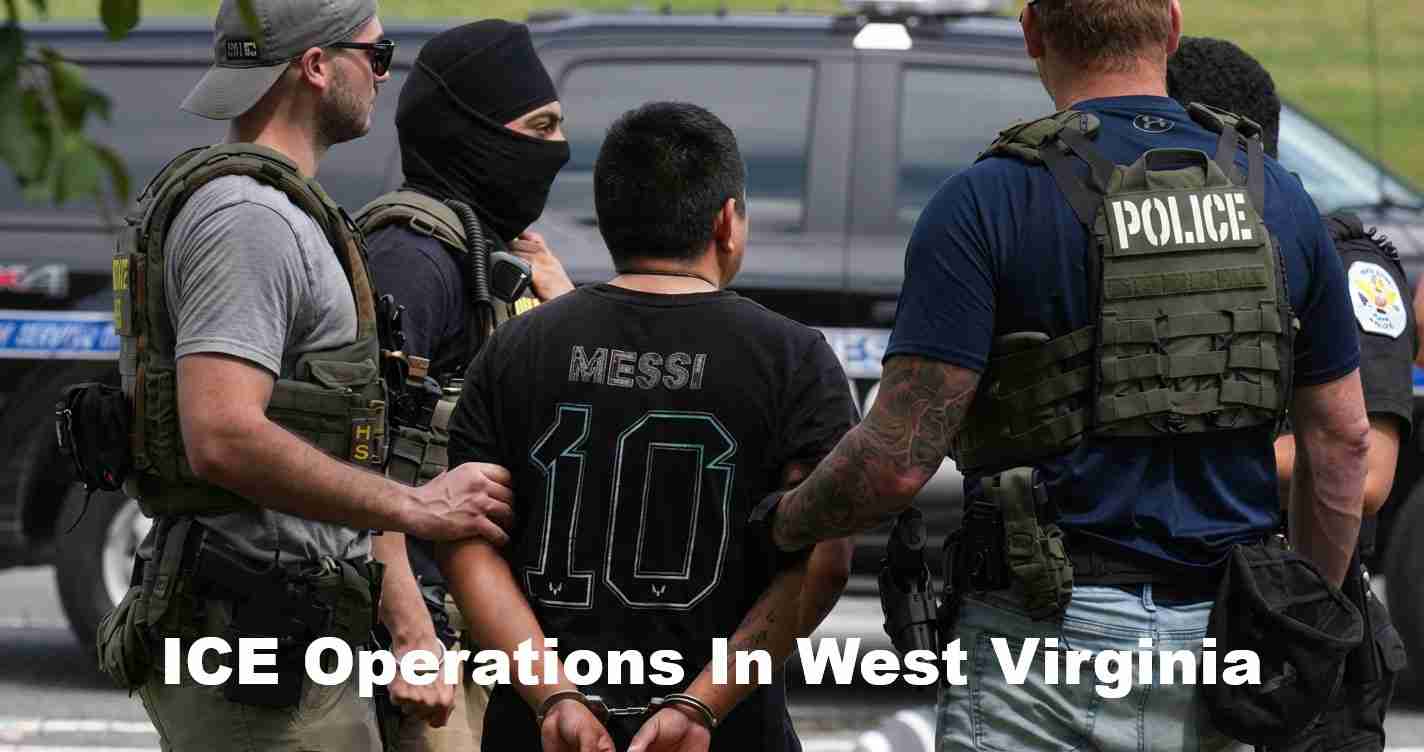
ICE arrests more than 650 across West Virginia in two-week sweep; local 287(g) partners lead the effort
ICE’s “Operation Country Roads” ran Jan. 5–19, 2026, arresting more than 650 people across West Virginia — over 550 by local 287(g) partners — targeting individuals with alleged criminal records in multiple cities statewide operation.
- Two-week surge: Operation Country Roads ran Jan. 5–19, 2026, across multiple West Virginia cities.
- Scale of arrests: Federal officials report >650 arrests; >550 involved local agencies using delegated 287(g) authority.
- Partners: The effort included 14 federal, state and local partners, notably ICE ERO Philadelphia, West Virginia State Police and National Guard.
- Ongoing scrutiny: Watch for Nitro warrant court filings and civil-rights challenges documented by watchdogs.
Overview
U.S. Immigration and Customs Enforcement (ICE) described Operation Country Roads as a planned, statewide enforcement surge conducted from Jan. 5–19, 2026. Teams deployed to multiple cities and counties to arrest people believed to be in the country illegally or with criminal convictions, coordinated with 14 federal, state and local partners.
Operation details and deployments
Deployments occurred in Charleston, Martinsburg, Beckley, Moorefield, Morgantown and Huntington. ICE said the operation ran without reported protests during the two-week period, although small rallies were planned afterward in Huntington and Putnam County. Sources reporting on deployments include WJLA and WV MetroNews.
ICE arrests: numbers and scope
Federal officials reported the total arrests topped 650. West Virginia agencies participating under the 287(g) program accounted for over 550 of those arrests, and for several days West Virginia led the nation in 287(g)-related arrests. The 287(g) program permits trained local officers to perform specified immigration enforcement tasks under ICE supervision. Officials said many arrested individuals had prior convictions, including allegations of child sex abuse, drug possession and endangering children. (See reporting by WV MetroNews and the U.S. Attorney’s Office, Southern District of West Virginia.)
Notable arrests and criminal charges
Authorities highlighted several individual arrests during the operation to illustrate the criminal conduct they said was uncovered, including:
- Sagar Singh — an Indian national arrested in connection with an unsafe tractor-trailer case. (Source: WV MetroNews.)
- Ling Yan (Yang Ning) — a Chinese national with an Ohio conviction for endangering children. (Source: WV MetroNews.)
- Federal prosecutors also announced at least eight immigration-related criminal cases tied to search warrants executed in Nitro on Jan. 16. (Source: U.S. Attorney’s Office, Southern District of West Virginia.)
Role of the 287(g) program and local partners
West Virginia’s expanded participation in 287(g) was central to the operation. Governor Patrick Morrisey signed a 287(g) Memorandum of Agreement in August 2025. Since then, reports say 25 West Virginia entities joined the program. State Police reported assisting with roughly 250 arrests since September 2025 and said actions were executed without reported error. (See coverage by WJLA and WV MetroNews.)
ICE and federal statements
“This operation demonstrates how strong partnerships between ICE and West Virginia law enforcement agencies enhance public safety and the integrity of our immigration system,” said Michael Rose, acting field office director for ICE ERO Philadelphia.
U.S. Attorney Moore Capito praised the joint effort as a “clear demonstration of the strength, discipline, and resolve” required to enforce the law and protect communities. (Press release: U.S. Attorney’s Office, SDWV.)
Public response and planned rallies
No protests were reported during the operation itself, but organizers planned two post-operation rallies: “Take Down The Tyrants” at Marshall University in Huntington and “ICE Out of Everywhere” near a DHS office in Putnam County. These events indicate local resistance among activists but did not interrupt field operations. (Reporting: WV MetroNews.)
Concerns, legal scrutiny and watchdog reporting
Watchdog reporting and local outlets raised constitutional and civil-rights questions about some enforcement stops. One report cited an arrest of a Venezuelan citizen near an I-77 tollbooth and noted that immigrants have filed lawsuits challenging certain enforcement tactics and seeking relief. Mountain State Spotlight questioned whether some stops met constitutional standards and pointed to pending legal challenges. (See Mountain State Spotlight.)
Documents and footage
Federal and local agencies released selected details. A YouTube summary video outlines parts of the operation, and court filings tied to Nitro search warrants are available via the U.S. Attorney’s Office press release.
Investigative notes on methodology
ICE said the operation used coordinated teams and trained local personnel operating under 287(g) authority to identify immigration violations, allowing communities to act more rapidly on immigration issues and focus on individuals with criminal records. Supporters say the model improves public safety; critics warn about civil-rights risks and community trust erosion. Both positions are reflected in public reporting and agency statements. (See WJLA and Mountain State Spotlight.)
Implications for Redding, California
Economic and law-enforcement lessons
Local agencies in Redding and Shasta County can draw lessons on interagency coordination and training. The West Virginia example shows how federal programs like 287(g) expand enforcement capacity; California agencies generally do not participate in the same way and many local leaders oppose expanding immigration enforcement roles for municipal police.
Political consequences for local leaders
Conservative-leaning audiences in Redding may view West Virginia’s approach — including Governor Morrisey’s embrace of 287(g) — as a model for tougher local-federal cooperation. Opponents are likely to emphasize civil-rights and community-trust concerns; expect the issue to shape local political debates.
Social and community effects
Stronger enforcement can remove individuals alleged to be dangerous but may also chill cooperation between immigrant communities and police. In Redding, this trade-off could affect crime reporting and community policing; local leaders should weigh enforcement benefits against trust and safety impacts.
Practical applications for residents
Residents, businesses and schools in Redding should review safety protocols and legal obligations when immigration enforcement occurs. Local leaders can use this case to discuss training, legal guidance and community outreach to reduce friction and protect vulnerable residents.
What to watch next
- Follow court filings tied to the Nitro warrants and any civil lawsuits challenging enforcement tactics.
- Watch for expansion of cross-jurisdictional 287(g) programs in other states and local debates in California communities.
- Monitor agency and watchdog reporting for updates on reported constitutional concerns and case outcomes.



