
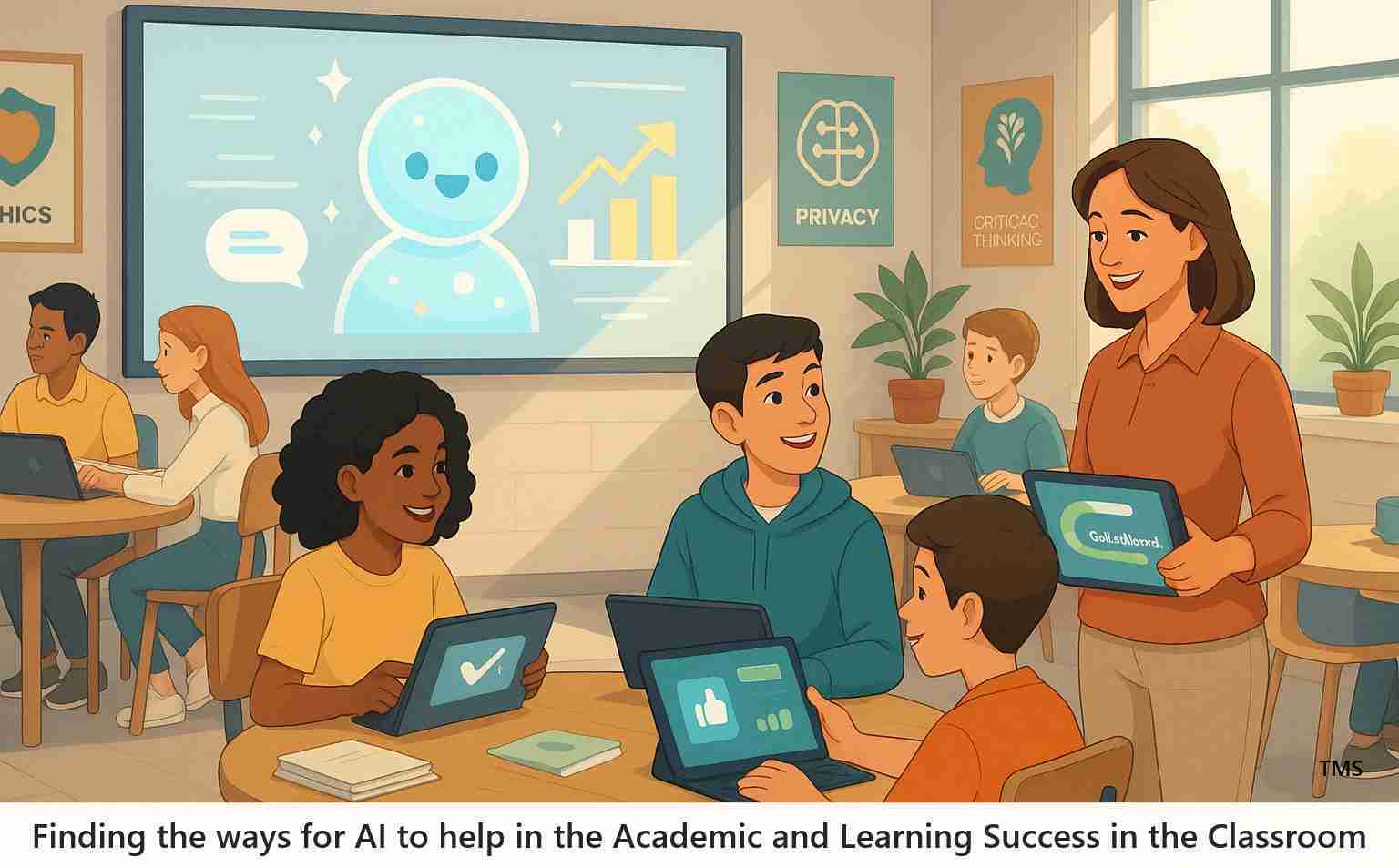
Generative AI in Education Forces Local Leaders to Act — Personalized Learning, Workforce Readiness at Stake
Generative AI is reshaping education in Redding, enabling personalized learning, altering pedagogy, and pressuring institutions to act to ensure workforce readiness, fiscal stability, and equitable access — requiring proactive leadership at local schools and colleges.
Key takeaways
- Generative AI tools now offer scalable one-on-one tutoring and adaptive lessons that meet students where they are.
- Traditional assessments and rote memorization are under pressure as AI can produce polished answers in seconds — forcing a shift to authentic, project-based evaluation (Entrepreneur).
- Many institutions have been reactive rather than proactive, revealing gaps in faculty training and institutional strategy.
- Generative AI improves access for students with disabilities via speech-to-text, translation, and personalized formats — expanding inclusion.
- Workforce demand now favors AI literacy and hands-on skills; schools that lag risk leaving graduates behind.
Full story
Personalized and adaptive learning
One of the clearest, most immediate effects of generative AI in education is personalized and adaptive learning. AI-powered tutors and lesson generators assess a student’s knowledge, identify gaps, and deliver instruction at the right level and pace. That means students who need extra time or different explanations can get them without waiting on stretched teachers.
Research and industry reports show these tools increase engagement and speed mastery of new skills, making targeted intervention more feasible at scale.
Disruption of traditional assessment and pedagogy
Generative AI has exposed the limits of teaching that emphasizes memorization and standardized tests. When students can ask an AI for polished essays or problem solutions, schools must rethink what learning looks like. The shift favors project-based work, critical thinking, and authentic assessments that show whether a student truly understands a topic (source).
“This disruption creates opportunities for educators to restore the focus on reasoning and civic literacy,” experts say — but it also raises hard questions about academic integrity and whether existing tests match employer needs.
Faculty and institutional challenges
Many faculty members and administrators are struggling to keep pace. Reports show institutions responded in fits and starts, often reacting to incidents instead of setting a clear strategy (Entrepreneur; Cengage Group).
Experts call for faculty-led change: invest in faculty AI literacy, create interdisciplinary communities of practice, and allow safe experimentation to manage ethical risks and rework curricula.
Enhancing accessibility and inclusivity
Generative AI is more than a grading or lesson tool — it can make classrooms accessible through speech-to-text, real-time translation, personalized content formats, and emotion-aware supports. These capabilities help schools serve a broader range of learners and meet federal and state obligations for equitable education (SpringsApps).
For conservative leaders, this is a chance to deliver better outcomes within existing budgets by targeting resources where they work best — with safeguards for transparency and data privacy.
Real-world skills and workforce development
Outside schools, companies are using generative AI to upskill employees quickly and at scale. That means local employers increasingly look for workers who understand AI tools and can apply them to real problems. Institutions that update curricula to include AI literacy, data literacy, and applied problem solving will give graduates a competitive edge (AWS Executive Insights).
For Redding’s economy — agriculture, manufacturing, health services, small business — AI-ready workers could boost productivity and attract employers.
Support and engagement beyond academics
AI-powered chatbots and virtual assistants now offer 24/7 support for students navigating courses, enrollment, and financial aid. These tools improve retention and reduce administrative loads. Some systems even analyze engagement and emotional signals to flag students who may need outreach (SpringsApps).
Such supports help tight-budget districts manage caseloads more efficiently, but leaders must balance convenience with strong data protections and clear human oversight.
Why leaders can’t ignore generative AI
The stakes are practical and immediate. As AI becomes central to both learning and work, institutions that fail to adapt risk producing underprepared graduates and losing students to better-equipped competitors (AWS; Entrepreneur).
Leaders must also confront ethical risks — bias, misinformation, privacy — with clear policies and community input. Proactive governance can prevent harmful outcomes and preserve public trust (AACSB).
Essential actions for education leaders
Experts recommend a practical list of steps: invest in faculty AI training; build interdisciplinary teams to pilot tools; center strategies on student learning and inclusion; and create ethical guardrails and data protections (AACSB; Entrepreneur).
Prioritizing personalized, flexible learning aligns schools with workforce needs and community values and is cost-effective over time through better retention and stronger placement rates (AWS).
Implications for Redding, California
Economic impact
Generative AI in education can strengthen Redding’s workforce. Local employers — from health care providers to regional manufacturers — need staff who can use modern tools. Schools and Shasta College tailoring programs to include AI literacy and applied problem-solving stand to boost local hiring and attract new businesses.
Political consequences
School boards and city leaders will face decisions about budgets, contracts with AI vendors, and data privacy rules. For conservative voters in Redding, priorities include protecting student data, ensuring taxpayer value, and keeping curriculum aligned with community standards. Transparent policies and local oversight will reduce friction and build trust (Entrepreneur).
Social effects
AI-driven supports can improve outcomes for students with disabilities and those who need extra help, reducing dropout rates and strengthening civic participation. At the same time, leaders must guard against overreliance on technology that could weaken teacher-student relationships; investments should supplement, not replace, proven classroom instruction (SpringsApps).
Cultural relevance
Redding’s families value hard work, practical skills, and local control. Implementing AI with those values in mind means focusing on career-ready programs, clear community oversight, and preserving parental input on curriculum. Schools that show how AI tools prepare students for meaningful jobs and higher wages will find stronger local support (AWS).
Practical applications for Redding schools and colleges
- Start small: pilot AI tutoring or administrative chatbots in one grade or program to measure results before wider rollout.
- Invest in teacher training tied to measurable outcomes; require faculty-led committees to vet tools (Cengage Group).
- Establish clear data and privacy standards in contracts with vendors to protect students and taxpayers (SpringsApps).
- Align career-technical education and community college offerings with local employer needs for immediate impact on jobs (AWS).
Sources
- Entrepreneur: How generative AI is completely reshaping education
- AWS Executive Insights: Top generative AI skills and education trends for 2025
- SpringsApps: Main AI trends in education 2024
- Cengage Group perspectives: AI’s impact on education in 2025
- AACSB Insights: Why faculty should lead the AI revolution



