
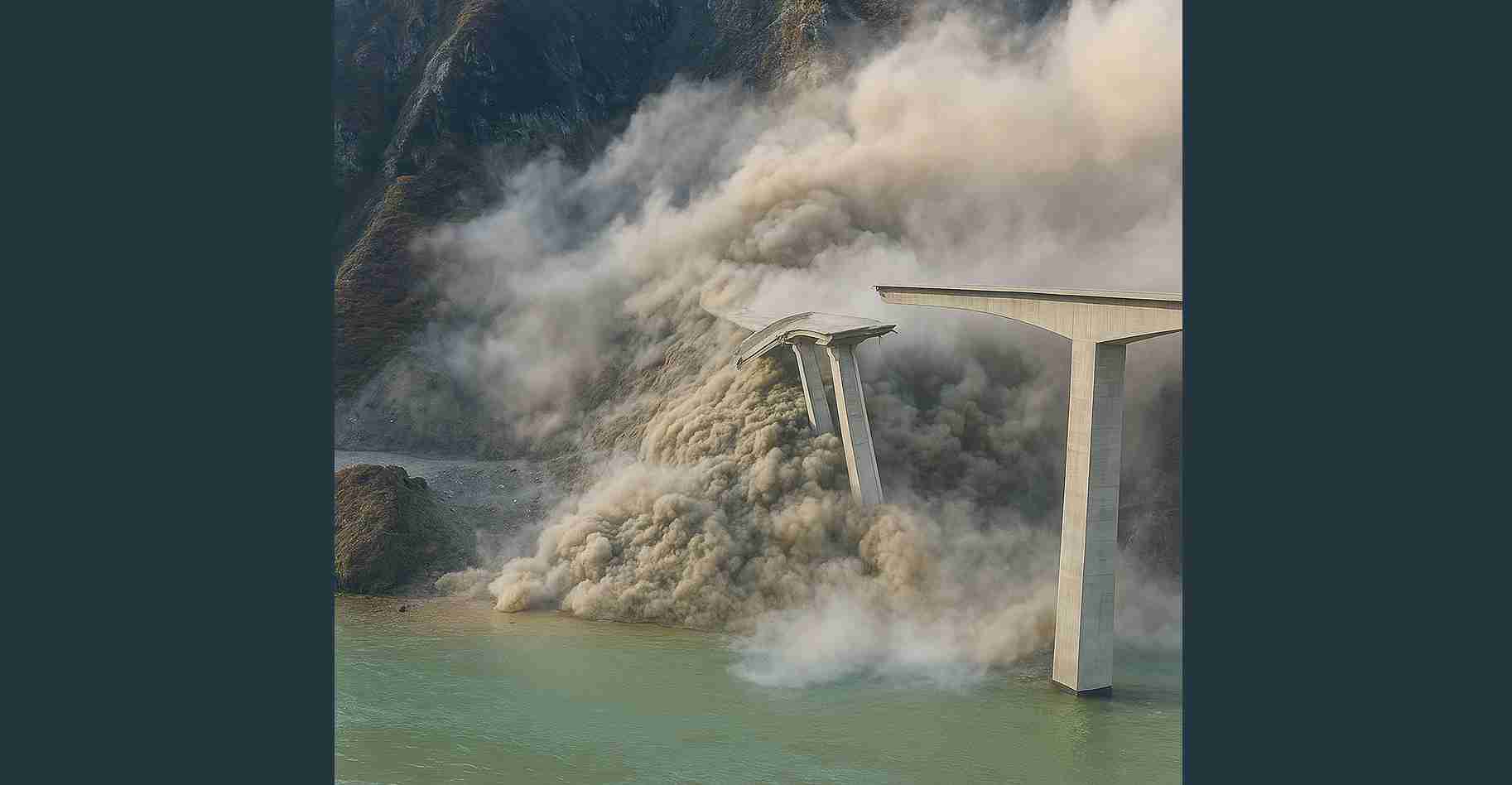
Hongqi Bridge Collapse in Sichuan: 758-Meter Span Falls After Landslide; Cracks Seen a Day Earlier
A newly built 758-meter Hongqi Bridge in Sichuan Province collapsed into a river after a mountainside landslide undermined its supports on Tuesday; officials had closed the bridge a day earlier after detecting cracks and ground movement.
- Major failure: A large portion of the Hongqi Bridge broke away and plunged into the river after a landslide hit the mountainside supporting the structure — see the video.
- New but vulnerable: The 758‑meter bridge opened earlier in 2025 and failed just months after opening to traffic — documented in the video.
- Precursors detected: Local officials reported visible cracks and terrain shifts the day before and closed the bridge as a precaution — referenced in the video.
- Source of failure: The immediate trigger appears to be a massive landslide that destabilized the mountain supporting the bridge — see the video footage.
What happened
Publicly posted video footage shows a dramatic slice of the multi‑span bridge suddenly detaching where it connected to a mountainside and collapsing into the river below. The landslide that struck the supporting slope appears to have undermined foundation supports and approach ramps. Local authorities reported that pronounced cracks and shifts in slopes and nearby roads were observed the day before; police closed the bridge to traffic Monday afternoon as a safety precaution — the sequence is visible in the video.
The bridge opened earlier in 2025 and was a key link in a highway project intended to speed connections between central China and Tibet. Project announcements characterized it as a major engineering effort to move people and goods more quickly across mountainous terrain. The collapse raises immediate questions about site selection, geological assessment, foundation design, and post‑opening monitoring of infrastructure in geologically active areas; supporting footage and notices are available in the video.
Official response and available information
Local police closed the bridge the afternoon before the collapse after reporting visible cracks and ground movement; that precaution likely prevented traffic being on the structure at the time of failure, according to the local notice reported alongside the video. Beyond the closure and circulated video, the supplied reporting does not include detailed statements about injuries, rescue operations, or a formal engineering assessment.
“Authorities have not yet published a full investigation report in the materials provided here.”
The immediate cause identified in available footage and official notices is a landslide — a common hazard in Sichuan’s steep, seismically active terrain. Whether the landslide was triggered by heavy rain, construction activity, geological instability, or a combination remains to be verified by investigators; the initial accounts and footage are available in the video.
Why the collapse matters
This event is more than a local transport failure. The Hongqi Bridge collapse highlights broader concerns about infrastructure planning and safety in landslide‑prone regions. Large projects in mountainous terrain require thorough geological surveys, conservative design margins, and ongoing monitoring after opening. The fact that cracks and terrain shifts were visible enough to prompt closure a day earlier suggests risk was detectable and that monitoring and quick response likely prevented casualties on the bridge — see the available video.
The collapse will feed into debates over construction timelines, oversight, and accountability, especially given the project’s strategic importance in linking central China with Tibet. Critics may point to aggressive schedules and cost pressures; supporters emphasize the role such projects play in economic development. This incident is likely to be scrutinized for indications of design or oversight lapses.
Technical and geological context
Sichuan Province features steep valleys, high relief, and complex geology. The region has a history of damaging earthquakes and frequent landslides. Building major bridges and highways here requires accounting for slope stability, drainage, and potential ground movement. Bridges that rely on mountain abutments or slopes are especially vulnerable if slopes are unstable or if construction disturbs natural balances.
In this case, the reported landslide struck the mountainside supporting the Hongqi Bridge, undermining the structure’s connection to stable ground. The supplied material is limited to a single public video and local notices; a full engineering investigation would inspect foundation conditions, slope reinforcements, drainage works, and any warnings reported during construction or after opening.
Questions for investigators
- Were comprehensive geological surveys completed before construction, and did they identify slope risk?
- Did construction methods or scheduling alter natural drainage or stability of the slope?
- What role did weather, seismic activity, or human activity play in triggering the landslide?
- Were monitoring systems installed, and if so, how quickly did they detect slope movement?
- Was the design conservative enough for predictable slope hazards, or were cost or timeline pressures a factor?
All of these questions will be central to determining whether the collapse was an unavoidable natural disaster or a preventable failure linked to planning, design, or oversight decisions; early media and official notices reference the video.
Reporting limitations and follow-up
This account is based on video footage and local reports available at the time. The primary supplied source is a public video and accompanying notices; no detailed engineering reports, casualty counts, or full investigation results were included. Further reporting should track official investigation releases, engineering assessments, and updates on regional transportation impacts.
Implications for Redding, California
Economic impact
Supply chain disruptions from major route failures in China can ripple into global logistics. For Redding businesses that depend on imported goods or parts, longer routes or delays could slow deliveries and raise costs. Local companies with direct ties to China should monitor shipping changes and inventory exposure.
Political consequences
The collapse may reinvigorate U.S. debates about oversight, engineering standards, and maintenance for public works. Local leaders and conservative voters in Redding could use the incident to press for stricter review of projects, contractor vetting, and transparency when taxpayer funds are used.
Social effects
Public confidence in large infrastructure projects can be affected. Residents may demand clearer inspection records and assurances about slope and drainage management near local bridges and bluffs. Emergency preparedness plans for sudden infrastructure loss may be revisited.
Cultural relevance
Redding’s values of self‑reliance and prudent stewardship of public funds mean many residents will seek transparency and rigorous oversight of local works. The Hongqi Bridge collapse may strengthen local calls for conservative fiscal management paired with strict safety standards.
Practical applications for Redding residents
- Review local projects: ask about geotechnical studies and inspection records for bridges or highway work near slopes or river bluffs.
- Advocate for inspections: encourage publication of inspection schedules and prioritization of drainage and slope stability repairs.
- Emergency readiness: confirm backup plans for supply disruptions and know alternate routes if a key bridge or road is closed unexpectedly.
Sources
Video and local reporting on the Hongqi Bridge collapse and prior detection of slope cracks and road shifts: video.
Investigative reporting will continue as authorities release formal findings. The collapse highlights the risks of building major transport links in geologically active areas and raises questions about planning, monitoring, and accountability that resonate beyond China, including for communities such as Redding that rely on safe, well‑managed infrastructure.



