
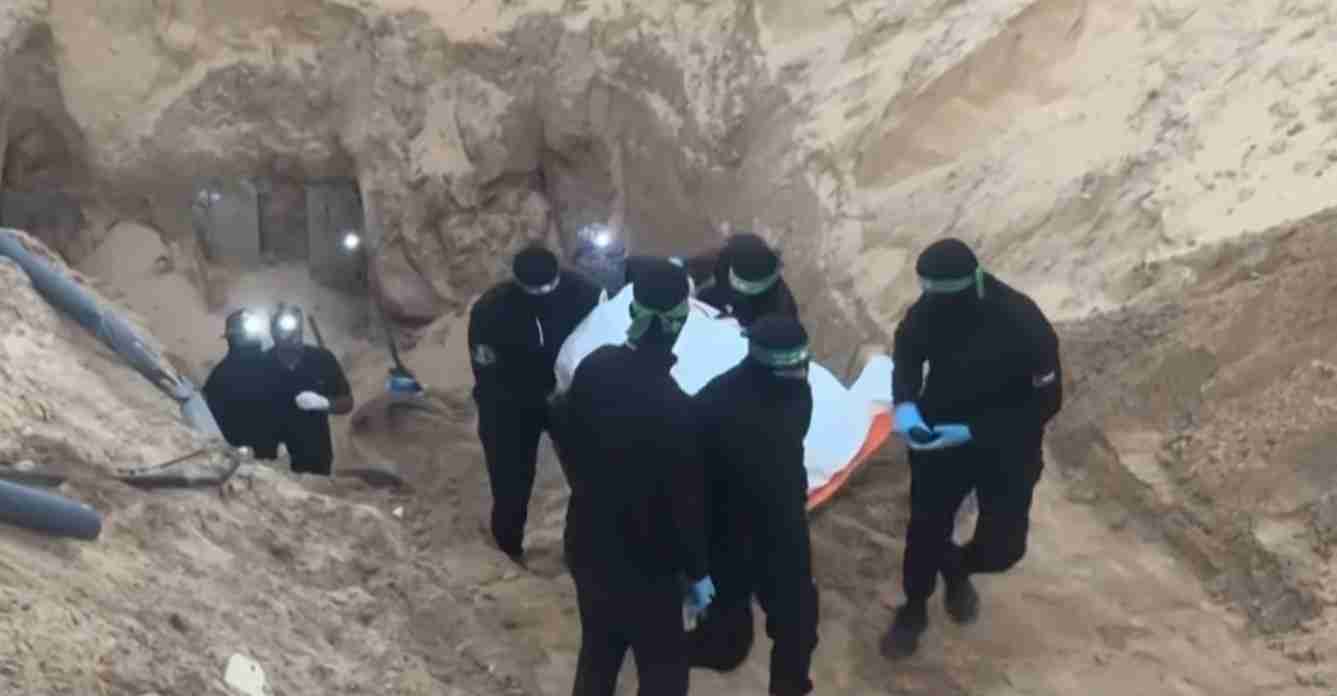
Partial remains handed over by Hamas are not hostages, Israeli officials say amid Red Cross mediation
Hamas transferred partial human remains to Israel through the Red Cross, but Israeli officials said they do not match any remaining hostages in Gaza. Publicized by Al‑Qassam, the handover highlights deep complexities in verifying hostage fates.
- Three sets of partial remains were handed over via the International Committee of the Red Cross, publicized in Al‑Qassam footage.
- Israeli officials say the remains do not match any of the hostages still unaccounted for, citing forensic, medical and intelligence assessments.
- Hamas called for international intermediaries to provide recovery equipment and said its teams will continue searches in areas it controls.
- The ICRC acted as intermediary, underscoring the limited but crucial role of neutral organizations in fragile humanitarian exchanges.
What was handed over
Hamas publicized footage showing the handover of partial human remains to Israeli authorities on Friday night. The group said it had recovered body parts from areas under its control and coordinated with the Red Cross to effect a transfer. The handover involved three sets of remains, described by Hamas as partial and recovered by its teams. Source material was released as Al‑Qassam footage.
Israeli response: remains do not match hostages
Israeli officials announced on Saturday that the remains handed over were not those of any of the remaining hostages held by Hamas. Authorities said their assessments — based on available forensic, medical and intelligence methods — showed no match to the unaccounted-for civilians and soldiers Israel says were taken during the October attacks.
Spokespeople accused Hamas of deliberately withholding the actual remains of hostages and suggested the returned remains could be a diversion or propaganda tactic. Those charges reflect deep mistrust and complicate humanitarian steps meant to clarify the fate of missing people. See the published sequence in the Al‑Qassam footage.
Hamas statements and recovery efforts
Hamas said its recovery teams are prepared to continue searching for bodies in territories they control. The group appealed to international intermediaries for technical help — specifically, equipment to allow for more thorough and safer recovery operations. Hamas framed the handover as part of responsible management of the dead and urged greater international participation to lift logistical barriers.
Publicizing the handover via Al‑Qassam fighters appeared aimed at showing action on recovery, but it drew an immediate rebuttal from Israeli authorities claiming the remains do not account for those still missing. Source: Al‑Qassam footage.
Red Cross mediation and the limits of humanitarian exchange
The International Committee of the Red Cross (ICRC) acted as the intermediary for the transfer. The Red Cross often serves as a neutral channel in conflict zones to facilitate exchanges that combatants cannot safely conduct directly. Its involvement enables controlled, neutral handling of sensitive transfers and can provide documentation and guarded transport.
However, verification remains difficult. Forensic identification requires secure access to recovery sites, cooperation from local authorities, and functioning medical and laboratory resources — all of which are in short supply in parts of Gaza. The ICRC’s role can reduce immediate transfer risks but cannot replace full forensic identification by national authorities and international experts. Source: Al‑Qassam footage.
Verification challenges and diplomatic fallout
This episode highlights how hard it is to verify the fate of hostages and recovered remains during active hostilities. Restricted access, degraded evidence, and incentives on both sides to shape narratives make conclusive identification extremely challenging. Israeli officials’ swift rejection underscores these tensions.
Diplomatically, the dispute may affect negotiations over hostage releases, prisoner exchanges, or humanitarian pauses. Israeli authorities may press for stronger verification guarantees and more direct control over recovery operations, while Hamas’ call for third‑party equipment suggests a desire both for outside validation and for involving intermediaries that can diffuse direct blame.
Why this matters now
Families of the kidnapped and communities across Israel continue to seek answers about dozens of people taken into Gaza. Any transfer of remains raises hopes but can magnify grief if identification fails. For Israel, proving the fate of hostages has legal and moral weight; for Hamas, presenting recovered remains can serve humanitarian, domestic messaging, or bargaining roles.
The Red Cross mediation underscores how neutral organizations are often the only channels for fragile humanitarian steps, but the limits of such mediation mean human and political tensions will persist.
Implications for Redding, California
Although the direct material impact on Redding is limited, the episode resonates locally across economic, political, social and cultural lines and suggests practical actions civic groups and officials may consider.
Economic impact
- Direct economic effects in Redding are limited, but organizations assisting refugees, veterans, or disaster relief may see renewed demands.
- Local charities could face new donor interest or pressure to direct funds to vetted international relief groups, including those working with the Red Cross.
- Community fundraising and donations tied to hostages and their families may affect local charity budgets and events.
Political consequences
- The episode sharpens national security and foreign policy debates that resonate with conservative voters in Redding.
- Local leaders and constituents may press for stronger verification protocols and robust intelligence sharing.
- Elected officials in Redding and Shasta County could face constituent pressure to support policies favoring aid to allies and accountability measures.
Social effects
- Community solidarity, grief, and calls for action may increase; expect vigils, prayer meetings, and civic statements.
- Frustration over perceived propaganda or obstruction by Hamas could fuel local activism and rallies demanding clearer humanitarian standards.
Cultural relevance
- For conservative communities in Redding, the story underscores values such as duty to protect citizens and skepticism of adversaries’ public statements.
- Local media and opinion platforms may emphasize Red Cross mediation to argue for third‑party verification in humanitarian exchanges.
Practical applications for residents
- Civic groups can hold information sessions on humanitarian mediation and direct residents to reputable organizations when donating or volunteering.
- First responders and veterans’ groups can prepare counseling referrals and logistical support for grieving families.
- Residents seeking policy change can contact federal representatives to press for bipartisan measures prioritizing rigorous verification and international guarantees.
Source material and further reading
This report is based on footage and reporting publicized by Al‑Qassam and statements from Israeli officials. Full source: Al‑Qassam footage. The Red Cross’ involvement was reported in the same materials.
Investigative note
The transfer illustrates how humanitarian gestures can be contested and politicized during wartime. On‑the‑ground verification remains a major hurdle. For audiences in Redding, the episode offers moral resonance and raises practical policy questions about how the United States and its allies should press for transparent, enforceable mechanisms to account for the missing and repatriate remains with dignity and certainty.


