
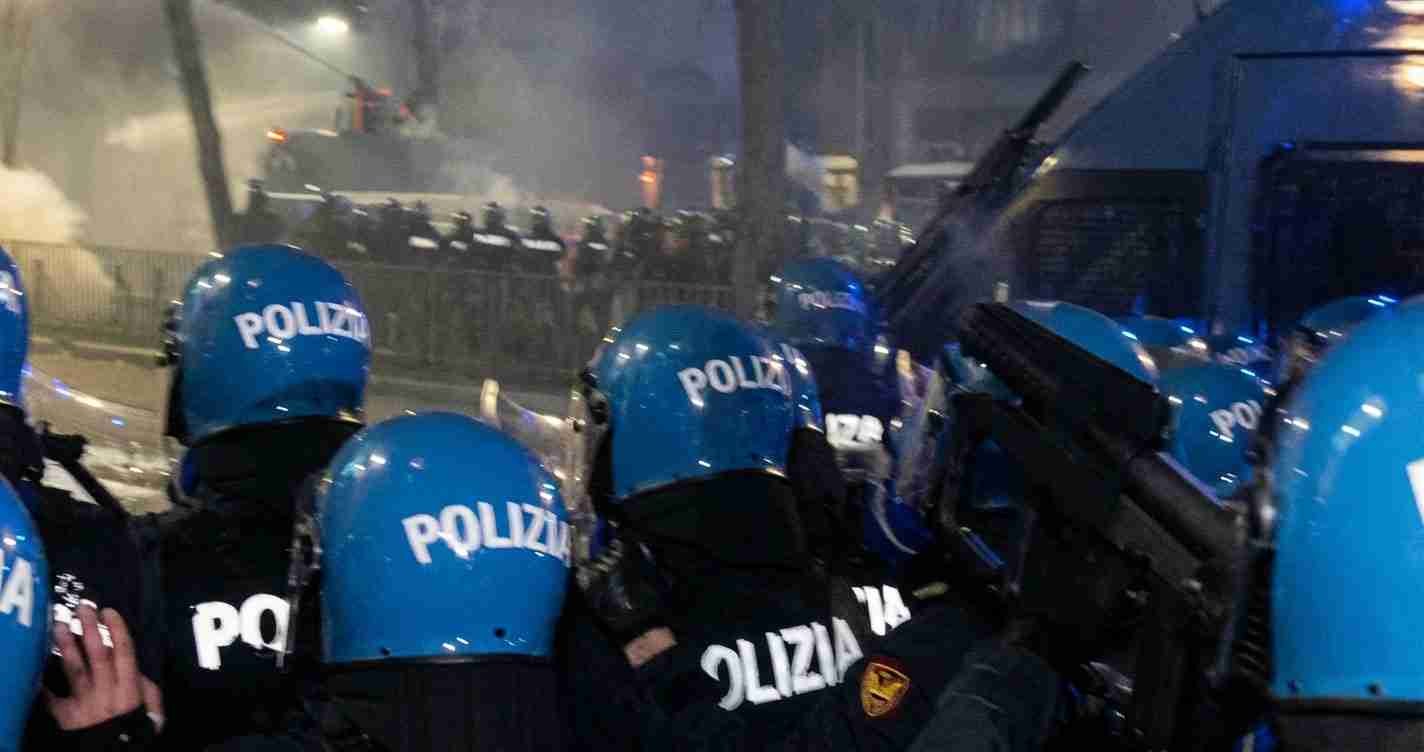
Turin violence erupts after Askatasuna eviction; Meloni vows firm response as police clash with anarchist groups
Violent clashes broke out in Turin on January 31, 2026, after the eviction of the Askatasuna social centre, injuring 108 security personnel as masked anarchist groups confronted police; Prime Minister Giorgia Meloni vowed a forceful government response.
- Scale: Police estimated about 15,000 protesters; organizers claim up to 50,000.
- Casualties: Authorities reported 108 security personnel injured — 96 police officers, 7 Guardia di Finanza, 5 carabinieri.
- Violence: Masked, black-clad groups used fireworks, improvised incendiaries and blunt weapons; police responded with tear gas and water cannon.
- Political fallout: PM Giorgia Meloni condemned the events as “attempted murder” and called for stronger measures and investigations.
What happened: the protest and the turn to violence
A national march in support of the Askatasuna social centre began in Turin’s Vanchiglia neighbourhood and drew a large daytime crowd. Police put attendance at about 15,000 while some organisers claimed as many as 50,000 (Anadolu Agency; organizers’ claim).
Witness accounts and circulating video indicate the demonstration remained largely peaceful until after nightfall. Masked groups in black split from the main march and launched coordinated attacks on police lines. Multiple clips show projectiles flying at officers and formations pushed back amid clouds of red smoke (see Video coverage and additional footage).
Weapons and tactics reported
Authorities and media documented a sharp escalation in tactics. Protesters reportedly hurled bottles, stones, fireworks, homemade incendiary devices and smoke bombs. Officials said some used improvised “nail-filled paper bombs,” set rubbish bins and a police armoured vehicle ablaze, and deployed street furniture and uprooted lampposts as blunt weapons. One officer was reportedly surrounded and assaulted with kicks, punches and hammer blows (Anadolu Agency report; video).
Police response
Security forces used tear gas, water cannon and baton charges to repel attacks. Clashes in some neighbourhoods lasted more than an hour; police eventually re-established control after sustained operations. Officials described chaotic scenes and significant danger to officers on the ground (footage).
Official and political reactions
Prime Minister Giorgia Meloni visited injured officers at Le Molinette hospital and posted images from her visit on X. She labelled the attacks “attempted murder” by “organized criminals,” saying officers reported hammers, Molotov cocktails, stones launched by catapults and signal jammers used against them. Meloni announced a government meeting to consider tougher security measures, including potential preventive-detention provisions under emergency rules (coverage; AA).
“Attempted murder” by “organized criminals,” Prime Minister Giorgia Meloni.
Interior Minister Matteo Piantedosi called the violence a “danger to democracy” and accused parts of the left of downplaying the attacks. Deputy Prime Minister Matteo Salvini branded the assailants “terrorists,” urged rapid arrests and demanded the eviction of other occupied social centres. Carabinieri commander Lt. Gen. Salvatore Luongo characterised the events as “an attack on the state.”
Investigations and arrests
At least three arrests were reported in the immediate aftermath, including one linked to the assault on an officer. Prosecutors and security services opened inquiries into organised violence, weapons supplies and coordination among fringe groups. The government said it will examine whether additional legal tools or decrees are needed to prevent similar mass disorder (Anadolu Agency).
Background: Askatasuna and Turin’s activist networks
Askatasuna is a long-standing social centre in Turin, reportedly used by far-left activists for nearly three decades. The eviction prompted a national march and drew local and international anarchist, communist and pro‑Palestinian networks. Experts, including Dr. Lorenzo Vidino of George Washington University, note Turin’s history as a hub for militant anarchist and communist activity and link the unrest to a pattern of militant activism including past attacks on media outlets such as La Stampa (reporting; video).
Different frames from across the political spectrum
Coverage diverged along ideological lines. Government and conservative outlets emphasised the violence, the targeting of police and the threat to public order. Left-leaning and activist sources framed the demonstration as resistance to “militarization and repression,” focusing on the eviction itself and contesting accounts that foreground only the most violent elements (conservative coverage; activist perspective; organizers’ account).
Why this matters
The Turin clashes raise urgent questions about balancing the right to protest with public safety. When demonstrations are infiltrated by organised violent groups, risks to first responders and the public increase. Italian leaders’ signals toward tougher law‑and‑order measures may reshape responses to large demonstrations and occupied social centres nationwide.
Implications for Redding, California
- Public safety and protest policing: Redding authorities should monitor international responses to organised violence in protests and review crowd-control plans, equipment and interagency coordination.
- Local protest dynamics: The Turin example shows how quickly a peaceful gathering can be hijacked by a minority; timely enforcement of unlawful occupations may limit escalation.
- Political messaging: Tough government rhetoric, as by Meloni, may resonate with conservative voters and shape local debates on law and order.
- Support for first responders: With 108 security personnel injured in Turin, policymakers should prioritise funding, training and medical support for emergency personnel.
- Civil liberties and oversight: Any adoption of tougher preventive measures should be balanced with legal oversight to protect civil liberties.
Sources and visual coverage
Video footage and firsthand scenes circulate online showing black‑clad demonstrators confronting police and officers pushed back by thrown objects. See Video of clashes (YouTube) and Additional footage.
Reporting on injuries and government reactions is documented by Anadolu Agency. International coverage and commentary on Meloni’s response appear in outlets such as Fox News. Alternate activist perspectives and turnout claims are available from People’s Dispatch and Freedom News.
Reporting notes
This article was assembled from reporting by Times Media Service and the sources linked above. All factual details, figures and URLs are preserved from the compiled reporting. For raw footage, see the linked videos and agency reports.


