Greta Thunberg fined, banned after Grand Canal dyed green in Extinction Rebellion protest timed with COP30
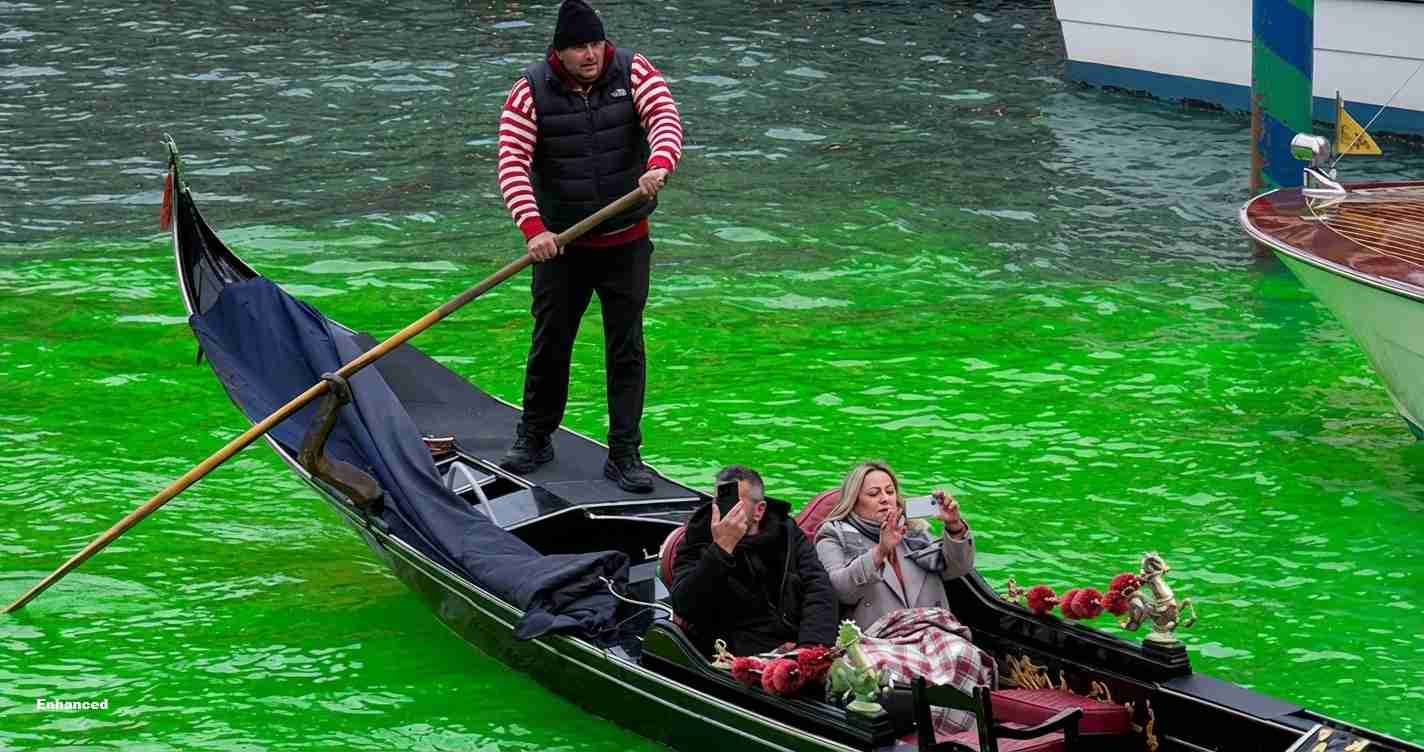
Greta Thunberg and 35 Extinction Rebellion activists dyed Venice’s Grand Canal fluorescent green on November 24, 2025, drawing fines and a 48‑hour ban from the city as part of synchronized Italian protests timed with the close of COP30 in Brazil.
- What happened: Activists released a non‑toxic fluorescent dye into the Grand Canal and staged visual protests across Venice on November 24, 2025.
- Participants and penalties: Greta Thunberg and 35 others (mostly Italian, some Colombian and Ethiopian) were fined €150 each and excluded from Venice for 48 hours.
- Claim and context: Organizers said the dye was a biodegradable tracer used in environmental studies; the action was timed to protest perceived failures at COP30.
- Reaction: Local officials condemned the stunt while some tourists and environmental groups defended the protesters’ message.
What happened in Venice
On November 24, Extinction Rebellion Italy staged coordinated actions nationwide; Venice became the most visible scene. Activists aboard boats released a bright, fluorescent green dye into stretches of the Grand Canal. Protesters also hung a “Stop Ecocide” banner from the Rialto Bridge and staged a slow, silent flash mob of people dressed in red with veils, intended to evoke a moral emergency.
Organizers said the dye matched the tracers used in environmental monitoring and insisted it was non‑toxic and biodegradable. Authorities responded by citing participants for unauthorized public disturbance: each person received a €150 fine and a 48‑hour ban from Venice.
Why the protest was timed with COP30
Extinction Rebellion Italy framed the action as a response to perceived weak outcomes at COP30 in Brazil, where negotiators did not adopt a clear roadmap to phase out fossil fuels. The Venice dyeing was part of a single‑day push across ten Italian cities — including dyed fountains in Genoa and Padova and altered rivers in Turin, Bologna and Taranto — meant to dramatize the group’s claim that political leaders are not doing enough.
“Visible, peaceful disruption is necessary to make the crisis visible,” an Extinction Rebellion Italy spokesperson said in a distributed statement, also calling for ecocide to be recognized as an international crime.
Local officials and tourist‑business concerns
Veneto regional governor Luca Zaia condemned the action as “disrespectful to Venice’s history and to its fragile environment”, warning it risks harming the city’s reputation. While police and municipal officials said the dye did not appear to cause lasting harm, they stressed that unauthorized actions on public waterways cannot be tolerated.
Venice’s economy depends heavily on tourism. Business owners and residents told Times Media Service they worry headline‑grabbing stunts could deter visitors, disrupt tours, and add cleanup or policing costs. Tourists at the scene were split: some supported the message on climate inaction, others called the tactic inappropriate amid overtourism concerns.
Legal and environmental context
Authorities cited participants for administrative offenses tied to public order and unauthorized use of the canal. The penalties — €150 fines and a 48‑hour exclusion — are relatively light; critics argued they were too lenient given the potential risks to a UNESCO site. Extinction Rebellion Italy maintained the dye was approved by scientific experts and commonly used in monitoring; independent observers said no immediate ecological damage was evident but recommended follow‑up water testing.
The incident highlights the tension between protected protest and unlawful interference with public spaces under Italian law: peaceful demonstration is permitted, but altering a protected waterway without permits is unlawful.
How Extinction Rebellion coordinated the national campaign
Organizers said Venice was one element of a synchronized, one‑day campaign in ten cities aimed at making the climate debate highly visible in urban centers. Extinction Rebellion Italy criticized national leaders for opposing ambitious fossil fuel phaseout language at COP30 and followed its history of dramatic, non‑violent civil disobedience to capture media attention.
Supporters argue such tactics are necessary when conventional lobbying fails; opponents say they can alienate the public, risk historic sites, and undermine the rule of law.
Reactions from visitors, environmentalists, and politicians
Reactions were mixed. Some tourists and climate activists praised the demonstration as moral pressure on leaders; others — including local officials and business owners — said it disrespected Venice and threatened the city’s fragile balance between preservation and tourism. Environmental advocates noted COP30’s results were broadly seen as modest, which bolstered activists’ claims that dramatic action was justified. Regional leaders and national politicians emphasized protecting heritage sites and public safety.
Source attribution and further reading
This report is based on Times Media Service reporting and statements from Extinction Rebellion Italy and Venetian authorities. For background, see Extinction Rebellion, the UN Climate Change COP information, and Greta Thunberg’s public platform.
Implications for Redding, California
Economic and tourism effects:
- Local tourism sensitivity: High‑profile disruptions in famous destinations can shift travel sentiment; Redding leaders should monitor media impact and conservative traveler concerns about safety and respect for attractions.
- Event planning and risk: Parks and event planners should prepare contingency plans for protests at high‑profile sites like Shasta Dam, Whiskeytown, or the Sundial Bridge and coordinate rapid responses.
Political and legal considerations:
- Rule of law: The Venice fines and short bans may spark local debate over penalties for unauthorized actions that threaten public assets.
- Local policy posture: Officials may consider stronger ordinances to protect monuments, waterways, and infrastructure from unauthorized interference.
Social and cultural effects:
- Community norms: The imagery of a landmark dyed green will feed into national debates; civic groups can promote lawful conservation and stewardship.
- Educational opportunities: Schools and clubs can frame discussions around climate policy, protection of local landmarks, and lawful protest.
Practical steps for local leaders
Recommendations for Redding officials and stakeholders:
- Review permitting and enforcement: Ensure demonstration permits and penalties deter unauthorized actions while respecting free expression.
- Strengthen conservation messaging: Emphasize practical resilience measures — water management, wildfire prevention, habitat restoration — that align with community values.
- Prepare visitor communications: Ready tourism messaging to reassure visitors about safety, attractions, and respect for local landmarks if national headlines influence perceptions.
“Visible, peaceful disruption is necessary to make the crisis visible,” an Extinction Rebellion Italy spokesperson said, underscoring the group’s rationale even as officials stressed heritage protections.
(Report compiled from Times Media Service reporting and public statements from Extinction Rebellion Italy and regional authorities.)