
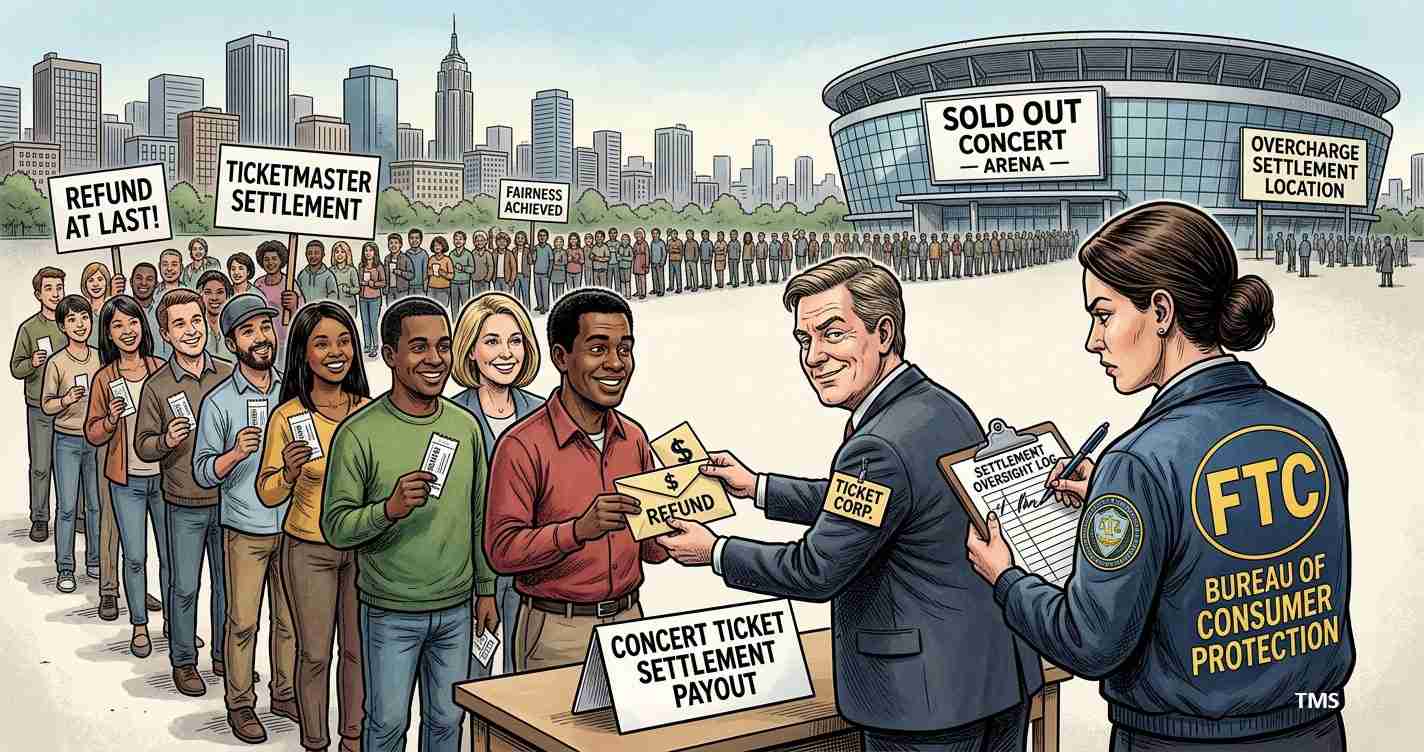
FTC alleges ticket platform hid fees under new Junk Fees Rule; proposed settlement would force clearer “total price” displays
The FTC alleges a ticketing platform hid mandatory fees during a May 12–14, 2025 sales window, and the agency’s proposed settlement would require clearer “total price” displays and fund a $10 million consumer redress program for affected buyers.
- Rule requires total price up front: The FTC’s FTC FAQs say sellers must display the total price — including mandatory fees — prominently in any offer or ad for live-event tickets.
- Alleged violation spans three days: The agency alleges some listings between May 12–14, 2025 omitted mandatory fees from initial displays; the proposed settlement would fund refunds and clearer disclosures.
- Proposed $10M redress: Filings describe a $10 million consumer redress program for eligible buyers; public records did not show a court-approved settlement or posted redress as of April 12, 2026.
- Rule scope and compliance: The Junk Fees Rule (16 C.F.R. Part 464) applies to primary sellers, resellers and marketplaces and bans drip or partitioned pricing while allowing fees if disclosed up front.
Overview
The Federal Trade Commission finalized the Junk Fees Rule (16 C.F.R. Part 464) in December 2024 and began enforcement on May 12, 2025. The rule targets deceptive pricing in live-event ticketing and short-term lodging by requiring the total price — including all mandatory fees — to be shown prominently before checkout.
Rule details and requirements
The rule, published in the Federal Register, requires that the total price be more prominent than any itemized fee breakdown prior to checkout so consumers can see the full cost before beginning a purchase. For the official text see Final rule text and for practical guidance see the FTC FAQs.
What is covered
- Live-event tickets include in-person concerts, sporting events and theater performances; pre-recorded shows and movies are excluded.
- The rule applies to primary sellers, resellers, third-party marketplaces and business-to-business arrangements — online, in apps or in person.
- Banned practices include drip pricing (adding mandatory fees later) and partitioned pricing (never showing a single total price). Businesses also may not misrepresent fee purpose, amount, or refundability.
Enforcement and context
The FTC began enforcement on May 12, 2025 and has issued warning letters to platforms it deemed noncompliant. The rule follows a March 2025 executive order directing action to improve price transparency in ticket purchases and echoes more than a decade of FTC work on so-called “junk fees.” The commission notes compliance avoids deception claims under Section 5 of the FTC Act; noncompliant businesses risk enforcement actions, civil penalties and consumer redress orders.
For analysis and industry context, see an industry overview and a legal guide.
Alleged platform practice and company response
According to the FTC’s complaint and proposed settlement summaries, the company’s site displayed some listings between May 12–14, 2025 that showed prices exclusive of mandatory fees on the initial display, with fees revealed later in checkout. The proposed remedy would include refunds to two groups within 90 days: consumers whose total ticket price was not disclosed on the initial display, and all other consumers who bought tickets during that period.
“The total price of live-event tickets must be disclosed up-front,” the FTC’s Bureau of Consumer Protection Director Christopher Mufarrige said, calling price transparency “essential to a free and competitive marketplace.”
A company spokesperson said the firm disagrees with the agency’s view but is refunding a portion of affected buyers’ fees and described the issue as limited to a set of listings during that three-day window. Filings described a $10 million consumer redress program; however, public records and independent news databases did not show confirmation of a court-approved settlement or posted redress payments as of April 12, 2026. Reporters have requested further comment from both the FTC and the company.
Implications for Redding, California
Economic impact
Local venues, small theaters, community organizations and regional promoters in Redding may need modest IT updates or vendor changes to display the total price prominently. For consumers, clearer upfront totals should ease comparison shopping and reduce surprise charges at checkout — potentially increasing event attendance.
Political consequences
The rule walks a line between consumer protection and regulatory burden: it enforces honest advertising without banning fees. Local officials in Shasta County may seek guidance or relief for small promoters while framing the rule as protecting families from deceptive pricing.
Social and cultural effects
Price transparency may help families and working residents budget for entertainment and increase access to local cultural life by reducing surprise fees. Community groups organizing benefit concerts or school performances will need to ensure event listings show the total price to avoid deterring attendees.
Practical steps for residents and organizers
- For buyers: Expect websites and box offices to show the total price up front; if a price looks low, check that a single total is displayed before beginning checkout. See the FTC FAQs for consumer guidance.
- For organizers: Review ticketing settings with providers, confirm how fees are displayed, and update listings and vendor contracts to ensure the total price is prominent. Practical vendor guidance is available from industry resources.
Sources and where to read the rule
Primary source documents and guidance include the FTC FAQs and the FTC press release. The rule was published in the Federal Register and the Final rule text.
Additional analysis and guidance: industry overview, legal analysis, and vendor guidance from industry resources.
Reporting note
The FTC’s public materials summarize its complaint language and the company’s statements describing refunds for a limited set of listings during May 12–14, 2025. Independent public records did not show confirmation of a court-approved $10 million redress program tied to that three-day window as of April 12, 2026; reporters have sought further confirmation from both the FTC and the company.



