
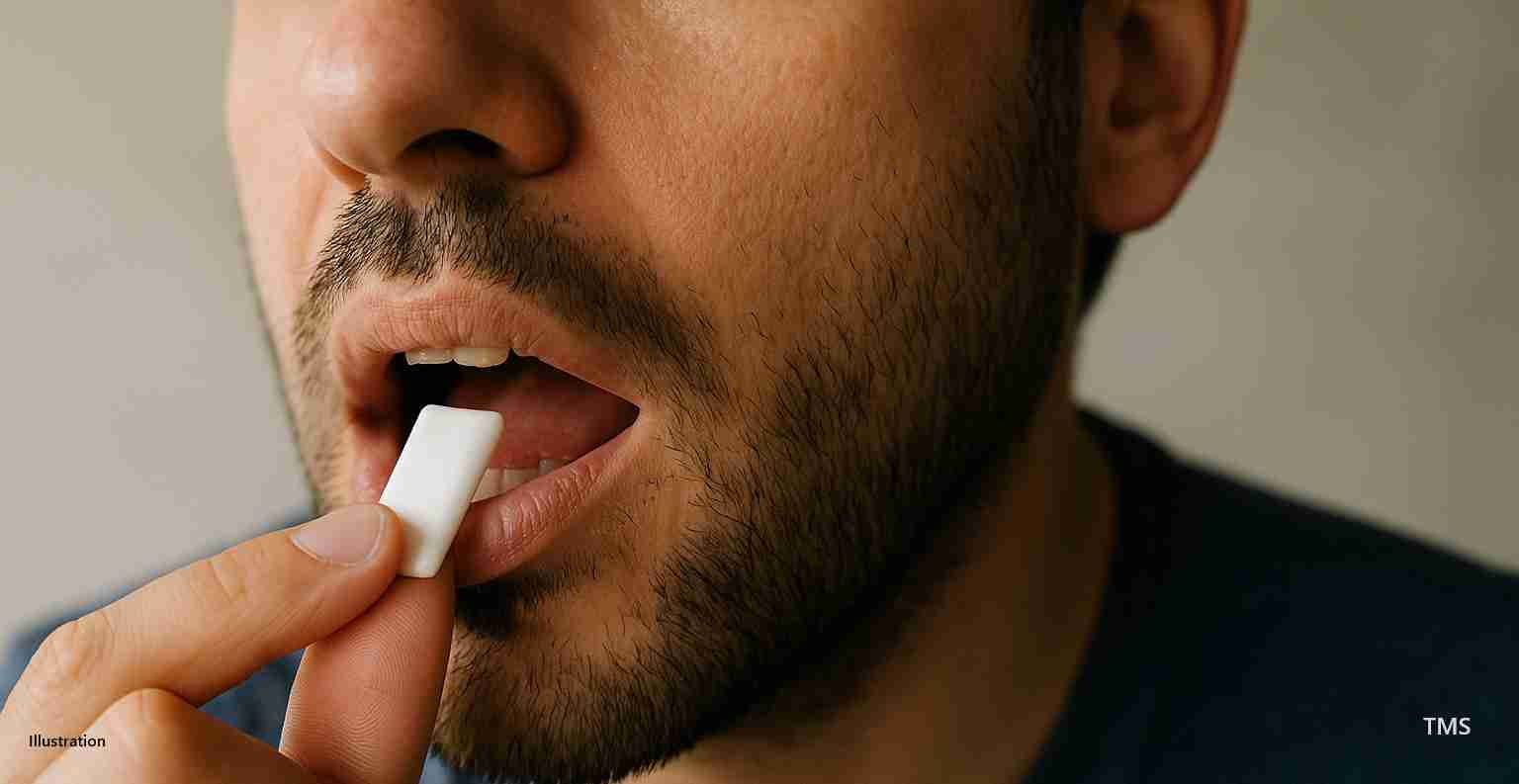
Chewing-gum flu test could taste out influenza before symptoms — edible flu test shows lab promise but needs human trials
Lede: Researchers in Würzburg, Germany, have developed an edible influenza sensor — potentially in chewing gum — that releases a thyme-like taste when viral neuraminidase is present in saliva, offering rapid, at-home detection before symptoms in lab studies.
Key takeaways
- What: An edible flu test that releases a thyme-like flavor when influenza enzyme is present in saliva — suitable for chewing gum, lozenges or thin films.
- How: A molecular sensor links a synthetic substrate to thymol; neuraminidase cleaves the substrate and frees the taste molecule.
- Status: Validated in saliva and cultured-cell lab tests; human trials are planned in about two years.
- Caveats: Clinical testing must confirm specificity, sensitivity and performance across real-world users with variable taste perception.
How the chewing-gum flu test works
Researchers built a molecular sensor that mimics the natural target of influenza’s enzyme neuraminidase — the “N” in virus labels such as H1N1. The sensor uses a synthetic substrate chemically linked to thymol, the compound that produces a thyme-like or herbal taste. When the sensor encounters neuraminidase in infected saliva, the enzyme cleaves the substrate and frees thymol. The liberated thymol produces a detectable taste in the mouth, signaling likely influenza presence; if no enzyme is present, the sensor remains intact and no taste appears.
Lab results and safety checks
In laboratory testing the sensor released the thyme flavor within about 30 minutes in saliva samples from people confirmed to have influenza. Initial cell-culture studies indicated no measurable harm to human or mouse cells in vitro. These findings suggest a fast, non-invasive screening method that could be delivered as chewing gum, a lozenge or a dissolving film.
“Fast and non-invasive” — lab evidence shows promise, but human testing is required to confirm real-world safety and accuracy.
Why taste-based detection could matter
Current influenza diagnostics rely on nasal or throat swabs with laboratory PCR or on rapid antigen kits that often detect infection only after symptoms begin. A taste-based test could offer:
- Instant, at-mouth screening without swabs or machines.
- Potential detection before symptom onset, enabling earlier isolation and fewer secondary infections.
- Low-cost, scalable options for seasonal surge periods and settings lacking lab infrastructure.
Limitations, open questions and next steps
Researchers stress the work is preliminary: the sensor has been tested in saliva and cultured cells but not yet in live human volunteers. The team plans human trials in about two years to evaluate whether the taste signal reliably appears in people — including before symptoms develop.
Key questions clinical testing must answer
- Specificity: Could other enzymes or pathogens trigger the sensor and cause false positives?
- Sensitivity in practice: Will the taste signal occur early enough and often enough to change behavior and reduce spread?
- Human variability: Taste perception differs by individual; subjective reporting could affect accuracy.
- Regulatory and manufacturing: The sensor will need regulatory review and scalable, safe production before at-home sale.
Comparisons with existing tests
Unlike PCR — highly accurate but lab-bound — and many over-the-counter lateral flow tests — rapid but typically symptomatic — this chewing-gum concept aims for immediate, intraoral detection that could operate prior to symptom onset. If validated, it would likely serve as a complementary screening tool rather than a replacement for confirmatory diagnostics in clinical settings.
Implications for Redding, California
Redding and Shasta County stand to gain practical benefits from a reliable edible flu test, especially for protecting workplaces, keeping schools open and reducing strain on local health services. Below are potential local impacts and considerations.
Economic and community impacts
- Small businesses could use a low-cost, private screening tool for workers before shifts, reducing unexpected absenteeism.
- Households might avoid clinic visits and lab fees by using an inexpensive at-home screening option for basic decision-making.
Health system impact
- Fewer unnecessary clinic visits for mild infections could free local resources for serious cases.
- Public-health teams might deploy taste-based screening in shelters, schools or community centers during seasonal peaks if validated.
Schools and education
School districts could consider a non-invasive chewing-gum or lozenge test as a less distressing alternative to swabs for student screening before events or after exposures, potentially increasing parental acceptance of in-school testing programs.
Practical and cultural considerations
Conservative communities that prioritize individual responsibility may prefer a self-administered, private test. Privacy concerns could be lower than with centralized reporting systems, but local leaders must still decide reporting policies and guidance for positive results.
Caveats for local leaders and residents
- The test remains experimental; do not assume immediate availability or full reliability until human trials and regulatory review are complete.
- Taste perception varies — some users may not sense the thyme taste clearly; clinical confirmation remains important where accuracy matters.
- Local agencies should prepare clear guidance on steps after a positive taste signal (confirmatory PCR, isolation, contact notification) to avoid confusion and disruption.
Selected sources and further reading
- American Chemical Society press release — A step toward diagnosing the flu with your tongue
- Fox News health story
- AOL coverage
- Inside Precision Medicine
- LabMedica technology article
- Clinical Lab Products discussion
Reporting from Würzburg, Germany; additional local reporting and context by Times Media Service.



