
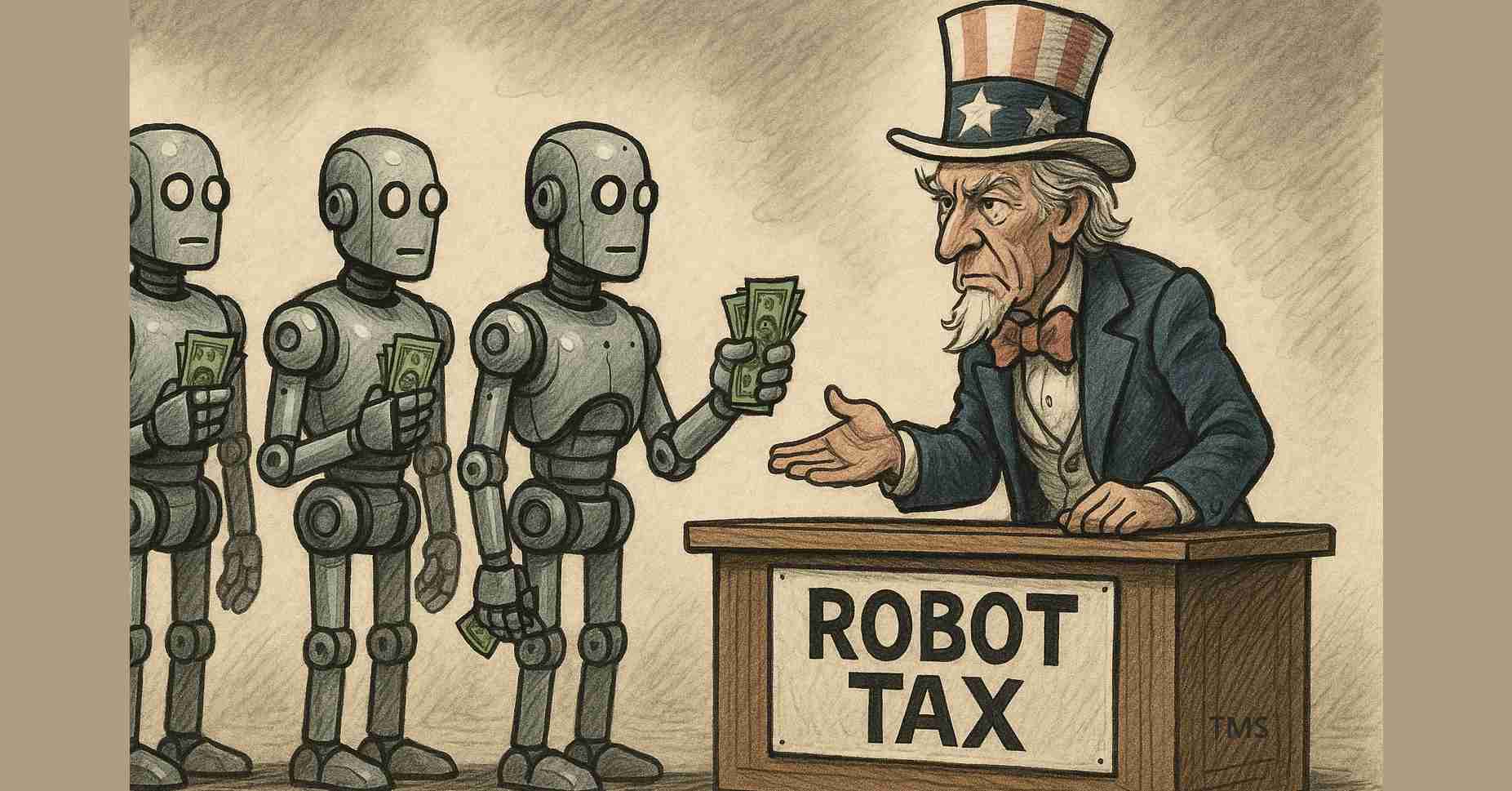
Democrats Push “Robot Tax” as AI Threatens Jobs: Local Impacts for Redding
Senate Democrats, led by Sen. Bernie Sanders, are pushing a proposed “robot tax” to charge firms that replace human roles with automation, funding retraining and transitional support as lawmakers warn that AI could threaten up to 100 million U.S. jobs over the next decade.
Key takeaways
- Senate Democrats are advancing proposals for a so-called “robot tax” (coverage).
- A Senate analysis cited by lawmakers warns AI and robotics could affect up to 100 million U.S. jobs and automate more than half of roles in 15 of 20 major sectors (analysis; report).
- Restaurant and fast‑food workers are repeatedly flagged as vulnerable, with industry research projecting high automation risk (Adecco; Fox Business).
- Critics urge caution: recent labor data show limited direct automation layoffs so far — one analysis found roughly 20,000 jobs lost to automation in 2025 (Axios).
What lawmakers are proposing
Senate Democrats describe the levy as a way to make companies that replace humans with automation pay a share of the social costs. The tax would be calculated by the number of human roles a firm replaces with machines, algorithms, or other AI systems, and revenue raised would fund worker retraining, transitional income support, and other programs to blunt economic disruption. Sources: reporting; analysis.
Sen. Bernie Sanders has framed the issue as an “economic crossroads,” warning that unchecked automation could produce “an economy where machines earn most of the money while ordinary workers lose their jobs.” Sanders’ remarks and coverage highlight calls for companies profiting from automation to contribute to solutions. Supporters cite voices such as Bill Gates urging firms to help address automation’s societal impacts (additional reporting).
How big is the risk?
The Senate analysis cited by Democrats found that AI or robots could replace more than half of positions in 15 of 20 major workforce sectors studied, with projected automation rates above 80% in roles such as customer service, freight and material movement, and executive assistants. Reporting and analysis: Mitrade; Fox Business.
Restaurant and fast‑food roles are highlighted repeatedly: industry work suggests more than 80% of restaurant jobs could be automated over time, with an estimated 57% of fast-food and counter-worker positions at risk in some studies. See Adecco’s analysis and reporting at Fox Business.
Balancing those projections, analysts and academic studies caution the pace and scale of job loss from AI remain uncertain. Recent labor data show automation-caused layoffs were far lower than other types of job losses in 2025 — one analysis put automation-related job losses at roughly 20,000 that year, while broader layoffs were far higher. Axios also reports Yale researchers finding little measurable disruption to the overall labor market from AI so far.
Industry trends and roots of automation
Automation in food service and retail accelerated during the COVID‑19 pandemic as off‑premises dining, curbside pickup and tight labor markets pushed companies to invest in ordering systems, automated payment and back‑of‑house software. Employers argue automation reduces errors and cost while handling repeated tasks without fatigue; opponents warn it can hollow out middle‑ and lower‑income roles and concentrate profits. Source: Adecco.
Policy balance: proponents view a robot tax as a brake on rapid shifts and a way to ensure workers share in productivity gains; opponents — including many business groups and conservative lawmakers — warn a tax could chill innovation, raise consumer prices or push investment overseas.
Voices and counterpoints
Democratic lawmakers argue proactive policy is needed to prevent growing inequality and that the levy would make companies internalize social costs tied to replacing human workers, using revenue for retraining and safety nets (coverage; reporting).
Critics note limited historical evidence that automation alone has caused mass job collapse so far and emphasize caution. Research cited by observers points out AI-driven “creative destruction” can create new roles — but often in tech‑dense locations, leaving other regions and sectors behind. See World Economic Forum and Axios.
What the tax might mean for businesses and workers
Lawmakers say revenue from a robot tax would finance retraining programs, apprenticeships and income supports while displaced workers reskill for jobs in growing fields. Supporters call this a fairer distribution of gains when companies replace human labor with low‑cost automation (analysis).
Opponents counter that taxing automation could make U.S. businesses less competitive globally, slow capital investment and raise consumer costs. Some business leaders warn firms might relocate or delay automation projects, limiting future efficiencies and potential job creation.
Implications for Redding, California
Economic impact
Redding and Shasta County rely heavily on service industries — small business, hospitality, retail and food service. If fast‑food and counter jobs face high automation risk nationally, local restaurants and quick‑service outlets could see major operational shifts (report; Adecco).
A robot tax intended to fund retraining could help local workers transition to in‑demand roles — but conservative residents and local officials may object to new federal levies that increase costs for employers and could slow investment.
Political consequences
For Redding’s conservative‑leaning voters, the plan may raise concerns about federal taxation of innovation and government intervention in business decisions. Local officials could face pressure to oppose the measure, arguing it threatens small businesses and job growth.
Conversely, community leaders and unions might support federal help for displaced workers, urging careful program design so funds directly aid retraining without unduly penalizing small employers.
Social effects
Workers relying on hourly service jobs could see early impacts. Younger and lower‑income residents who depend on entry‑level positions may need access to training, childcare support and transitional income while they retrain. Local non‑profits and community colleges would likely play key roles in delivering retraining and placement services if federal funds become available.
Cultural relevance and practical steps
Redding’s workforce culture values self‑reliance and small business ownership. Measures perceived as punishing employers could face strong local opposition; policy designs focused on voluntary employer partnerships and local control of retraining funds may fare better.
Practical advice: workers should monitor local job listings and training; community colleges and workforce boards may expand classes in healthcare support, skilled trades and tech‑adjacent roles. Small‑business owners should evaluate where automation boosts efficiency versus where human service is a competitive advantage, and plan for potential new costs or reporting requirements if a tax becomes law.
Reporting note & sources
Projections of large‑scale AI job displacement are driving policy responses in Washington, even as current labor data show limited direct automation‑related layoffs so far. The debate centers on whether policymakers should act now to blunt a possible future disruption or wait for clearer labor‑market signals. See reporting by:
For readers in Redding: this national debate raises immediate questions about how local businesses will adapt, how workers can prepare, and whether new federal rules will help or harm the region’s economy. Local planning, training and community partnerships will matter.



