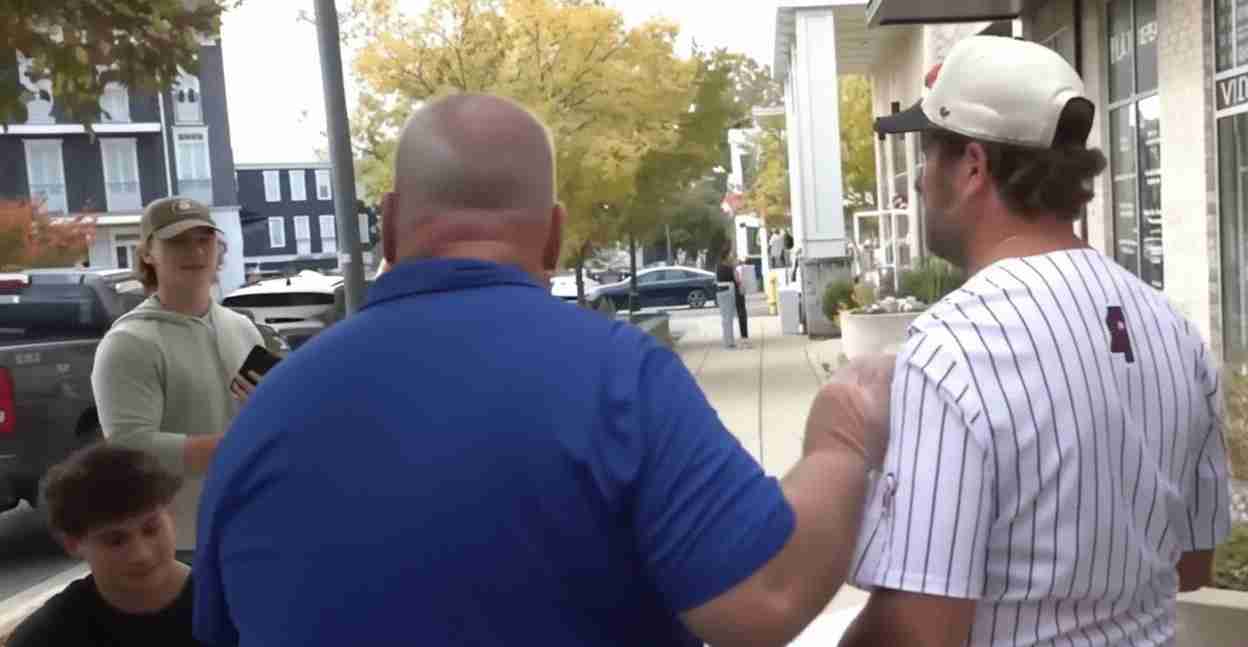
Student Arrested After Antisemitic Outburst Disrupts Dave Portnoy’s Starkville Pizza Review
A 20-year-old student, Patrick McClintock, was arrested after allegedly shouting an antisemitic slur and throwing coins during Dave Portnoy’s live “One Bite” pizza review in Starkville, Mississippi; authorities booked him on a misdemeanor disturbing-the-peace charge.
- Arrest made: Patrick McClintock, 20, was arrested and booked on a disturbing-the-peace misdemeanor following the incident reported by CBS News.
- What occurred: Video shows the suspect shouting an antisemitic slur and tossing coins at Dave Portnoy during a public “One Bite” review outside a Starkville restaurant.
- Legal review: Authorities are assessing whether the behavior meets Mississippi’s criteria for bias-motivated enhanced penalties.
- Broader debate: The episode intensified concerns about rising antisemitism and safety for public figures and communities.
What happened during the Starkville pizza review
Video of the moment shows Dave Portnoy conducting his “One Bite” pizza review outside a local Starkville restaurant when a man confronted him. According to police and media reports, the man can be heard shouting an antisemitic slur and then tossing coins in Portnoy’s direction before officers intervened.
Starkville Police responded on scene and later arrested the individual identified in reports as Patrick McClintock, 20. The footage and the arrest report are central to the official review of the incident; coverage and details have been reported by CBS News.
Arrest and legal context
Charge: McClintock was booked on a misdemeanor charge of disturbing the peace. The Starkville Police Department emphasized that while offensive speech alone can be protected under free-speech doctrines, officers will act when behavior threatens safety or disrupts public events.
Investigators are reviewing whether the facts meet Mississippi’s standards for a bias-motivated offense, which could lead to enhanced penalties under state law. Whether prosecutors pursue additional charges will depend on the evidence, witness statements, and whether conduct is found to be motivated by bias.
Dave Portnoy’s reaction and wider concerns
Portnoy publicly addressed the incident on social media and in interviews, saying the episode reflected a “definitive shift” toward antisemitism he and others in the Jewish community are experiencing. He described living with regular threats and has added around-the-clock security at his home, saying it “only takes one” person to cause real harm.
“Imagine hating somebody just because of their religion in this f—ing country.” — Dave Portnoy, as reported by CBS News
Portnoy framed his response as part of a responsibility he feels as a visible Jewish figure—to speak out when he sees hate and to highlight how seemingly joking behavior can have dangerous consequences for targeted communities.
Broader context: trends in antisemitism
Experts and watchdog groups, including reporting cited by CBS News, note a rise in antisemitic incidents in recent years. The Anti-Defamation League and other groups have documented increases in harassment and violent acts, raising alarm about safety for Jewish Americans.
Social media’s role: Online harassment can spill into public spaces; viral video clips of confrontations amplify attention and pressure local authorities, businesses, and community leaders to respond.
Investigative questions authorities and communities are weighing
- Spontaneous vs. planned: Was the outburst an isolated spontaneous act or a premeditated disruption? Video and witness statements will be key.
- Bias-motivation: Do the facts meet the state’s legal standard for a bias-motivated offense that would justify enhanced penalties?
- Event safety: What steps should media producers, restaurants, and law enforcement take to protect public figures and bystanders during live events?
Implications for Redding, California
Economic and business impact: Local restaurants and small businesses that host events or media appearances should review security plans. A single disruptive incident can damage reputation and deter customers; owners should consider staff de-escalation training and rapid law-enforcement notification protocols.
Political and law-enforcement consequences: City officials and police leaders may review local codes and training to ensure they can act promptly when speech crosses into threatening or disorderly conduct, balancing free-speech protections with public safety.
Social and community effects: Redding’s Jewish and faith communities might feel increased concern about public safety. Community leaders are encouraged to coordinate with law enforcement, report threats, preserve evidence, and hold forums to reinforce shared values of tolerance.
Cultural relevance and free-speech balance: Conservatives who prioritize free speech will want to distinguish between protected expression and criminal conduct; the Starkville incident illustrates that disorderly or threatening acts can lawfully be restricted even when words are offensive.
Practical steps for residents
- Report threats and disruptive behavior to local police and preserve evidence such as video.
- Businesses hosting public events should coordinate with police and consider modest security for high-profile guests.
- Community organizations and schools should remind students and residents that hateful conduct can have legal consequences.
Sources and attribution
This report is based on coverage by CBS News, which detailed the arrest, statements from Starkville Police and Dave Portnoy, and the video of the incident. Full source: CBS News.
Additional reporting and follow-up may clarify whether state bias-motivated penalties are applied or whether further charges or school discipline follow. Local leaders and law enforcement in Starkville and communities such as Redding will continue to monitor developments closely.