
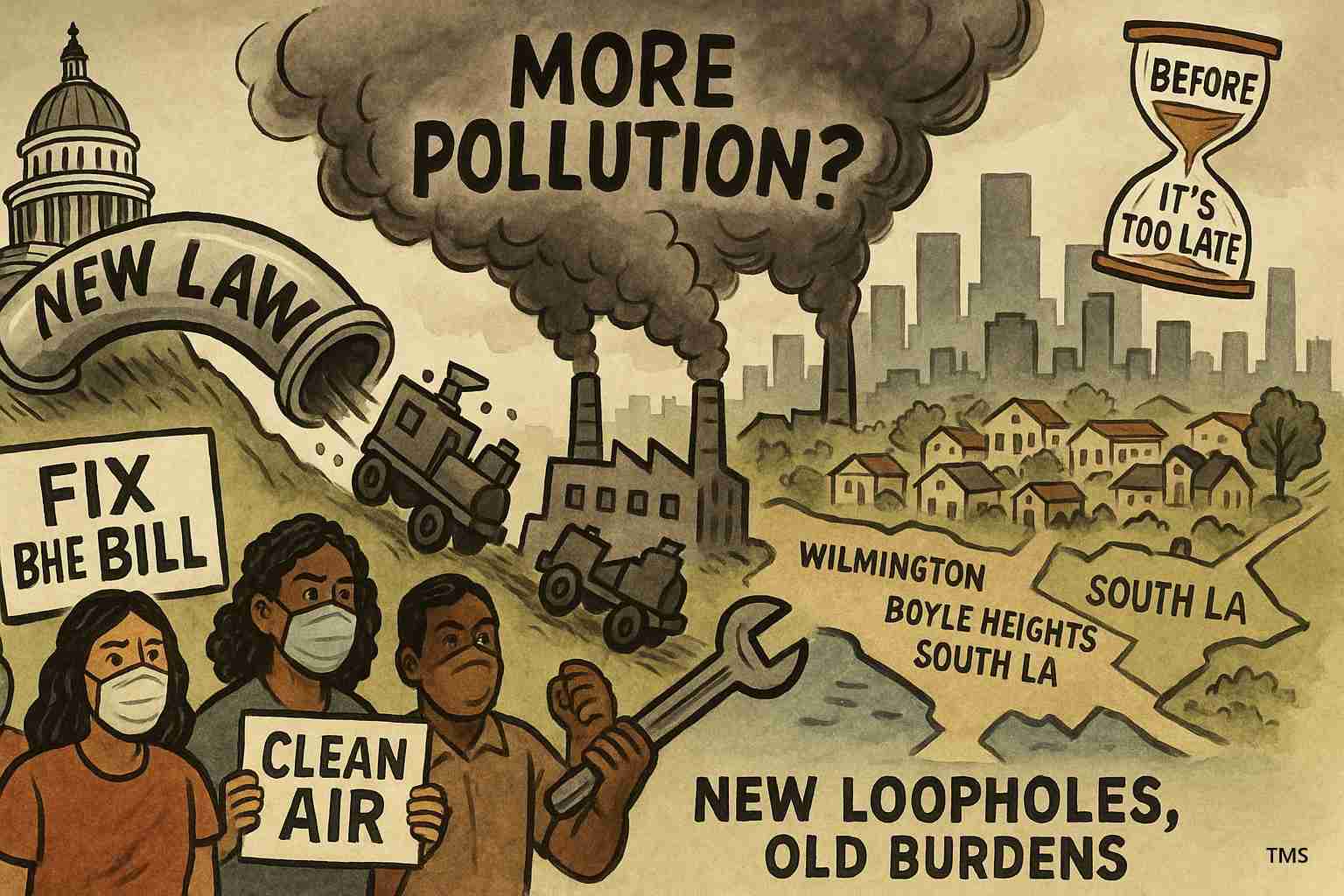
New California law SB 131 CEQA exemption could speed “advanced manufacturing” — and bring more polluting factories to big cities
California’s SB 131, signed June 30, 2025, creates a broad CEQA exemption for projects labeled “advanced manufacturing.” Supporters tout speed and jobs; critics warn it can sidestep environmental review, boost urban pollution, and limit public oversight.
- SB 131 (signed June 30, 2025) creates a wide CEQA exemption for facilities the state deems advanced manufacturing; routine CEQA review is removed. Official bill text
- The law also freezes most building-code updates for six years and imposes a 60-day permit “shot clock,” aiming to speed approvals but reducing review time.
- Environmental and community groups warn the exemption’s loose definitions could include battery, heavy-metal, and waste-processing plants, shifting polluting facilities into urban neighborhoods.
- Local leaders — including in places like Redding and Shasta County — must weigh potential jobs against public-health, habitat, and environmental-justice concerns.
What SB 131 changes — plainly
SB 131 creates an exemption from the California Environmental Quality Act (CEQA) for facilities designated as advanced manufacturing. That exemption means many projects no longer require standard CEQA environmental review, disclosure of air/water/soil impacts, or mitigation plans.
The statutory text and related analyses note the exemption removes a common path for public notice, comment, and CEQA-based lawsuits that previously could delay or reshape projects. For the bill language, see the Official bill text. For legal analysis of the package of changes, see a review by CEQA Developments and an industry/legal perspective from Holland & Knight.
Supporters and opponents — the debate
Supporters argue SB 131 reduces red tape, attracts investment in advanced manufacturing, and creates jobs by offering regulatory certainty through a code freeze and faster permit timelines. Legal and industry notes frame the changes as a package to revive manufacturing capacity.
Opponents — more than 130 environmental organizations among them — contend the law’s broad definitions let developers avoid environmental review, heightening risks for communities already burdened by pollution. A coalition letter and campaign materials lay out demands to restore endangered-species protections and reinstate CEQA review for polluting industries; see the coalition response and Green Foothills’ advocacy.
“The exemptions could be used by projects that pose real risks to air and water quality,” coalition groups warn.
Why critics say urban areas are most at risk
Streamlining and speed tend to favor sites with lower land and logistics costs and available workforces — often dense urban neighborhoods. Critics caution that concentrating new industrial facilities in cities will worsen traffic, smog, and existing pollution burdens.
Without CEQA, residents may have fewer opportunities to learn about proposed projects, challenge environmental findings, or require stronger pollution controls — shifting the balance away from community oversight toward expedited approvals.
What “advanced manufacturing” could cover
The term in SB 131 is broad and has raised alarms because it can be interpreted to include:
- Battery component production and lithium compound processing
- Heavy metal manufacturing and refining
- Certain types of waste processing or incineration
- Industrial-scale chemical and material plants
Advocates point to early reports of projects being rebranded as “advanced manufacturing” to qualify for exemptions; see reporting and case studies in the Coverage and materials from Green Foothills. One local example raised by advocates concerns the Guadalupe Quarry project near San Bruno Mountain and related classification disputes.
Permit timelines, code freeze, and public notice
SB 131 imposes a maximum 60‑day timeline for agencies to approve or deny certain permit applications and freezes most state and local building-code updates for six years, with narrow health-and-safety exceptions. Together, these provisions shorten the time available for agency review and public engagement.
Legal analysts emphasize that the combination of a code freeze and a shot clock alters the balance between speed and scrutiny in California environmental regulation; see analysis from Holland & Knight and CEQA Developments.
Endangered species and habitat protections
Previously, CEQA reviews often flagged harms to endangered and threatened species and their habitats. SB 131’s current statutory language does not restore those CEQA-based protections for qualifying advanced-manufacturing projects, creating a gap that conservation groups decry.
Environmental organizations warn that projects sited on or near sensitive lands could proceed with less habitat review; see Green Foothills’ concerns and the coalition letter.
Economic arguments — jobs vs. local costs
Proponents highlight potential jobs, local hiring, and property-tax revenue from new manufacturing projects, including battery supply-chain growth. They frame SB 131 as addressing a long-term decline in California’s manufacturing capacity.
Opponents counter that local costs — increased air pollution, higher public-health expenditures, reduced property values near polluting sites, and long-term cleanup liabilities — may offset economic gains, particularly where communities lack leverage to demand mitigation without CEQA oversight.
Implications for Redding, California
Economic opportunity and jobs: Redding and Shasta County could attract manufacturers seeking lower-cost sites and quicker approvals under SB 131, bringing construction and factory jobs to the region.
Local control and public notice: Smaller cities often rely on public review to shape industrial projects. The CEQA exemption and compressed review windows could limit Redding residents’ ability to influence project design and conditions.
Air quality and wildfire smoke: Redding already endures seasonal smoke and air-quality challenges. New industrial emissions could exacerbate risks for vulnerable residents, driving higher health costs.
Placement near disadvantaged neighborhoods: Streamlined siting elsewhere has favored lower-income urban areas; local land-use patterns in Redding could similarly concentrate impacts near less politically powerful neighborhoods.
Threats to habitats and species: Shasta County contains sensitive habitats; reduced CEQA-based habitat review increases the risk that some projects could proceed with less scrutiny of ecological impacts.
Practical steps for local leaders: City and county officials can consider strengthening local ordinances where legal, requiring robust conditional-use permits, negotiating binding mitigation agreements, and demanding transparency on emissions and waste handling even when CEQA review is not required.
Sources and further reading
Note: Read the bill text and the linked legal analyses for the specific statutory language and definitions that determine which projects qualify as advanced manufacturing. Local officials in Redding and Shasta County will face choices balancing jobs and investment with public health, habitats, and community input under SB 131.



