
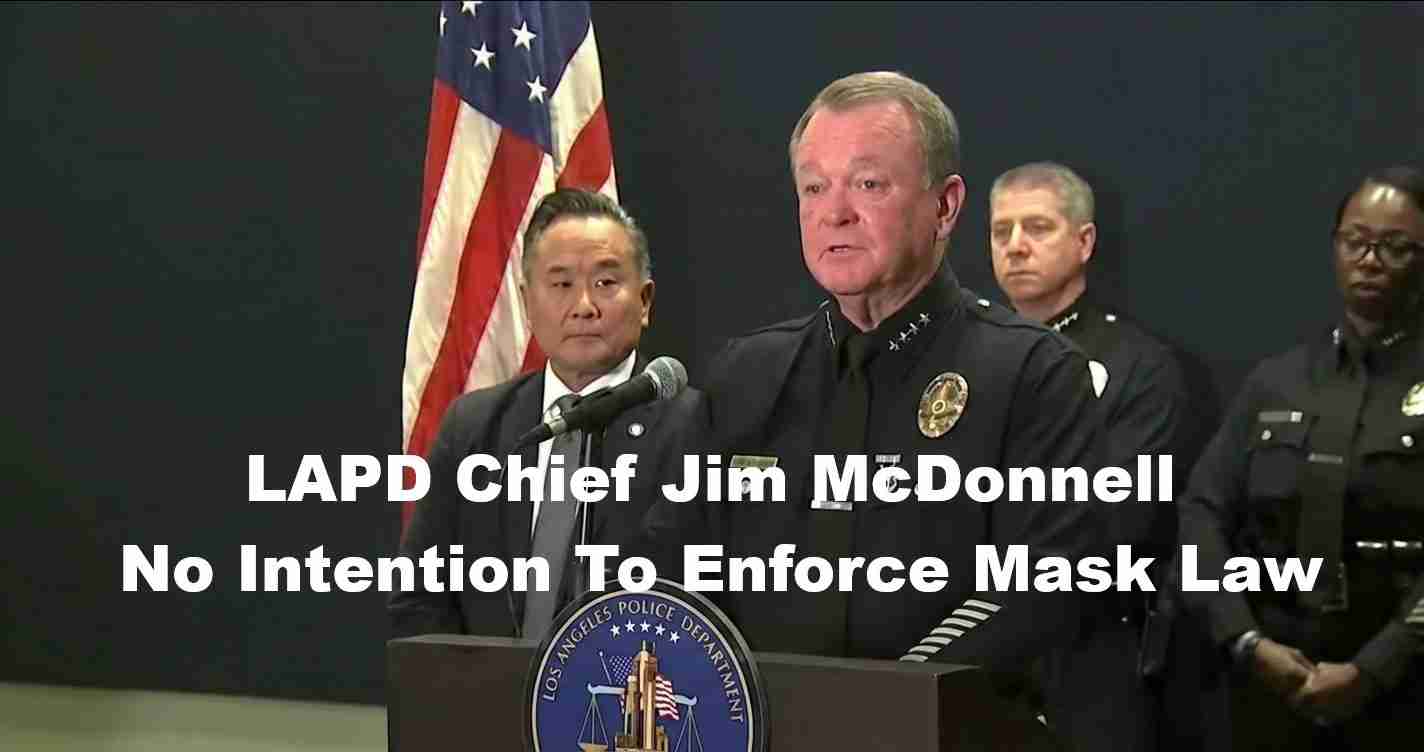
LAPD will not enforce California SB 627 on federal ICE agents, citing safety and legal concerns
LAPD Chief Jim McDonnell said the department will not enforce California Senate Bill 627 against federal ICE agents in Los Angeles, citing public safety, tactical risks and legal uncertainty amid a federal challenge and a statewide enforcement stay.
Key takeaways
- LAPD non-enforcement: Chief Jim McDonnell said LAPD will not attempt to enforce SB 627 against federal Immigration and Customs Enforcement officers in Los Angeles due to tactical and safety risks — reporting from Fox News and Fox LA.
- About SB 627: The law — called the “No Secret Police Act” — bans most on-duty face coverings for law enforcement and makes violations a misdemeanor; it was signed by Gov. Gavin Newsom in September 2025, as reported by ABC7.
- Federal legal challenge: The Biden administration has sued under the Supremacy Clause and a statewide stay on enforcement is in place while litigation proceeds (Fox LA).
- Local policy & partnerships: LAPD maintains limited cooperation with ICE on immigration matters while continuing collaboration with federal partners on major events and serious crimes (Los Angeles Times).
Background on SB 627 and why it matters
California’s SB 627 seeks to prohibit law-enforcement officers from wearing face coverings while performing official duties, except when undercover or for required tactical/protective gear. Supporters say the measure improves accountability and prevents operations that alarm residents; it followed high-profile 2025 immigration raids that used masks and unmarked vehicles, prompting public outcry.
Opposition and federal arguments
Federal agencies and opponents say the law undermines officer safety. Officials from Immigration and Customs Enforcement and the Department of Homeland Security argue that masks can protect agents and their families from doxxing, threats and retaliation while still allowing identification and, where possible, use of marked vehicles. The federal government has filed suit asserting states cannot regulate federal officers’ conduct under the Supremacy Clause; a judge has signaled significant constitutional questions and a stipulated statewide enforcement stay is currently in effect.
McDonnell’s reasons for non-enforcement
Chief McDonnell emphasized that the LAPD’s first duty is public safety and de-escalation. He argued that attempting to enforce a misdemeanor against another armed law-enforcement agency risks dangerous confrontations and escalation.
“From a practical standpoint, our role when we get to a scene is to de‑escalate the situation, not to ramp it up… Trying to enforce a misdemeanor violation on another law enforcement agency, that’s not going to end well.” — Chief Jim McDonnell (reported to Fox LA)
McDonnell noted the reality of “one armed agency approaching another armed agency” and said enforcing a face-covering misdemeanor could create tactical standoffs that are unworkable and dangerous in real-world settings. He stressed the department will prioritize de-escalation and community safety when federal agents operate in Los Angeles.
LAPD policy and federal partnerships
The LAPD has a 1979 policy limiting cooperation with ICE on immigration enforcement to preserve trust with immigrant communities. That policy remains, even as the department collaborates with federal partners on counterterrorism, human trafficking, major events and other serious crimes. McDonnell highlighted coordination for the World Cup, the Olympics and other national-security-related events (Los Angeles Times).
While the LAPD says it will not seek tactical confrontations over face coverings, it also affirmed it will hold federal partners accountable for conduct that violates local law and department policy when appropriate.
Legal fight and enforcement pause
The federal lawsuit argues SB 627 interferes with federal law-enforcement operations. Courts are weighing whether California can impose criminal penalties on federal officers for wearing masks while on duty. A judge indicated the federal plaintiffs have strong arguments, and a stipulated statewide enforcement stay reduces immediate conflict while litigation proceeds.
Reactions and wider context
Local leaders reacted variably when SB 627 passed. Los Angeles Mayor Karen Bass condemned the 2025 masked raids that helped prompt the measure; other officials pushed ordinances to limit masked enforcement locally. Federal agencies have signaled they will not comply if compliance would endanger operations or officers.
Public commentary is split: critics highlight risks that masked, unmarked operations resemble kidnappings; supporters emphasize protections against doxxing and targeted threats. The debate touches on immigration enforcement, community trust in policing, and the balance between oversight and operational security.
LAPD crime data timing and practical policing concerns
McDonnell’s remarks coincided with the LAPD’s release of 2025 crime statistics showing historic lows in homicides and ongoing discussions about less-lethal tools and crowd management. He framed non-enforcement as consistent with field realities: officers must focus on de-escalation and safe resolution in crowded or volatile scenes rather than enforcing a misdemeanor that could spark armed confrontation (Fox LA).
Implications for Redding, California
Economic impact
- Local law enforcement resources: If other California departments follow LAPD’s lead, Redding and Shasta County agencies may avoid diverting officers and equipment to policing federal agents over mask rules, preserving budgets for patrols and prevention.
- Tourism and business perception: A restrained approach reduces the risk of high‑profile clashes that could deter visitors and investors.
Political consequences
- State-local tensions: Redding officials will monitor how Sacramento and federal courts resolve SB 627; the ongoing legal battle could shape state priorities impacting Northern California.
- Local messaging: Conservative leaders may use LAPD’s position to argue for “public‑safety‑first” policies and against laws seen as politically driven or impractical.
Social effects
- Community trust: Immigrant and Latino residents will watch local handling of federal operations; avoiding confrontational enforcement may preserve trust while focusing on crime prevention.
- Public safety perception: Some residents may view protections for agent safety as sensible if they prevent escalations that spill into neighborhoods.
Cultural relevance
McDonnell’s stance resonates with values of officer safety, constitutional limits and practical policing for Redding’s conservative-leaning audience, highlighting tensions between Sacramento’s legislative priorities and Northern California’s operational realities.
Practical applications for residents
- When federal agents operate locally, residents should expect local law enforcement to prioritize de‑escalation and public safety. Report emergencies to local dispatch and follow lawful directions on scene.
- City and county officials can use the federal court case as a prompt to review local policies on federal cooperation and communicate residents’ rights and safety procedures.
Reporting notes and sources
This article draws on statements and reporting from Fox News, Fox LA, ABC7 and the Los Angeles Times regarding Chief Jim McDonnell’s comments, SB 627’s provisions and the federal legal challenge.
Key source links: Fox News · Fox LA · ABC7 · Los Angeles Times



