Chaos at Senate Hearing: Brian McGinnis Senate Protest Ends With Arrest, Possible Broken Arm After Senator Tim Sheehy Intervention
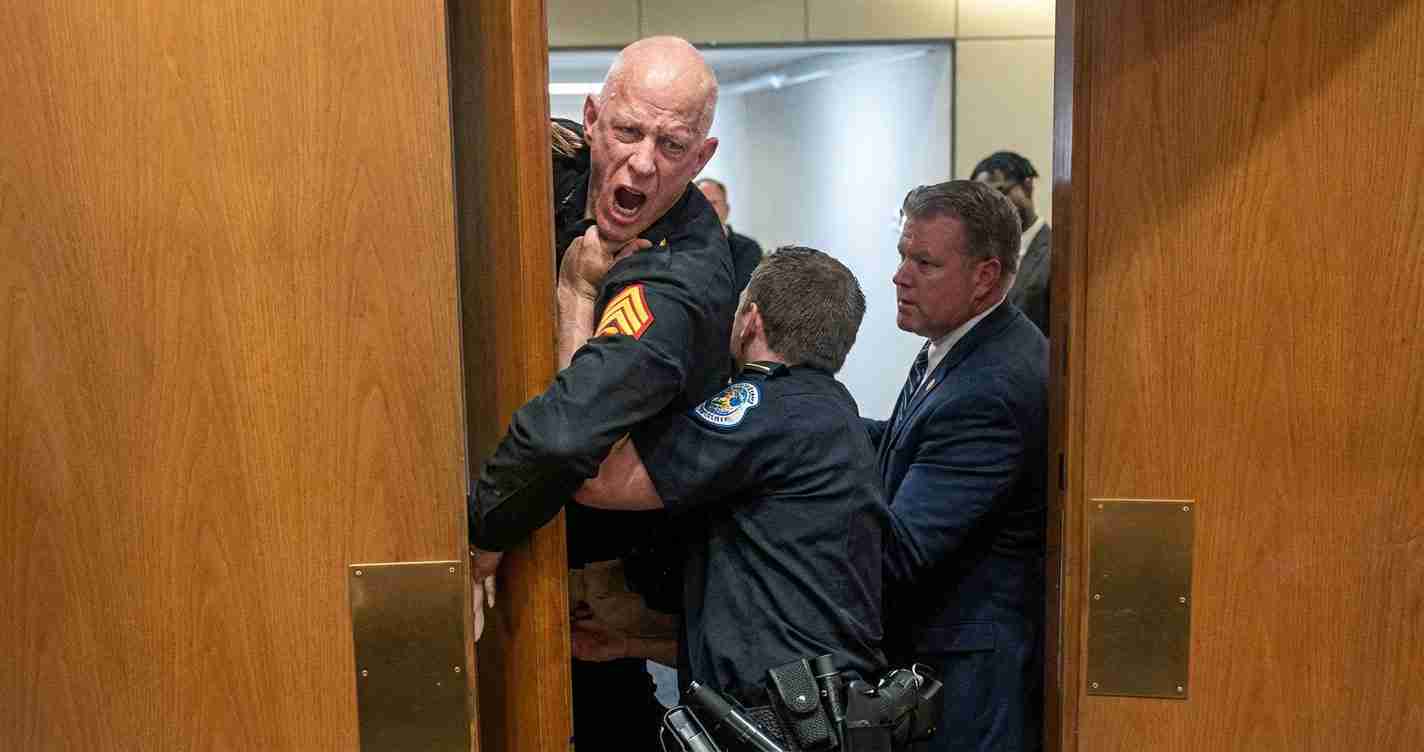
Brian McGinnis, a 44-year-old Marine veteran and Green Party Senate candidate, was arrested and reportedly suffered a broken arm after being forcibly removed from a Senate Armed Services Subcommittee hearing on March 4, 2026, following a protest.
- Forcible removal: McGinnis was removed by Capitol Police after shouting during the hearing and resisting at the doorway; video recorded an audible cracking sound during the struggle.
- Senator intervention: Sen. Tim Sheehy (R-Mont.) stepped into the doorway struggle and said he acted to de‑escalate the situation.
- Legal exposure: McGinnis faces multiple charges, including three counts of assaulting a police officer, three counts of resisting arrest, and a charge for unlawful demonstration.
- Medical treatment: Reports indicate McGinnis sustained a broken arm and was treated; three officers also received minor treatment.
What happened at the hearing
The episode took place during a Senate Armed Services Subcommittee session on the Current Readiness of the Joint Force. Video and contemporaneous reporting show Brian McGinnis stood up and shouted that “America does not want to send its sons and daughters to war for Israel,” interrupting the proceedings and prompting immediate security action.
Capitol Police moved quickly after McGinnis refused to stop. Two officers began escorting him out, and video depicts a physical struggle at the doorway as he resisted. According to accounts, McGinnis wedged his arm inside the door frame, refusing to let go as staff and lawmakers converged on the exit. An audible cracking noise is captured on video during the push to free him.
Senator Tim Sheehy’s intervention
Sen. Tim Sheehy, a Republican from Montana and a former Navy SEAL, appears on video stepping into the doorway struggle. Sheehy told reporters he intervened to help officers and to de‑escalate the situation.
“He was fighting back. I decided to help out and deescalate the situation. This gentleman came to the Capitol looking for a confrontation, and he got one. I hope he gets the help he needs without causing further violence.” — Sen. Tim Sheehy
Sheehy’s actions were met with mixed reaction: supporters praised an armed public official who aided officers; critics questioned whether elected officials should physically involve themselves in police removals inside the Capitol. The footage has become part of public debate over protocol and security.
The injury and medical treatment
Multiple reports indicate McGinnis’s arm was broken during the struggle. Video captures a cracking sound at the doorway as officers and others — including Sheehy — tried to free his arm from the door frame. McGinnis later reported the arm was broken and received medical treatment. Capitol Police said three officers also were treated for minor injuries.
Legal charges and next steps
Arrest and charges: McGinnis was arrested at the scene and faces multiple counts: three counts of assaulting a police officer, three counts of resisting arrest, and one count for crowding, obstructing and incommoding tied to the unlawful demonstration. The case is pending and will proceed through the courts.
Capitol Police reiterated that demonstrations are not allowed inside congressional buildings; protests are permitted on Capitol Grounds outside the buildings when properly coordinated. Legal proceedings will determine how charges move forward and whether any further administrative or security reviews occur.
Reactions and context
The incident fuels ongoing debates over protest rights, security, and use of force in federal spaces. Advocates for strict enforcement emphasize the need to protect lawmakers and staff from disruptions. Civil liberties proponents and some observers call for a review of force used in removals, particularly when injuries result.
Campaign note: McGinnis’s campaign said he intends to continue his Senate run; family members noted he will need time to recover after medical treatment. The episode has broader resonance within conversations about veterans in political life and expectations for decorum in government buildings.
Implications for Redding, California
Economic: The incident is unlikely to have direct economic effects on Redding but may influence donor behavior and media attention tied to national security and law-and-order issues.
Political: For conservative audiences in Redding, the episode reinforces concerns about security and institutional respect; Sheehy’s intervention may be viewed favorably by voters prioritizing law and order.
Social and cultural: Redding’s veterans community may hold divided views — some sympathetic to McGinnis as a veteran, others critical of his decision to disrupt a formal hearing. Local groups could use the incident to host forums on protest limits, civic engagement and veteran roles in politics.
Practical takeaways: Residents and organizers should note that protests inside federal buildings are banned and that disruptions can carry criminal charges. Lawful channels — petitions, town halls, organized demonstrations on Capitol Grounds — are suggested alternatives for advocacy.
Reporting notes and sources
This article draws on reporting from multiple outlets for details about the protest, removal, Senator Sheehy’s intervention, injuries and charges. See original reports here:
Police account: Capitol Police said McGinnis “got his own arm stuck in a door to resist our officers and force his way back into the hearing room,” and that officers were put in danger; three officers and McGinnis were treated for injuries (see sources above).
Note: All factual details, quotes and source URLs are preserved from original reporting by the outlets listed.