
A’s Break Ground on $1.75 Billion “Armadillo” Ballpark in Las Vegas; Work Ramps Up as Costs and Questions Grow
The Oakland Athletics broke ground June 23, 2025, on a $1.75 billion, 33,000-seat Las Vegas ballpark at the former Tropicana site — a high-profile move aiming for a 2028 opening amid rising costs and scrutiny.
Key takeaways
- Ceremonial groundbreaking: Held June 23, 2025, at the former Tropicana site (ESPN: Athletics celebrate groundbreaking at Tropicana site).
- Budget & capacity: Project announced at $1.75 billion for a 33,000-seat stadium; estimates rose to about $2 billion by December 2025 (Wikipedia: New Las Vegas Stadium).
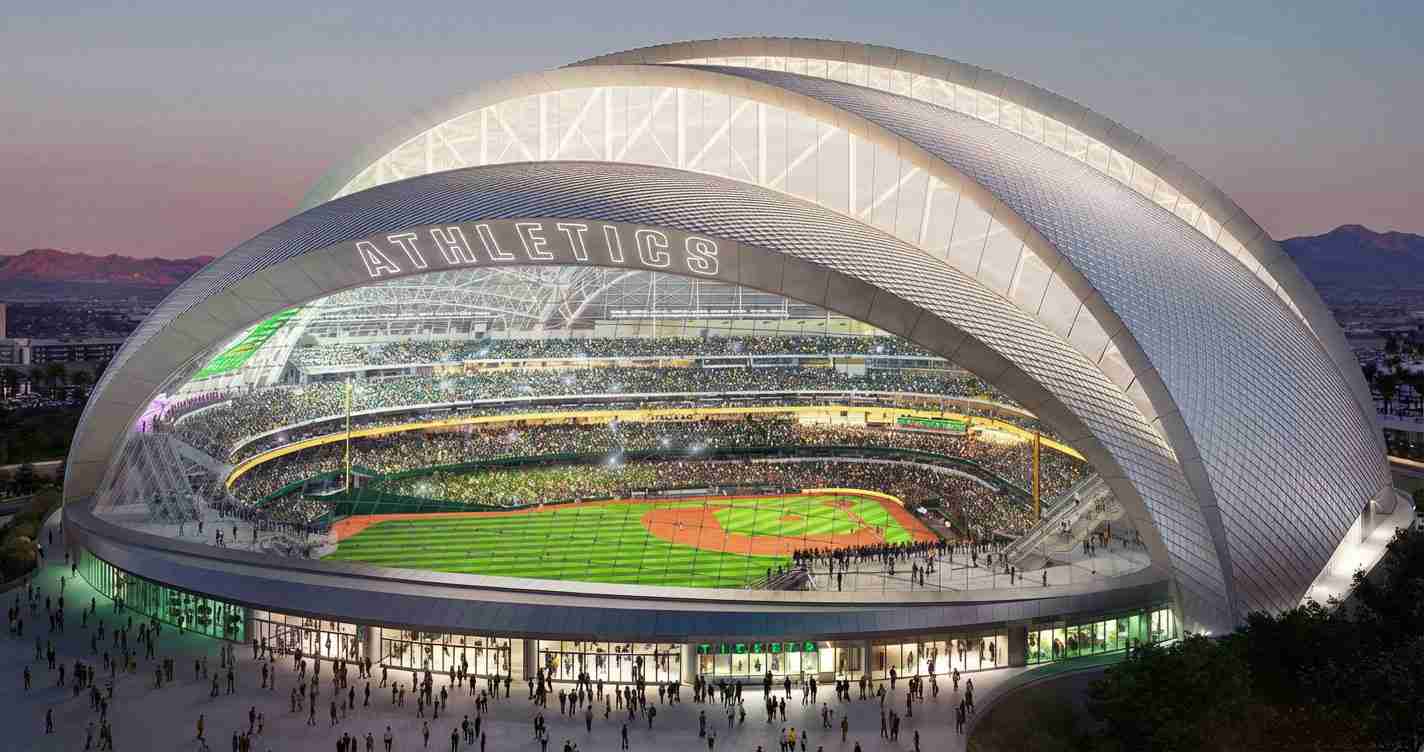
- Design & features: Designed by BIG and HNTB, nicknamed the “Armadillo,” with a massive cable‑net glass wall and Strip-framing outfield window (Dezeen: BIG’s layered “Armadillo” stadium).
- Public support: Nevada and Clark County approved up to $380 million in public assistance; the team covers remaining costs (Wikipedia: New Las Vegas Stadium).
Groundbreaking and ceremony: A new identity in Las Vegas
On a heat‑baked morning at the former Tropicana lot, owner John Fisher spoke to a crowd that included MLB commissioner Rob Manfred, former Athletics greats Rollie Fingers and Dave Stewart, local officials, and Little Leaguers. Fisher declared
“We are Vegas’ team”
— a concise statement of intent as the franchise begins its multi‑year relocation.
The ceremony combined celebration with a pledge to the community as crews and early earthwork were on display: mounds of dirt, construction vehicles, and a marked home plate on a nine-acre portion of the 35‑acre Bally’s-owned site at Tropicana Avenue and Las Vegas Boulevard. Team president Marc Badain emphasized a ready local workforce and accelerated progress (ESPN; Dezeen).
Design and features: an “Armadillo” with a view of the Strip
The stadium — shaped by BIG (Bjarke Ingels Group) and HNTB — uses overlapping arched layers that many compare to the Sydney Opera House. The nickname “Armadillo” references its layered form and sweeping glass entry. Designers promise the world’s largest cable‑net glass wall at the entrance and a dramatic glass outfield window framing the Las Vegas Strip, while keeping fans close with 84% of seats between the foul poles (Dezeen; ESPN).
Seating capacity: 33,000 — one of the smaller stadiums in MLB — designed for intimacy and sightlines.
Construction update and timeline: concrete now, steel next spring
Foundations began in May 2025, and by late 2025 concrete pours included foundations, elevator cores and portions of decks and concourses. Rebar cages and columns were rising; the team reported the first deck pour underway in the outfield and roughly half the decks poured at the time of the ceremony. Escalators were scheduled to arrive within weeks of the groundbreaking (Athletics Ballpark Construction Page).
Badain outlined a compressed schedule: steel work in the bowl to begin March 2026, completion of the fifth of six buttresses by late February 2026, roof steel visible by June 2026, and the stadium frame shaping up through summer and fall 2026.
Financing, lease and public support: public money and private stakes
Nevada and Clark County authorized up to $380 million in public support while the Athletics and private partners are responsible for the remainder. Public records and reporting indicate project costs increased from $1.75 billion to about $2 billion by December 2025, prompting questions about potential spillover effects on infrastructure and phased site development (Wikipedia).
The team secured a 30‑year rent‑free lease with buyout and operational options, a structure that analysts and officials will watch for long‑term fiscal exposure and accountability.
Context: the move from Oakland and the big-picture stakes
MLB owners approved the Athletics’ relocation in November 2023. The club left Oakland’s Coliseum after the 2024 season and played temporarily in West Sacramento at a Triple‑A facility through at least 2027. Las Vegas now hosts four major pro teams — the Raiders (NFL), Golden Knights (NHL), Aces (WNBA) — expanding the city’s pro-sports profile. Commissioner Rob Manfred framed the move around Las Vegas’s demographics and tourism draw (ESPN).
Investigative lens: timeline risks, cost growth and accountability
Team officials maintain the stadium remains on track for a January 2028 opening despite the projected cost increase. Yet the jump from $1.75 billion to roughly $2 billion raises concerns for taxpayers and officials who approved public participation. Although the public share is capped at $380 million, cost overruns may affect related infrastructure and broader development commitments.
Analysts and conservative observers will press for clarity on return‑on‑investment, contract safeguards, and realistic timelines. The long‑term, rent‑free lease is a focal point for questions about fiscal exposure and municipal oversight.
Tropicana site, Bally’s redevelopment and mixed‑use plans
Demolition of the Tropicana site finished in October 2024. Plans include a phased redevelopment of a new 3,005‑room Bally’s hotel-casino through 2030, with mixed‑use parcels surrounding the ballpark intended to generate private revenue. Renderings show residential, retail and hospitality components that could enhance the Strip experience but also increase pressure to deliver promised jobs and tax returns (Wikipedia).
Who benefits and who bears the risk?
Backers highlight tourism dollars and job creation as key benefits. The arena’s Strip location is expected to draw visitors for games, conventions and hospitality revenue. However, taxpayers and local governments face political and financial risks if revenues lag or costs continue to rise. Clear contract terms and performance metrics will be essential to protect public interests.
Implications for Redding, California
Redding is nearly 300 miles from Las Vegas, but the Athletics’ move affects Northern California indirectly. Local hotels, restaurants and travel services may see both losses and gains depending on fan travel patterns. Some former Oakland fans might travel to Las Vegas for marquee games, while Northern California will host fewer high‑profile MLB events.
Political consequences: Conservative-leaning communities like Redding may use the deal as a case study to push for tighter protections when public funds back private sports projects. The Las Vegas cap and lease terms will be compared to historic California deals.
Social and cultural effects: Fans in Redding lose a proximate, high‑level franchise presence; youth programs and local identity around the A’s will be affected. The team’s outreach at the groundbreaking signals attempts to maintain youth engagement through clinics and potential exhibition events.
Practical applications: Travel operators and sports promoters in Redding can package trips around big games, leveraging the modern, intimate ballpark and nearby Strip hotels once Bally’s redevelopment advances (Athletics Ballpark Construction Page; Dezeen).


