
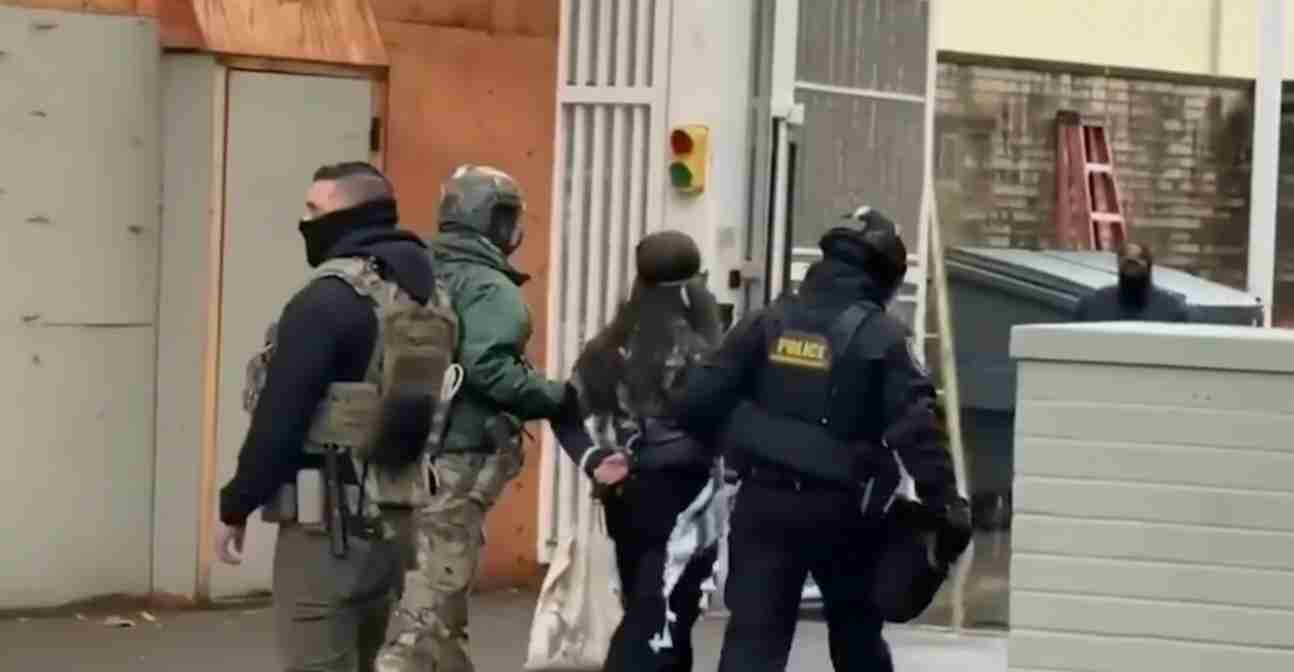
Arrests Made After Clashes Outside Portland ICE Facility; Some Detainees Transported to Clark County Jail
Federal officers detained three people during Oct. 11 protests outside the South Portland ICE facility; Portland police confirmed two arrests, and the transfer of three detainees to Clark County, Washington, has prompted legal and jurisdictional questions.
- Detentions and arrests: DHS officers detained three people during protests, and the Portland Police Bureau confirmed two arrests tied to activity at the immigration facility — video footage and reporting.
- Cross-state transfer: Three protesters arrested at the scene were held at the Clark County jail in Vancouver, Washington, prompting inquiries from Clark County officials — OPB reporting.
- Legal backdrop: The protests occurred amid broader disputes over federal responses in Portland, including an appeal related to restrictions on deploying National Guard troops — appeal coverage.
- Accountability questions: Local officials are seeking clarity on chain-of-custody, booking procedures, and notification for cross-state detainee transfers.
Protests and arrests at the ICE facility
On Oct. 11, dozens of demonstrators and some counter-demonstrators gathered outside the U.S. Immigration and Customs Enforcement facility in South Portland. Video and eyewitness accounts show confrontations escalating near the facility driveway, after which federal Department of Homeland Security officers moved into the driveway and detained three people that day — video footage and reporting.
Witness accounts: Protest organizers described exercising free speech while calling for changes to immigration enforcement; law enforcement cited aggressive tactics and counter-protester presence as factors prompting intervention.
The Portland Police Bureau later confirmed two arrests directly tied to the protests at the immigration facility, distinguishing city police actions from federal detentions in the driveway area. Video material cited by reporters shows officers and demonstrators in close contact before detentions occurred.
Cross-state detention raises jurisdiction questions
A notable development after the Oct. 11 detentions was that three people were transported to the Clark County jail in Vancouver, Washington. Clark County officials publicly pressed for details about why arrests made in Oregon resulted in detention across the state line — OPB reporting.
Key local concerns include:
- Chain-of-custody documentation and proper notification of the receiving jurisdiction.
- Booking procedures and whether local rules for medical care and processing were followed.
- Transparency and adherence to any state-to-state agreements or protocols when federal agencies use local jail capacity.
Legal and political context
The protests unfolded against a backdrop of legal disputes over federal forces operating in Portland. One prominent dimension was an appeal related to a temporary order limiting deployment of National Guard troops, which has shaped debate about the permissible scope of federal support for local law enforcement during protests — see appeal coverage.
Perspectives: Activists argue federal involvement can chill free expression or escalate conflicts; law enforcement and many conservative officials counter that federal support and firm enforcement are needed to restore public order when protests become disruptive or violent.
Video evidence and public records
Available video footage from Oct. 11 has been a primary source for reconstructing the sequence of events. The footage shows crowd movement, confrontations in the driveway, and federal officers detaining three people. Reporters have also relied on public records and statements from Clark County officials to probe the cross-state transfers — OPB reporting.
Official responses and open questions
- Portland Police Bureau: Confirmed two arrests tied to the protests and clarified that federal authorities made detention decisions in the driveway area — video footage and reporting.
- Department of Homeland Security / ICE: At the time of reporting, federal agencies had not released a full public accounting of the chain of events for each detention or a complete rationale for holding detainees in Clark County.
- Clark County officials: Are seeking clarity on why individuals arrested in Portland were moved to their facility and whether proper transfer protocols were followed — OPB reporting.
Implications for Redding, California
While the arrests occurred in Oregon and the transfers involved Washington, the episode has practical and political resonance for Redding and Shasta County officials who host federal facilities or cooperate with federal law enforcement.
Economic impact: County jails and taxpayers may face costs if federal transfers place additional demands on local detention resources, or if audits and legal reviews become necessary.
Political consequences: Conservative voters in Redding may view firm federal action at ICE facilities as law-and-order enforcement, yet cross-state transfers could prompt calls for clearer agreements to protect local control and transparency.
Social and cultural effects: Local advocacy groups on both sides of immigration issues may be energized, potentially leading to solidarity events, protests, or informational campaigns that draw attention to federal-local coordination.
Practical applications for residents
- Review protocols: Local officials should review cooperation and transfer protocols with federal agencies to ensure clear policies and documentation.
- Demand briefings: Residents can request regular updates from county sheriffs or supervisors on any federal-local detention arrangements.
- Advocacy: Local groups and officials may use this incident to push for policy reviews that protect local resources and maintain transparency and public safety.


