
9th Circuit Clears Trump National Guard Portland Deployment, Reinforces Presidential Authority in Face of State Objections
A divided U.S. 9th Circuit panel ruled that the Trump administration may federalize 200 Oregon National Guard troops and deploy them to Portland to protect a federal ICE facility, overturning a lower court injunction and reaffirming presidential authority.
- Appeals court lifts injunction: A three-judge panel allowed federalization and deployment of 200 Oregon Guard members to a Portland ICE site.
- Panel split reflects tension: Two Trump appointees and one Clinton appointee formed the divided majority that deferred to the executive’s factual findings.
- Civil liberties concerns: ACLU and other groups called the ruling an expansive assertion of federal power over state-controlled Guard forces.
Main story
Key information and immediate facts
Panel action: A three-judge 9th Circuit panel voted to lift a lower court order that had blocked the federalization and deployment of 200 Oregon National Guard members to protect a federal Immigration and Customs Enforcement (ICE) facility amid protests (Portland Tribune report; 9th Circuit opinion).
Panel makeup: The panel included Judges Ryan Nelson and Bridget Bade, appointed by President Trump, and Judge Susan Graber, appointed by President Clinton (OPB coverage).
Presidential memorandum: The federalization was ordered by a presidential memorandum dated Sept. 28, 2025, over objections from Oregon Governor Tina Kotek (OPB report).
Lower court grounds: U.S. District Judge Karin Immergut issued a temporary restraining order saying the administration failed to show conditions justified federalizing the Guard, calling the president’s determination “untethered to the facts” (OPB coverage).
Civil liberties reaction: Civil liberties groups criticized the appeals court decision as an overbroad expansion of federal power (ACLU statement).
Background: what led to the fight
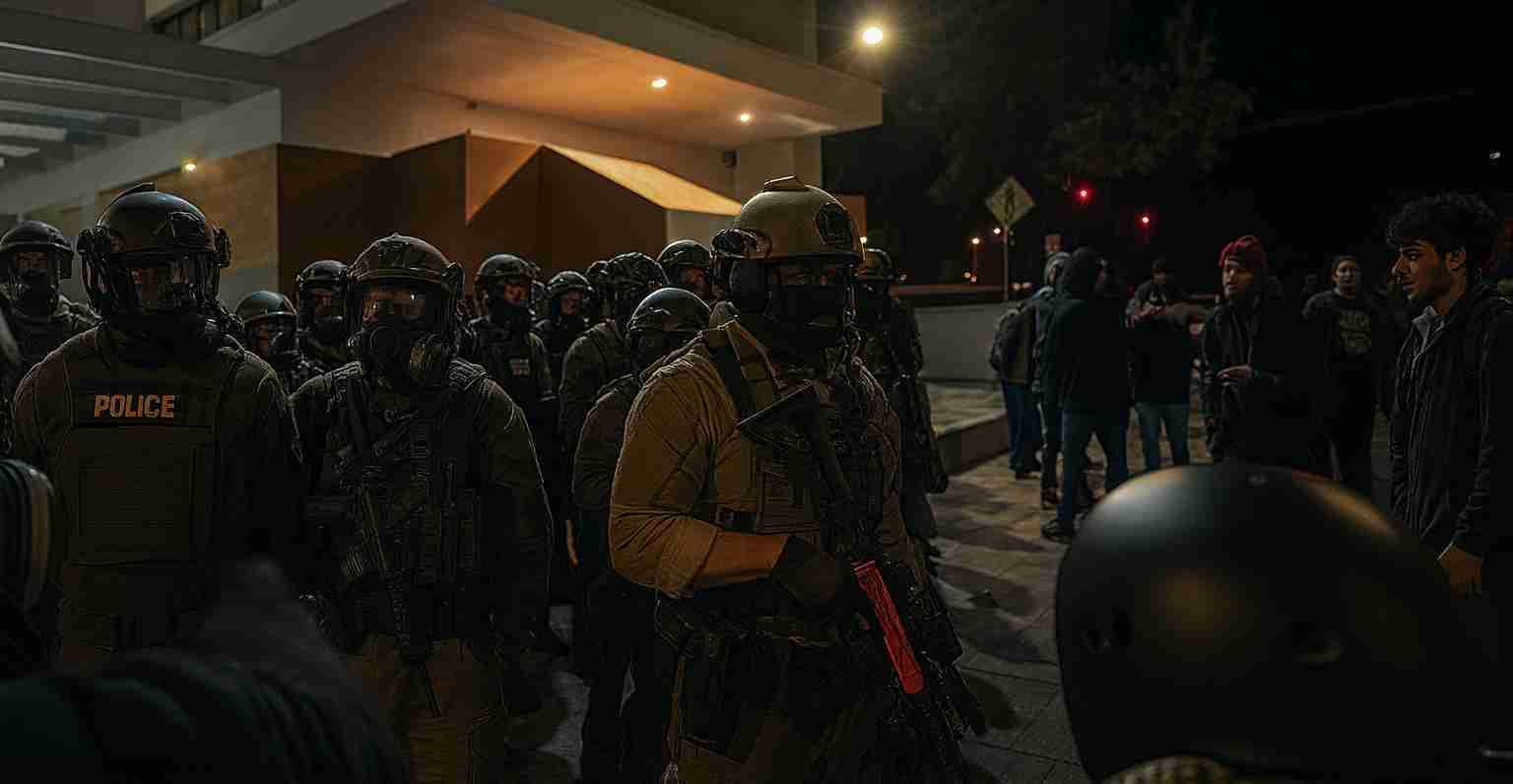
Federal officials said protests outside Portland’s ICE building had grown volatile, citing attacks on federal officers and damage to federal property to justify federalizing the Oregon National Guard and sending 200 troops to secure the site. Local leaders in Portland and Oregon disputed that characterization and filed suit, arguing the move violated state authority over the Guard and threatened First Amendment rights for protesters (OPB; 9th Circuit opinion).
The lower court decision
Judge Karin Immergut, a Trump appointee, stepped in and blocked the federalization with a temporary restraining order. She concluded the administration had not shown an “invasion” or rebellion that would clearly permit federal control under the cited statutes and described the president’s memorandum as seemingly untethered to facts on the ground in Portland (OPB).
The 9th Circuit ruling
Last week, a divided three-judge panel reversed the temporary restraining order. The majority emphasized the difficulty courts face in second-guessing the president’s judgment about enforcing federal law, giving strong deference to executive factual findings that federal forces were necessary to secure federal assets and personnel amid violent acts at protests (Full opinion).
“How is a district court supposed to get in and question whether the president’s assessment of executing the laws is right or wrong?” — Judge Ryan Nelson
Statutory basis: The opinion framed presidential power to federalize the Guard around federal statutes that allow action during invasion, rebellion, or when necessary to enforce federal law, and the court deferred to the executive branch’s assessment that protecting federal facilities and personnel warranted federalization.
Legal arguments from both sides
Justice Department: DOJ argued that the protests crossed from protected speech into criminal attacks on federal officers and federal property, and that protecting federal facilities and personnel is a core federal function that can trigger federalization when state forces cannot or do not act (OPB).
Oregon and Portland: State and city lawyers acknowledged unrest but maintained much of the activity remained peaceful and constitutionally protected; they warned that federalized troops policing political speech would set a dangerous precedent and undermine local control (9th Circuit opinion).
Division on the panel and limits of the ruling
Not unanimous: The split decision underscores tension between deference to presidential judgments about enforcing federal law and protecting state control over Guard forces and protest rights. The ruling did not resolve a separate order that barred deployment of Guard troops from California or other states, leaving unresolved questions about when governors can block out-of-state Guard forces (ACLU reaction).
Civil liberties warning: The ACLU called the decision expansive and warned it permits using military force against U.S. citizens in ways not supported by law or by facts on the ground (ACLU statement).
Reaction from elected officials and unions
State and city leaders: Governor Tina Kotek and Portland officials criticized the federalization and the use of military-style forces against protesters (OPB; Portland Tribune).
Federal law enforcement/unions: Police and federal law enforcement unions supported the decision, saying it will help protect officers. Civil rights organizations urged strict limits on military forces operating in domestic protest settings (OPB; ACLU).
Where the case goes next
The split decision increases the likelihood of further appeals. Parties could seek en banc review by the full 9th Circuit or ask the U.S. Supreme Court to decide how far the president’s power reaches in federalizing state Guard units for domestic law enforcement purposes (9th Circuit opinion; OPB).
Implications for Redding, California
Economic impact
- Federal authority affirmed: The ruling signals a stronger federal hand to secure federal facilities, which could reassure federal employees and contractors who serve the region, potentially reducing economic uncertainty tied to prolonged protests (9th Circuit opinion).
- Local costs and missions: Easier federalization could mean California’s Guard resources are tapped more often, affecting training schedules, state missions and budgets that support local emergency response in places like Redding (OPB analysis).
Political consequences
- State vs. federal authority: Conservative readers in Redding may view the ruling as a check allowing the president to protect federal property when local leaders decline to act, reinforcing law-and-order messaging (Portland Tribune).
- Governor–federal friction: The decision could intensify tension between governors and the White House in divided states, influencing local campaigns and policy debates about public safety.
Social effects
- Public safety expectations: Some Redding residents prioritizing decisive safety responses may be reassured, while civil liberties advocates could be alarmed by the prospect of federal troops near protests (ACLU).
- Protest dynamics: Activists may alter tactics, timing or locations to avoid federalized responses, potentially shifting demonstrations away from federal sites.
Cultural relevance
Values at stake: For conservative communities around Redding, the ruling resonates with themes of respect for law and support for federal officers; local leaders might cite the case when advocating for robust protections for federal assets and personnel (Portland Tribune).
Practical applications for local officials
- Review mutual-aid and readiness: County and city officials in the Redding area should revisit emergency plans and Guard coordination with the state to clarify roles if federalization becomes more readily invoked (9th Circuit opinion).
- Messaging and legal preparedness: Legal counsel and public information officers should prepare clear messages balancing protections for peaceful protest with enforcement against violence, and consider pressing for clearer state statutes or agreements defining domestic federal troop operations.
Sources and further reading
- Ninth Circuit opinion (full text)
- OPB coverage: Ninth Circuit, Trump National Guard in Oregon
- Portland Tribune: Appeals court approves use of National Guard in Portland by Trump administration
- Fox News reporting: 9th Circuit ruling on Trump National Guard Portland
- ACLU statement: Reaction to Ninth Circuit opinion
- Video of court reporting and coverage
Published by Times Media Service — Portland, Oregon. All facts, dates and source links preserved from the original reporting and primary documents.


