
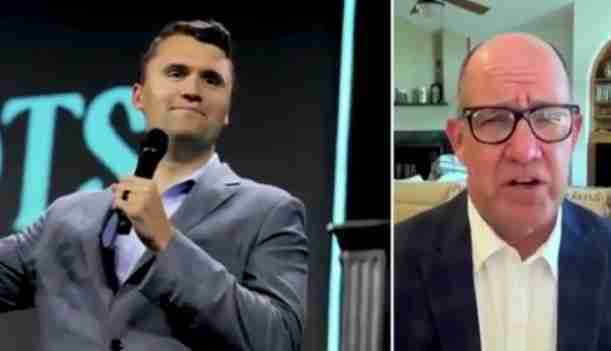
MSNBC Drops Matthew Dowd After On-Air Remarks Spark Outrage Over Charlie Kirk Shooting
MSNBC has fired network analyst Matthew Dowd after highly controversial on-air remarks linking Charlie Kirk’s rhetoric to a climate of violence, prompting immediate outrage and termination within hours amid questions about media responsibility and live commentary.
Key takeaways
- Matthew Dowd was fired after making on-air remarks that linked Charlie Kirk’s rhetoric to an atmosphere of violence. Sources: Fox News, Latin Times.
- Dowd said, “hateful thoughts lead to hateful words, which then lead to hateful actions.” Sources: Fox News, Hindustan Times.
- The comments came during breaking coverage of the fatal rooftop sniper shooting of Charlie Kirk at Utah Valley University; facts were still emerging. Sources: Fox News, Republic World.
- MSNBC President Rebecca Kutler called the remarks “inappropriate, insensitive, and unacceptable” and the network apologized before terminating Dowd. Sources: Fox News, Republic World.
Main content
Key information
MSNBC analyst Matthew Dowd was fired after making remarks on live television that linked Charlie Kirk’s rhetoric to an atmosphere of violence. Initial reporting and follow-up coverage appeared in Fox News and the Latin Times.
Dowd’s key line—“hateful thoughts lead to hateful words, which then lead to hateful actions”—was delivered during live coverage before full facts were available. Reports documenting the quote include Fox News and Hindustan Times.
What Dowd said on air
During breaking coverage, Dowd cautioned that “We don’t know any of the full details of this yet. We don’t know if this was a supporter shooting their gun off in celebration,” then added, “Hateful thoughts lead to hateful words, which then lead to hateful actions.”
The statements were documented by multiple outlets including Latin Times, Fox News, and Hindustan Times.
Network response and public outcry
MSNBC moved quickly. Network president Rebecca Kutler issued a public apology describing the comments as “inappropriate, insensitive, and unacceptable.” Hours after the broadcast, the network announced Dowd’s dismissal. Coverage and timelines are available at Fox News and Latin Times.
The firing prompted intense backlash from conservative leaders, social media users, and some White House and Trump administration figures who condemned both Dowd’s comments and the broader role of networks in national discourse.
Political reaction
Senior conservative politicians and public figures publicly condemned the remarks and used the episode to criticize cable news coverage of political violence. Former President Donald Trump and other conservative leaders publicly mourned Kirk and highlighted the incident as evidence of deep divides in national dialogue. Reporting on the political response appeared in outlets such as Hindustan Times and Fox News.
Context on Dowd and MSNBC
Background: Matthew Dowd joined MSNBC in 2022 after a long career that included time at ABC News. He served as a political analyst for the network until his dismissal following these remarks. The incident has renewed debate about the line between rapid analysis and premature speculation during live coverage (Fox News).
Ongoing investigation into the shooting
Authorities continue investigating the shooting at Utah Valley University. Early reports indicated the shooter fired from a rooftop, striking Charlie Kirk while he addressed a campus audience. Media outlets cautioned facts were still emerging when Dowd made his comments; see initial coverage at Fox News and Republic World.
Questions about newsroom process and live commentary
Critics argued Dowd’s remarks amounted to blaming the victim and urged stronger editorial checks before analysts speculate on motive. Media-watch commentators noted the tension between speed and accuracy during breaking events. Some outlets speculated about potential discipline for other staff involved in the segment, including host Katy Tur, though only Dowd was dismissed as of the latest reporting (Hindustan Times, Latin Times).
Media accountability and public trust
For many conservative viewers, the incident reinforced concerns about bias and accountability at major networks. Calls for clearer standards and firmer editorial oversight were immediate. Others argued networks must avoid commentary that could be read as condoning violence. The episode shows how quickly a single live statement can inflame audiences and reshape a network’s coverage for the day.
Implications for Redding, California
Economic impact: Local media and talk radio in Redding may see increased traffic as residents seek coverage they trust. Conservative-leaning stations could gain listeners; advertiser reactions nationally could affect local ad markets (Fox News).
Political consequences: Redding—a conservative community—may see local leaders use the controversy to underscore media distrust and campaign themes about accountability and free speech (Hindustan Times).
Social effects: Families with college-age members may view the shooting through concerns about campus safety. Local groups might organize forums, vigils, or discussions on safety and civil discourse (Fox News).
Cultural relevance: Conservative audiences in Redding likely will interpret the network’s actions as evidence of bias; local opinion pieces and talk radio may frame the episode as a journalistic failure (Latin Times).
Practical applications: Local organizers should review event security, emergency communication plans, and campus readiness in light of the shooting and national reaction (Republic World).
Sources and reporting notes
This report is based on multiple media accounts. Key sources include: Fox News, Latin Times, Hindustan Times, Republic World, and video of the original broadcast (video of the original broadcast).
Reporting note: Details were changing rapidly during live coverage when Dowd spoke. Authorities continue to investigate the Utah Valley University shooting. The network’s statements and public reaction were documented by the outlets cited above.



