
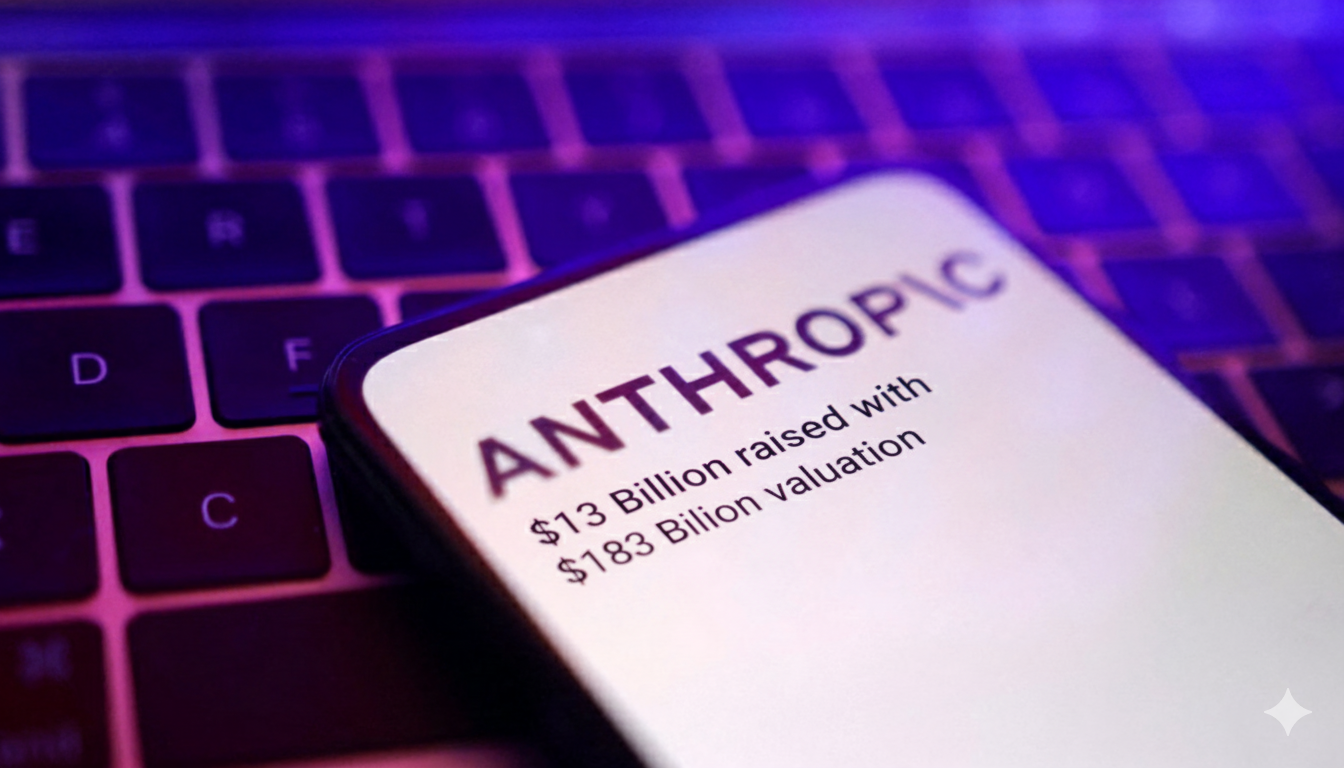
Anthropic’s $13B Series F Boosts Its Position — What Redding Businesses Should Watch as AI Investment Soars
Anthropic closed a $13 billion Series F in September 2025, valuing the AI firm at $183 billion; the funding led by Iconiq aims to accelerate enterprise adoption, safety research and international expansion amid fierce competition and investor scrutiny.
- Massive raise: Anthropic secured $13 billion in Series F funding, pushing its post-money valuation to $183 billion (TechCrunch; Anthropic press release).
- Revenue momentum: Reported ARR climbed from about $1 billion to $5 billion in months, with over 300,000 business accounts served and strong growth in high-value customers (Axios; PYMNTS).
- Product traction: Developer tool Claude Code has reached a run-rate revenue above $500 million, illustrating enterprise demand for developer and automation tools (PYMNTS).
- Local implications: Redding businesses should prepare for shifting skills, potential cloud cost changes, procurement scrutiny and opportunities for training and civic engagement.
Key information
- Funding: Anthropic raised $13 billion in a Series F funding round, creating a $183 billion valuation (TechCrunch; Anthropic press release).
- Lead investors: The round was led by Iconiq, co-led by Fidelity Management & Research and Lightspeed Venture Partners. Other backers include Altimeter, Baillie Gifford, BlackRock, Blackstone, Coatue, D1 Capital, Insight Partners, Ontario Teachers’ Pension Plan and the Qatar Investment Authority (TechCrunch; The Register).
- Revenue and customers: Anthropic’s ARR reportedly rose from $1 billion at the start of 2025 to $5 billion by August; the company says it serves more than 300,000 business accounts and has seen a sevenfold increase in customers generating run-rate revenue above $100,000 (Axios; PYMNTS).
- Product traction: Claude Code, launched in May, has reached a run-rate above $500 million (PYMNTS).
- Strategy: Anthropic will use the capital to accelerate enterprise adoption, strengthen AI safety research and support international expansion (TechCrunch; Anthropic press release).
- Market context: The raise arrives amid intense competition from firms like OpenAI and scrutiny that the pace of AI investment may resemble past tech bubbles (The Register; TechCrunch).
The deal and who’s behind it
Lead and co-lead investors: The round was led by Iconiq and co-led by institutional heavyweights including Fidelity Management & Research and Lightspeed Venture Partners. The investor list also features major asset managers and sovereign capital such as the Qatar Investment Authority, reflecting both the size and diversity of the financing (TechCrunch; The Register).
Anthropic’s announcement confirms the post-money valuation of $183 billion and frames the raise as validation of its commercial momentum (Anthropic press release).
Why investors poured in
Investors cite rapid revenue growth and enterprise demand. Reported ARR jumped from roughly $1 billion to $5 billion within months, and Anthropic’s CFO Krishna Rao described the round as a signal of “extraordinary confidence” in the company’s financial track record and growth path (Axios; TechCrunch).
Product traction: enterprise and developer tools
Enterprise sales: Anthropic emphasizes business customers: hundreds of thousands of business accounts and a sharp uptick in customers producing run-rate revenue above $100,000. That trend supports the company’s enterprise-first go-to-market strategy (PYMNTS).
Developer tools: Claude Code — launched in May — quickly reached a run-rate above $500 million, signaling demand for AI-assisted development workflows that speed coding, testing and integration (PYMNTS).
Competition and market dynamics
Anthropic operates in a crowded, high-stakes market. Competitors include OpenAI, which has also secured massive financing, as well as tech giants embedding AI into cloud platforms (Microsoft, Google). These dynamics affect pricing, cloud capacity demand and enterprise choice (TechCrunch; The Register).
Skepticism, costs and ethical questions
Analysts warn that rapid investment and valuations can echo past tech bubbles: high growth does not guarantee long-term profitability, especially given huge infrastructure and R&D costs (The Register).
“It is difficult to exclude ‘bad actors’ while staying competitive and well funded,” said CEO Dario Amodei, a comment that raises governance and national-security questions about funding sources (TechCrunch; Anthropic press release).
How Anthropic plans to use the money
- Enterprise adoption: Invest in sales, integrations and tools for businesses.
- AI safety research: Deepen work on model safeguards and responsible deployment.
- International expansion: Grow global sales, partnerships and regional support (TechCrunch; Anthropic press release).
Implications for Redding, California
Economic impact
- Small businesses: Local IT and digital-service firms could gain customers and tools (for example, Claude Code can speed development). However, automation may pressure wages and change skill demand.
- Cloud and infrastructure costs: Increased use of large AI models raises demand for cloud services and data-center capacity; small businesses should watch vendor pricing and negotiate contracts carefully (TechCrunch).
- Investment questions: Local investors and pension funds should weigh risk, governance and long-term returns when considering exposure to AI startups or funds (The Register).
Political consequences
- Procurement and oversight: City and county officials may face pressure to adopt AI tools for permitting, public safety or services. Procurement rules should demand clear data-handling and security terms, plus oversight of vendors with foreign or sovereign ties (TechCrunch; Anthropic press release).
- Regulation: State lawmakers and county supervisors will weigh rules on AI use, data privacy and competition; local leaders may balance protection with avoiding heavy-handed measures that stifle small firms.
Social effects
- Jobs and training: Automation may replace routine tasks while creating roles for AI oversight, engineering and compliance. Community colleges and workforce programs should prepare short-term training in AI tools, cloud ops and cyber security (Axios).
- Public services: Police, fire and healthcare may be offered AI tools for analysis or triage, but officials must balance benefits with privacy, bias and safety concerns.
Cultural relevance and values
Local control and skepticism: Conservative audiences in Redding often value local control and fiscal responsibility; the scale of outside investment, including sovereign investors, may heighten skepticism. Leaders should demand transparency about data control and decision-making (TechCrunch).
Ethical investing: CEO Dario Amodei’s comments about “bad actors” underscore concerns about accepting capital without safeguards; local institutions should consider ethical screens and contract clauses to protect community interests (Anthropic press release).
Practical applications for Redding
- Small business action: Pilot AI adoption on low-risk tasks (invoicing, scheduling, code help) and measure savings; negotiate clear SLAs and data-use rules with vendors (PYMNTS).
- Government procurement: Require vendor disclosures, security audits and limits on foreign access to sensitive data; include exit clauses in contracts (TechCrunch).
- Workforce development: Partner with Shasta College to create short certificates in AI tools, cloud ops and cyber security; encourage apprenticeships with regional IT firms (Axios).
- Civic engagement: Hold public forums so residents and businesses can ask about AI adoption, costs and safety. Transparency builds trust.
Reporting notes and sources
This report draws on Anthropic’s announcement and reporting from major outlets. Key sources include: Anthropic press release; TechCrunch; Axios; PYMNTS; and The Register.
Steps local leaders can take now
- Procurement transparency: Require vendor transparency in procurement and security audits before adoption.
- Training investments: Fund short training programs at Shasta College for AI tools, cloud ops and cyber security.
- Cross-sector advisory group: Set up a panel of city officials, businesses, educators and civil-society members to vet AI tools for public use.
- Protect public interest: Include ethical and governance clauses in contracts and insist on clear data-handling rules.
