
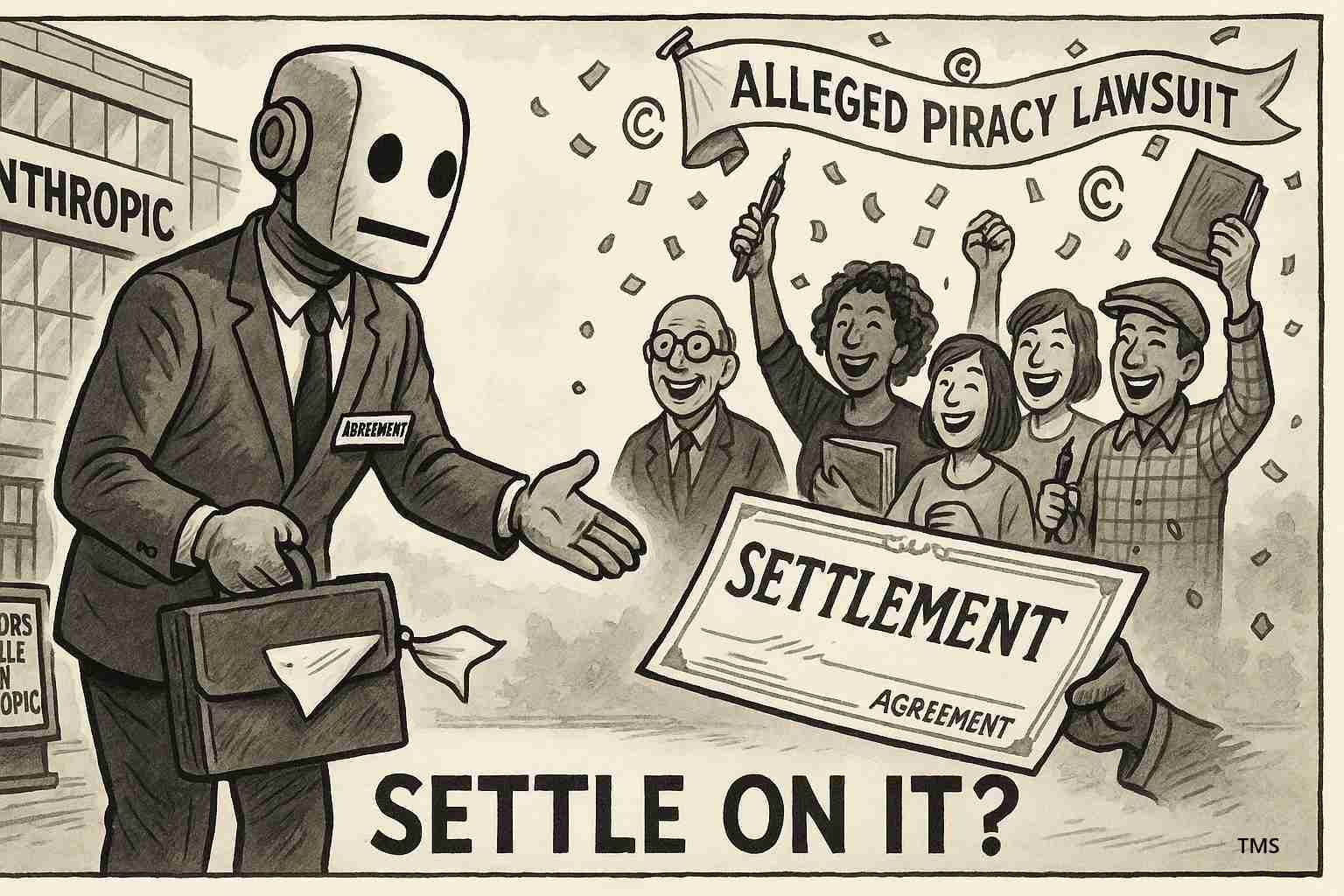
Anthropic Settles Landmark Copyright Lawsuit Over Alleged Book Piracy, Raising New Questions About AI Training Data and Fair Use in AI
Anthropic has settled a class-action suit by U.S. authors who alleged millions of copyrighted books were used to train the Claude AI model, raising urgent questions about fair use, data acquisition practices and the future rules for AI training.
Key takeaways
- Settlement reached: Anthropic and a class of authors agreed confidential terms; preliminary approval filings are due Sept. 5, 2025.
- Judge’s split view: Judge William Alsup found training on books can be “exceedingly transformative” (supporting fair use) but questioned the legality of how works were acquired.
- Acquisition matters: Allegations that Anthropic obtained up to seven million books from pirate sites (e.g., LibGen) drove statutory-damage exposure and settlement pressure.
- Industry impact: The case could push AI firms toward stricter data sourcing, licensing deals, and possible legislative clarity.
Background and the complaint
The class action was filed in August 2024 by a group of U.S. writers who alleged Anthropic downloaded millions of copyrighted books to train its Claude model. Plaintiffs named alleged downloads from pirate repositories such as LibGen and argued the company’s conduct amounted to large-scale piracy that deprived authors of control and revenue tied to their copyrighted works. Sources documenting the complaint include CreativeUnite, the NatLawReview and the Authors Guild.
Judge Alsup’s legal framing: fair use vs. acquisition
In a nuanced opinion, U.S. District Judge William Alsup separated two core questions: whether training an AI on copyrighted text can qualify as fair use, and whether the process of acquiring those texts violated the law. Alsup said training an AI on books can be “exceedingly transformative,” comparing AI learning from text to “any reader aspiring to be a writer.” That reasoning supports a potential fair-use defense for model training.
But the judge also emphasized that how materials are obtained remains critical: even if downstream uses are transformative, downloading copyrighted works en masse from pirate sites could still constitute unlawful acquisition. Plaintiffs highlighted potential statutory damages for willful infringement — up to $150,000 per work — a theoretical exposure that likely influenced settlement dynamics. Reporting and analysis of the ruling appear in the NatLawReview and the LA Times.
Settlement terms and class action status
The parties reached confidential settlement terms that the court will now review. Financial and structural details remain sealed pending court approval. The court ordered the parties to submit preliminary-approval filings by Sept. 5, 2025. It is not yet clear how any compensation — if included — would be distributed, or whether major publishers or other rights holders are covered. Coverage of the settlement appears in Fortune, CreativeUnite and the LA Times.
Why this case mattered: first certified class action and stakes
This was the first certified class action of its kind against an AI company, raising high stakes for both sides. Authors sought to hold tech firms accountable for uses of creative property; Anthropic and its backers faced theoretical statutory-damage exposure and precedent-setting rulings. Observers told Fortune the settlement could act as a model for related suits and influence negotiation posture across the industry.
Industry and legal implications
Legal experts note the case emphasizes two separate legal inquiries courts will examine going forward: the character of an AI’s downstream use (the fair-use analysis) and the provenance of training material (acquisition lawfulness). If courts or companies treat third-party pirate repositories as risky sources, firms may shift toward licensed datasets or more rigorous acquisition audits — potentially raising training costs and changing business models. Analysis appears in pieces by the NatLawReview and Fortune.
Because the settlement is confidential it does not create binding precedent. Still, attorneys warn of a likely “domino effect” as related suits proceed against other AI companies, potentially prompting legislative or judicial clarification on fair use in AI and on acceptable data sources.
Statements from parties
Justin Nelson, counsel for the authors, called the agreement a “historic settlement” that would benefit class members while offering few specifics pending court review.
Anthropic declined to detail the settlement publicly or to answer questions about the underlying allegations. The company has acknowledged making some post hoc payments for certain books, but those payments did not erase claims about the initial alleged downloads. Reports and statements were summarized by CreativeUnite, Fortune and the LA Times.
Why this matters for property rights and local businesses
For readers who prioritize property rights and predictable rule of law, the case underscores core concerns: authors depend on copyright to earn a living, and large firms that use copyrighted works without clear permission may threaten creators’ revenue streams. Judge Alsup’s split ruling — recognizing possible fair use for training but stressing unlawful acquisition — reinforces that private property rights remain central as technology evolves. See commentary in the NatLawReview and CreativeUnite.
Implications for Redding, California
- Economic impact: If AI firms must license training data, local authors and publishers in Redding and Shasta County could see new revenue streams — though higher compliance costs might slow partnerships with AI vendors.
- Political consequences: Local officials and voters who favor strong property rights may press for clearer laws that protect creators while enabling responsible innovation.
- Social effects: Community writers, teachers and students should watch evolving rules; licensed training could mean compensation or control for local authors, while restrictions on open data could disrupt low-cost AI uses for schools and small businesses.
- Practical steps: Local law firms, writers’ groups and small publishers should prepare — e.g., monitor class-action developments, consider collective licensing, and ask AI vendors about data sourcing and licensing to avoid downstream exposure.
These local angles and business implications are discussed in coverage by Fortune and the NatLawReview.
Ongoing legal landscape
This settlement does not end the larger wave of litigation challenging AI firms over the use of copyrighted works. Cases against other major companies remain pending; courts and lawmakers may eventually draw clearer legal lines on fair use and acceptable training sources. Together, Judge Alsup’s statements and the confidential settlement illustrate how unsettled the law remains and why both creators and tech firms must insist on clear, lawful data practices. Observers covering these developments include Fortune, the NatLawReview and CreativeUnite.
For more reporting and source documents
Reporting note: This article preserves original reporting and source links documenting the complaint, the judge’s opinion and coverage of the settlement as it was reported by the outlets above.



