
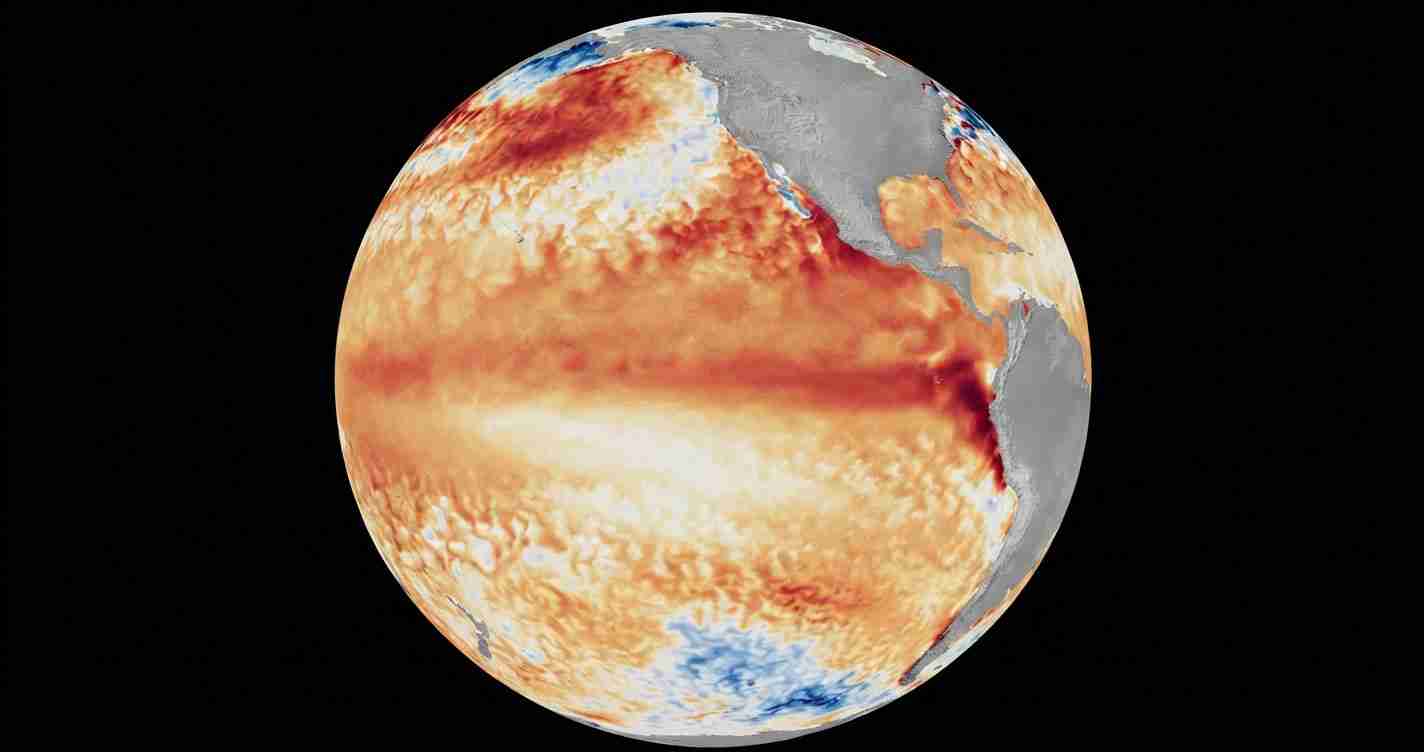
WASHINGTON, July 7 (San Diego News Online) — NOAA forecasters in College Park, Md., say El Niño conditions are already in place and are expected to strengthen into the Northern Hemisphere winter of 2026-27.
For people planning ahead, the useful step is simple: keep checking NOAA’s seasonal outlooks this fall and winter, especially if you live near the coast or rely on winter weather for travel, work or farming. El Niño can shift the odds for seasonal weather, but it does not lock in one exact outcome for any city.
What NOAA is seeing
NOAA’s Climate Prediction Center says its El Niño Advisory is in effect. The agency says above-average sea surface temperatures have spread across the central to eastern equatorial Pacific Ocean and that El Niño conditions developed over the past month.
The latest weekly readings the center reported show the Niño-3.4 index at +0.7°C, with Niño-4 also at +0.7°C and Niño-1+2 at +2.1°C. NOAA says its model guidance, including the North American Multi-Model Ensemble and the NCEP CFSv2 model, points to further strengthening.
How strong could it become?
NOAA says there is a 63% chance of a very strong El Niño during November-January, and the agency says that kind of event could rank among the biggest since records began in 1950.
The International Research Institute for Climate and Society says conditions are strengthening across the tropical Pacific and reported a weekly Niño-3.4 reading of +1.7°C on June 17, 2026. Seasonal outlooks are not exact, so the numbers can differ from one forecast update to the next even when the overall signal is the same.
What is El Niño?
El Niño is the warm phase of ENSO, short for El Niño-Southern Oscillation. It happens when parts of the equatorial Pacific stay warmer than normal long enough to change the atmosphere above it. Because the ocean and atmosphere are linked, that can affect weather patterns far from the Pacific.
Why it matters
NOAA says El Niño can influence U.S. weather patterns, and NOAA’s Ocean Service says it can also raise the chance of high tide flooding in some places. That does not mean every coastal area will flood, but it is one reason forecasters watch the Pacific so closely.
The bottom line
NOAA’s message right now is that El Niño is here and likely to grow stronger heading into winter. If your plans depend on weather, the practical move is to follow NOAA updates as the season changes rather than rely on one forecast this early.
