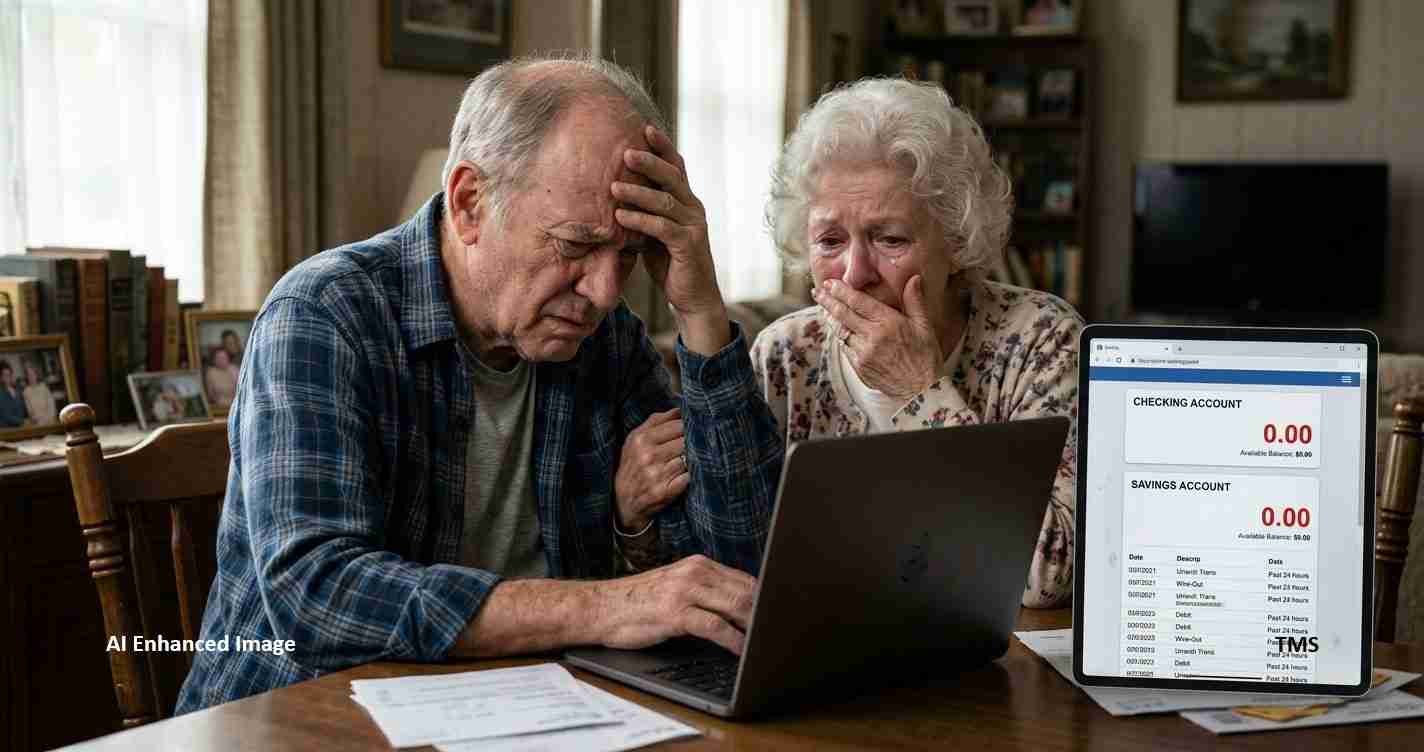
Grandparent scams on the rise: AI voice cloning and data breaches make senior-targeted fraud more convincing
Grandparent scams are surging as fraudsters use AI voice cloning and breached data to impersonate relatives, pressuring seniors for immediate payments. This report explains how the scams operate, why older adults are targeted, and four concrete protections families should adopt now.
Key takeaways
- Scammers impersonate relatives — callers demand urgent money for fake bail, medical bills, or legal fees; law enforcement has issued public advisories.
- AI voice cloning can recreate a family member’s voice from short videos or voicemails to make calls more convincing.
- Older adults are prime targets because they hold significant household wealth and commonly have personal data exposed in breaches.
- Four immediate protections: add a trusted contact, ask about withdrawal holds, verify urgent calls, and block risky Social Security changes.
How the grandparent (distress) scam works
Script and setup: A caller pretends to be a grandchild or close relative in urgent trouble and pressures the victim to send money immediately by cash, wire, or gift card. Callers often instruct victims to stay quiet or claim a “gag order,” while a second caller poses as an officer or lawyer to add authority.
Organized operations: Law enforcement reports show some groups run call centers with “openers” impersonating relatives and “closers” demanding cash; FBI IC3 advisory outlines this pattern.
“The script is simple but effective: familiar voice + urgent story = pressure to act without verification.”
AI voice cloning and fear tactics
Scammers combine emotional pressure with technology. AI voice-cloning tools can extract a grandchild’s voice from a birthday video, voicemail, or social post to generate a believable emergency call. That familiar voice plus urgent threats (bank hacks, court deadlines) often overrides a victim’s caution.
Why older adults are prime targets
Several factors make people 60+ attractive to fraudsters:
- Wealth: Households headed by those 65–74 often hold more net worth than younger adults.
- Data exposure: Date of birth, last four SSN digits, and addresses—still used for verification—have appeared in large breaches and can be cross-checked with social media.
- Higher losses and underreporting: Seniors typically lose more per incident and may hide crimes out of shame or fear of losing independence, reducing detection.
Data breaches and identity risk
Breaches provide starter kits: When names, SSNs, birthdates, and addresses are exposed together, scammers can impersonate victims more easily, open credit lines, or reroute transfers without immediate fraud alerts. High-profile breaches of health-plan processors and other providers have supplied attackers with large volumes of viable identity data.
Other fast-growing scams
Distress scams are part of a broader trend where fraudsters use time pressure and impersonation. Variants include:
- Bank-account compromise calls urging fund transfers to a “safe” account.
- Government impersonation scams (Social Security, IRS, Medicare).
- Tech-support fraud demanding remote access or payment for fake infections.
Four concrete steps for Grandparent Scam Prevention and to fight Elder Financial Exploitation
- Add a trusted contact to brokerage and investment accounts
What it is: A trusted contact is someone your firm can call if it suspects exploitation; they cannot move money by default.
Why: It creates a break between a scam call and a firm’s release of funds.
How: Log into each brokerage or retirement account and add a trusted contact in account settings; choose someone who knows your family and finances and tell them ahead of time.
- Ask your bank and retirement plan about holds on suspicious withdrawals
What it is: Many institutions can pause or review unusual transactions when elder exploitation is suspected.
Why: A short hold (24–72 hours) can stop an irreversible wire or cash pickup and allow verification.
How: Call customer service, ask if they have elder-exploitation policies, request a notation for extra review, and record the agent’s name and reference.
- Verify urgent calls before sending money
Core rule: Hang up and call back using a known number — the grandchild’s regular phone, the bank number on a statement, or a trusted family member.
Use a code word: Establish a family code word that only real relatives know. If a caller claiming an emergency cannot provide it, treat the call as a scam.
Never send cash, wires, or gift cards for an unexpected request, and never disclose full SSN, passwords, or one-time codes.
- Block or tightly control online changes to Social Security
Why: If criminals control your Social Security account they can reroute benefits or change contact information.
Steps: Turn on strong multi-factor authentication, use unique passwords, and contact Social Security about extra safeguards—ask whether they can require in-person or mailed verification for direct deposit changes.
Additional practical defenses
- Place credit freezes with the three major bureaus to block new accounts.
- Limit personal details online — reduce public sharing of relatives’ names, birthdays, and travel plans.
- Review bank and brokerage statements and credit reports regularly.
- Make a family rule: no urgent money requests by phone without independent verification.
Reporting and response
If you suspect a scam: Contact your bank, brokerage, or card issuer immediately to report fraud and request reversal of recent transfers when possible. File complaints with the Internet Crime Complaint Center (IC3) and the Federal Trade Commission. Keep detailed notes of calls, numbers, and amounts to help investigators.
Implications for Redding, California
Economic impact
Seniors in Redding often hold family savings, retirement accounts, and home equity that scammers target. A successful grandparent scam can wipe out a household’s nest egg, reduce local consumer spending, and harm small businesses and services that depend on retiree dollars.
Political consequences
Local officials may face pressure to expand outreach, fund fraud-prevention programs, or push financial institutions to adopt stronger hold procedures and trusted-contact policies. Voters may demand stricter enforcement of fraud and identity-theft laws.
Social effects
Scams erode trust within families and neighborhoods. Victims may hide losses out of shame, straining support networks and delaying recovery in the community.
Cultural relevance
Framing Grandparent Scam Prevention as a family and community duty — teaching code words and verification rules — will resonate locally, emphasizing protection of elders and preservation of family assets.
Practical applications for local residents
Banks, credit unions, and retirement-plan administrators should publish clear steps for placing holds and adding trusted contacts. Churches, veterans groups, and senior centers can host short workshops on video briefings and AI voice-cloning fraud. Families should make a written plan and carry a simple wallet card with verification steps and trusted-contact names.
Sources and further reading
- FBI Internet Crime Complaint Center (IC3) public service advisory on grandparent scams
- Community advisory post
- Video briefing and case summary
Contact local resources
For a one-page handout or family talking points to share with older relatives in Redding, contact your local bank or county senior services for printed materials and scheduling help. Preserve this guidance and share it with neighbors and community groups to reduce the risk of financial exploitation.