
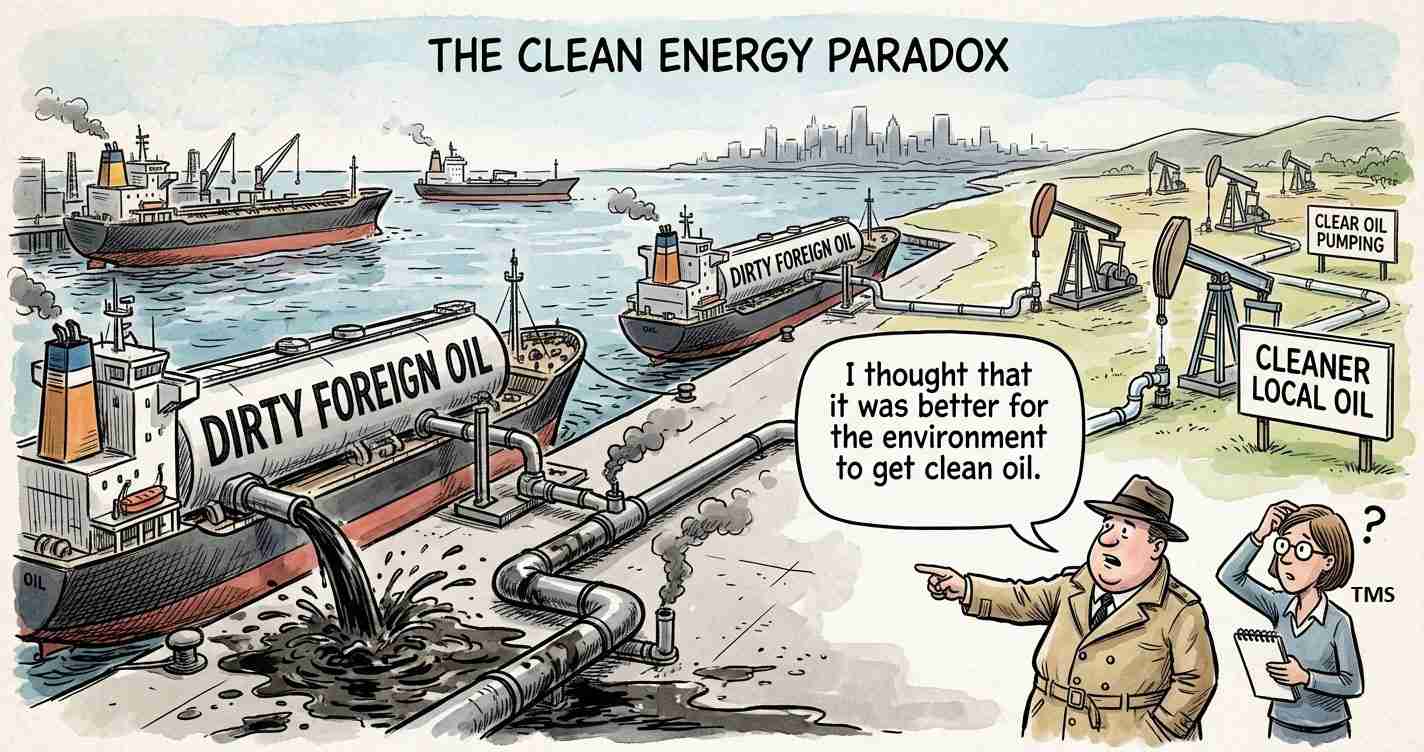
Trump officials invoke national security to force Santa Ynez pipeline restart, saying California’s foreign‑oil dependence threatens military readiness
The Trump administration invoked the Defense Production Act to compel restarting the Santa Ynez pipeline near Santa Barbara, citing national-security risks from California’s growing reliance on foreign crude and setting up a major federal‑state legal clash.
Key takeaways
- Administration action: The White House used an executive order and the Defense Production Act to order the restart of the offshore Santa Ynez / Sable pipeline system.
- National‑security rationale: Officials say over 60% of crude refined in California is imported, creating vulnerability for more than 30 military installations in the state.
- State pushback: Gov. Gavin Newsom and California regulators condemn the order, citing a 2015 spill and asserting state authority over coastal lands; legal challenges are expected.
- Local impacts: Restarting the system could add roughly 50,000 barrels per day of feedstock, affecting regional fuel prices, jobs, and emergency readiness in places such as Redding.
Federal move and legal authority
The administration issued an executive order and invoked the Defense Production Act (DPA), a Cold War–era statute that allows the president to direct private industry for national defense, to compel the restart of an offshore oil‑to‑shore pipeline serving platforms near Santa Barbara. Energy Secretary Chris Wright was delegated authority and issued directives permitting Sable Offshore Corp. to restore flows to shore.
Sources cited by the administration include the E&E News report and Politico coverage.
The administration’s national‑security argument
Administration officials, including Energy Secretary Wright and Interior Secretary Doug Burgum, framed the action as necessary to protect defense logistics and military readiness. Wright said the objective is to ensure “West Coast military installations have the reliable energy critical to military readiness,” calling certain offshore systems “vital to our national security and defense.”
The Department of Energy’s materials and reporting underpin this claim: the DOE fact sheet and additional reporting are cited repeatedly by officials.
Declining production, shrinking refineries
Federal officials link the DPA action to long‑term trends: California crude production has declined for decades while several refineries have closed or shifted to renewable fuels, increasing the state’s reliance on imported crude. Critics aligned with the administration argue strict state regulations have effectively “regulated refineries out of existence,” forcing reliance on foreign supplies.
Reporting and analysis on these trends include a compilation piece at VibeTrader and coverage at CalMatters, alongside the DOE fact sheet.
Foreign suppliers and Iraq
Officials have highlighted where California’s imports originate, noting data showing Iraq as a top exporter to the state in February. The administration argues that sourcing fuel from conflict‑prone regions and routes through chokepoints such as the Strait of Hormuz increases exposure to price shocks and supply interruptions.
The administration cites the DOE fact sheet and related reporting to support this assessment.
Santa Ynez / Sable history and environmental concerns
The Santa Ynez / Sable pipeline system was shut after a 2015 spill that fouled beaches and harmed wildlife. California officials have repeatedly cited that incident while condemning the federal order and arguing the pipeline remains subject to state environmental oversight and jurisdiction where it crosses coastal land.
The governor’s office statement is available at the Governor’s press release, and reporting on the pipeline’s legal and safety history appears in E&E News and Politico.
How much oil would come online?
Administration allies and some media estimate the restarted system could eventually deliver roughly 50,000 barrels per day. While not a complete solution, officials say that amount could meaningfully supplement regional refinery feedstock and provide a buffer against short‑term disruptions.
A video reporting discussed potential volumes and the likely legal outcomes, and the DOE frames such restarts as steps to “strengthen America’s oil supply” (see the DOE fact sheet).
Federal–state clash heads to court
Legal experts and state officials expect the courts to be decisive. Commentators describe the action as bringing “the full powers of the federal government to bear against California,” with litigation likely to test the limits of the DPA and the balance between national defense powers and state environmental authority.
Key coverage framing the anticipated legal battle appears at Politico and in the video reporting.
Implications for Redding, California
Economic impact: Residents and businesses in Redding depend on steady, affordable fuel for trucks, farms, construction and emergency services. A modest boost in California crude supply could ease regional price swings and lower costs for local trucking and agriculture.
Jobs and local economy: Offshore production and pipeline work could create jobs in coastal maintenance, logistics and distribution networks that indirectly benefit Northern California communities, including Shasta County.
Military and emergency readiness: Northern California installations such as Beale Air Force Base rely on reliable fuel; officials say reducing foreign dependence strengthens readiness, a claim cited in the DOE fact sheet and reporting at E&E News.
Political and social effects: The order is likely to energize conservative voters prioritizing national defense and energy independence, while deepening the cultural debate between job- and safety-focused inland communities and coastal environmental priorities.
Reporting and sources
This article draws on Department of Energy materials and national reporting. Key sources include the DOE fact sheet, E&E News coverage, Politico, a compilation report at VibeTrader, CalMatters, the California governor’s office statement, and video reporting on volumes and legal issues.
“The restart is presented as necessary to protect more than 30 military installations in California and to reduce imports routed through geopolitically sensitive chokepoints such as the Strait of Hormuz.”



